
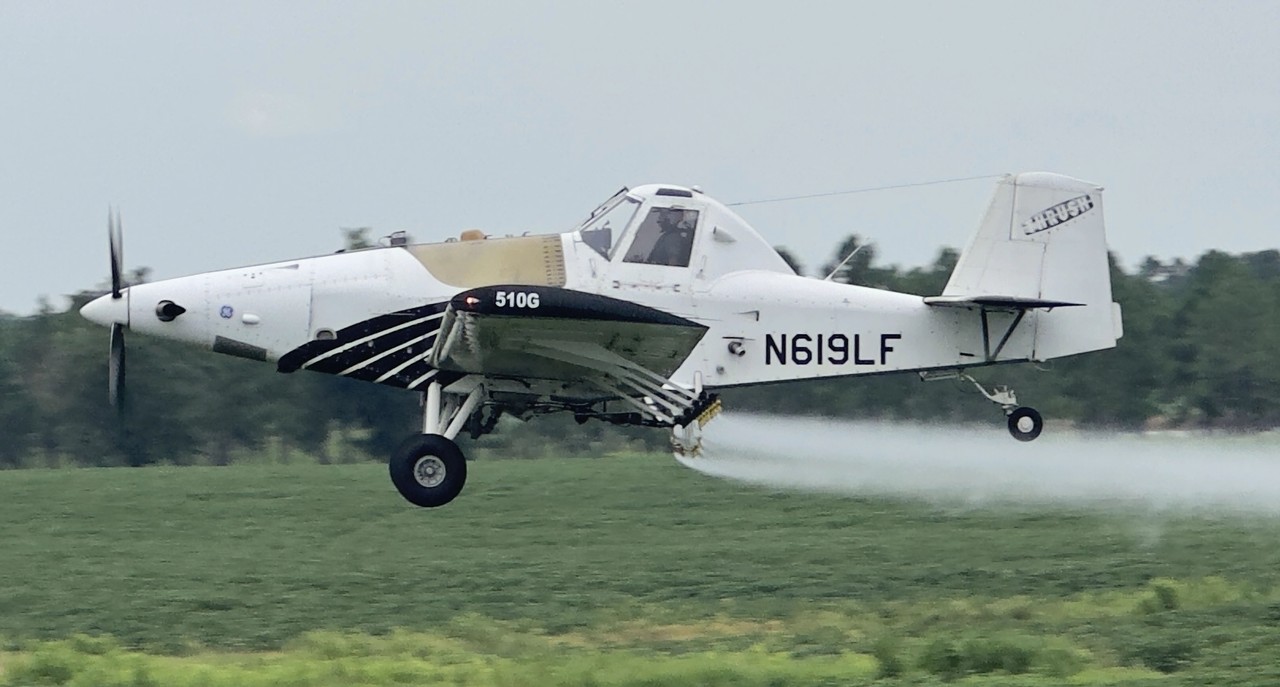
Agricultural Aviation Revolution
The Turbo Thrush emerged from Leland Snow's original S-2 design, first flown on 17 August 1953 with a radial engine. Snow's innovative configuration placed the chemical hopper ahead of the cockpit, creating better weight distribution and pilot safety in the event of a crash landing. The tubular fuselage was specifically designed for corrosion resistance and easy cleaning after chemical applications.
The Ayres Innovation
Frederick Ayres, an agricultural aircraft operator turned manufacturer, recognized the potential for turbine power in crop dusting. On 28 November 1977, Ayres Corporation purchased the Type Certificate and production facility from Rockwell International, immediately focusing on turboprop conversions. The first turbine variant, the S2R-T34, received certification on 28 April 1977, followed by additional models including the S2R-T11 (certified 26 October 1979) and the S2R-G6 (certified 5 March 1992).
Ayres marketed these aircraft as "Hush Thrush" models, emphasizing their dramatically reduced noise signature compared to traditional radial engines. This quieter operation opened new markets in populated areas where noise restrictions had previously limited aerial application work.
Engine Technology
The Turbo Thrush variants utilized two primary powerplant families. Pratt & Whitney Canada PT6A turboprops powered most models, including the PT6A-11AG producing 373 kW (500 shp) in the S2R-T11 and the more powerful PT6A-15AG generating 507 kW (680 shp) in the S2R-T15. The alternative Garrett TPE331-6, producing 559 kW (750 shp), powered the S2R-G6 variant from 1992.
These free-turbine engines offered significant advantages over radial pistons: higher reliability, reduced maintenance costs, instant availability of full power, and innovative features like reverse thrust for shorter landing distances. The turbines also addressed the growing shortage of parts for aging radial engines like the Pratt & Whitney R-985 and R-1340.
Production and Variants
Ayres Corporation operated from Albany, Georgia, steadily improving the design with larger hoppers and enhanced equipment options. Standard hopper capacity reached 1,514 litres in early variants, with options extending to 2,273 litres for high-volume operations. The company added creature comforts previously unknown in agricultural aircraft, including air conditioning, stereo systems, and dual cockpit configurations.
Production continued until Ayres' financial difficulties led to asset acquisition by Quality Aerospace in November 2001, followed by transfer to Thrush Aircraft on 2 September 2003. The transition occurred seamlessly, with Thrush Aircraft beginning production on the 273rd T34 variant (construction number T34-273, registered N550AG) in December 2003.
Operational Success
The Turbo Thrush found immediate acceptance among commercial agricultural operators. Companies like Loop Spraying Service, Driscoll Aviation, Pierce Aviation, Evergreen Flying Service, Bridwell Spraying Service, and Arkla Flying Service incorporated multiple examples into their fleets. The aircraft's 2.7-tonne maximum takeoff weight and 660 nautical mile range provided exceptional operational flexibility.
Fuel capacity of 719-863 litres usable, typically carried in two wing tanks, enabled extended missions without frequent refueling stops. The conventional taildragger configuration with robust landing gear proved ideal for operations from unprepared strips near agricultural fields.
Technical Specifications
Measuring 10 meters in length with a 2.8-meter height, the Turbo Thrush maintained manageable dimensions for hangar storage while maximizing hopper volume. The braced swept empennage provided excellent control authority during low-speed application passes, while the low-wing configuration ensured stable flight characteristics when heavily loaded.
The cockpit accommodated a single pilot as standard, though dual-control options served training operators and companies requiring two-pilot operations for insurance purposes. Modern avionics and improved visibility enhanced safety during the demanding low-level flight profiles typical of agricultural work.
Legacy and Continuation
Over 1,800 aircraft in the complete S-2/Thrush lineage have been produced since Snow's original design, representing one of general aviation's most successful specialized aircraft families. While exact production figures for the specific S-2R-G/T Turbo Thrush variants remain unspecified, serial numbers reached into the 3000s during the Ayres/Rockwell era.
Thrush Aircraft continues production today, maintaining the design's core philosophy while incorporating modern systems and regulatory compliance updates. Dozens of original Ayres-built Turbo Thrush aircraft remain active in agricultural operations worldwide, testament to their robust construction and enduring utility in specialized aerial application roles.