
Service History
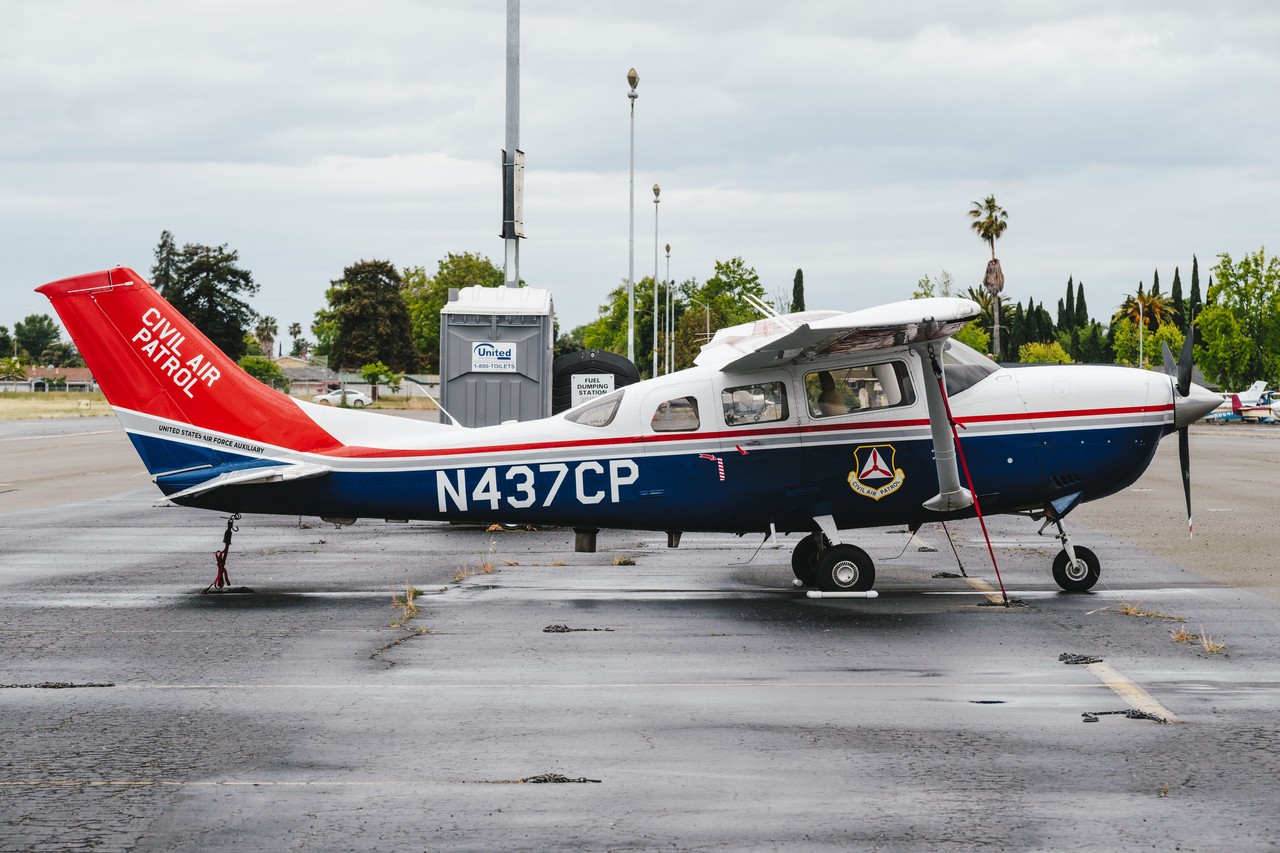
The T206 Turbo Stationair carved its niche in general aviation as a high-performance utility aircraft capable of operating effectively at altitude where naturally aspirated engines lose power. Since entering service in 1999, the turbocharged variant has dominated the market for single-engine aircraft requiring both substantial payload capacity and high-altitude performance. As of 2017, Cessna had delivered 1,264 T206H Turbo Stationair HD aircraft, making it the sole surviving production model in the venerable 206 family lineage that began in 1964.
The aircraft serves primarily in personal and business aviation roles, where its six-seat capacity and dual passenger doors provide practical utility for small group transport. Unlike its eight-seat sibling, the Cessna 207, which found popularity with air taxi operators, the T206 remained focused on the private and corporate flying market where its combination of performance and payload proved most valuable.
The Manufacturer
Cessna Aircraft Company launched the original Model 206 in 1964, establishing a design lineage that would span over six decades. The company's production philosophy emphasized continuous refinement rather than revolutionary changes, resulting in nearly 10,000 total 206-series aircraft manufactured through multiple production runs. Cessna's decision to halt all single-engine piston aircraft manufacturing in 1986 reflected the challenging liability environment facing general aviation manufacturers during that era.
The passage of the General Aviation Revitalization Act in 1994 fundamentally changed the industry's legal landscape, prompting Cessna to resume single-engine production. The company relocated manufacturing operations to Independence, Kansas, where production restarted in 1998 after the 12-year hiatus. This facility became the birthplace of the modernized 206 family, including the T206 variant that would become the line's sole survivor.
Engine & Technical Details
The T206H Turbo Stationair derives its high-altitude capability from the Lycoming TIO-540-AJ1A turbocharged engine, which produces 310 horsepower. This powerplant represents a significant departure from earlier turbocharged 206 variants that utilized Continental TSIO-520 engines of identical horsepower output. The Lycoming installation provided improved reliability and maintenance characteristics that became crucial selling points for the modernized aircraft.
The turbocharger system allows the engine to maintain sea-level power output at substantially higher altitudes than naturally aspirated engines, giving the T206 a decisive performance advantage in mountainous terrain or when flying above weather systems. The aircraft requires a crew of one or two pilots, depending on operational requirements and pilot certification levels.
Cessna's design team incorporated passenger doors on both sides of the fuselage, a feature derived from the company's experience with the Cessna 210 series. This dual-door configuration significantly improved passenger convenience and emergency egress capabilities compared to single-door designs common among competing aircraft.
Production & Legacy
The T206 production story reflects the broader challenges and recovery of American general aviation manufacturing. Cessna's original 206 series achieved remarkable longevity, maintaining continuous production from 1964 through 1986 before the liability crisis forced a complete shutdown. The naturally aspirated 206H, introduced in 1997, managed only 369 aircraft during its production run that ended in 2013, highlighting the market's preference for turbocharged performance.
The turbocharged variant proved more resilient, with certification achieved on October 1, 1998, and production models appearing in 1999. An enhanced version designated the Turbo Stationair HD entered production in July 2016 with increased gross weight capability, extending the design's utility and market appeal.
As of 2023, the T206H Turbo Stationair HD remains the only 206-family aircraft in active production, representing the culmination of nearly 60 years of design evolution. The aircraft's survival in an increasingly competitive market demonstrates the enduring appeal of high-wing, single-engine utility aircraft capable of operating from short, unimproved airstrips while carrying substantial payloads.
The T206's legacy extends beyond mere production numbers to represent Cessna's successful navigation of general aviation's most challenging period. Its continued manufacture validates the company's decision to resume single-engine production and proves that traditional aircraft configurations retain relevance in modern general aviation when enhanced with contemporary powerplants and systems.