
Service History
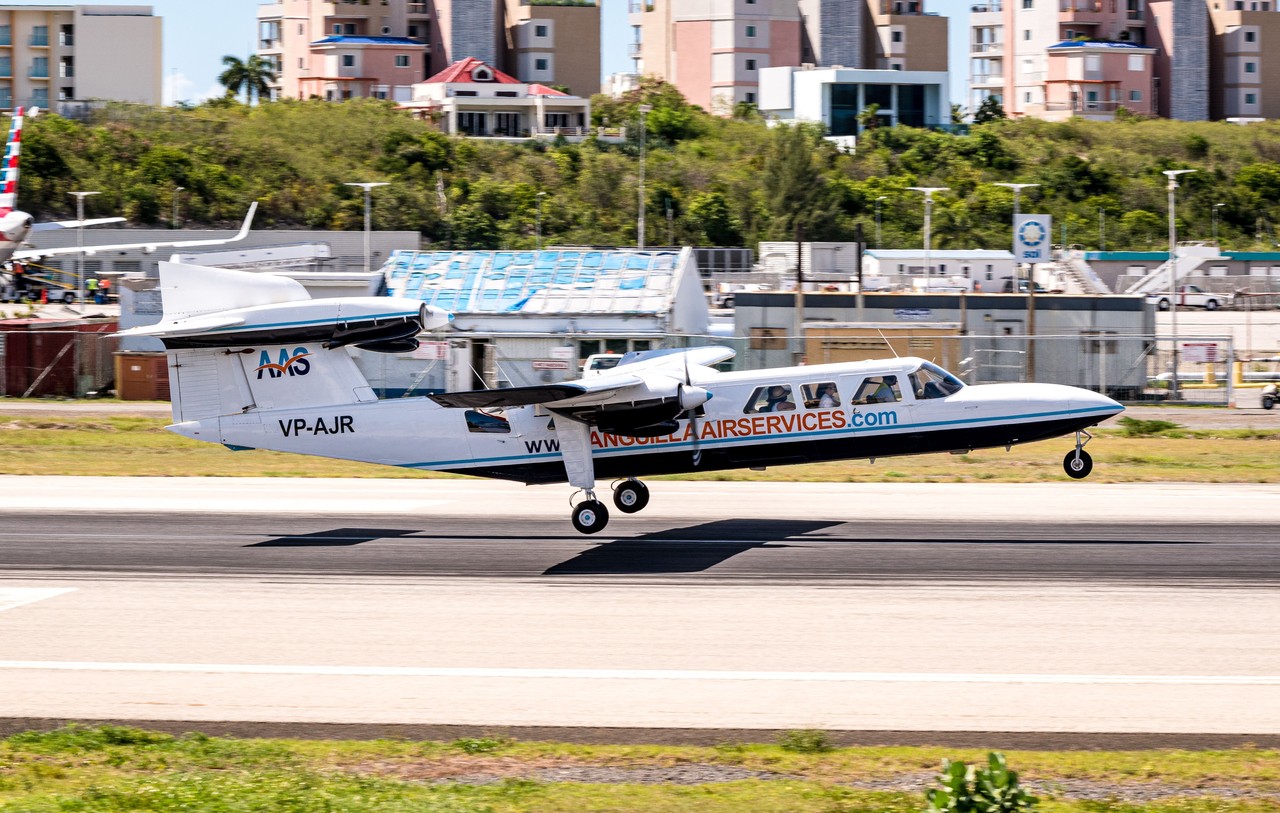
The Trislander carved out a specialized niche in commercial aviation as a feederliner aircraft connecting remote communities and islands worldwide. Aurigny Air Services of Guernsey became the type's most prominent operator, taking delivery of their first aircraft in July 1971 and eventually operating a fleet of 16 Trislanders for over four decades. The airline's workhorse G-BEVT, which first flew on July 1, 1977, and was delivered on July 22, 1983, completed an remarkable 86,603 flights averaging just 19.6 minutes each before retirement in 2017. This intensive utilization pattern exemplified the Trislander's role in short-haul operations, particularly serving the Channel Islands to Southampton route.
Commuter airlines across the globe adopted the Trislander for routes where larger aircraft proved uneconomical and smaller twins lacked sufficient capacity. The aircraft's ability to operate from strips as short as 2,000 feet while carrying nearly twice the passenger load of its Islander sibling made it invaluable for connecting remote destinations with limited infrastructure.
The Manufacturer
Britten-Norman was founded in the early 1960s by John Britten and Desmond Norman, two visionary engineers who recognized the need for rugged utility aircraft capable of operating from primitive airstrips. Their initial success with the BN-2 Islander, which first flew in 1965, established the company as a specialist in short takeoff and landing aircraft design. The Islander's popularity, with over 1,250 examples built, provided the foundation for developing the larger Trislander.
Financial pressures led to the company's acquisition by Fairey Aviation in August 1972, forming Fairey Britten-Norman and shifting much production to the Fairey factory in Gosselies, Belgium. The company subsequently changed hands multiple times due to ongoing financial difficulties, passing through Pilatus ownership before eventually licensing United States production rights to International Aviation Corporation in 1982. Despite these corporate upheavals, Britten-Norman survived as Britain's only independent commercial aircraft manufacturer, currently owned by Shelton Bidco Limited and continuing Islander production with over 1,300 total aircraft delivered.
Engine & Technical Innovation
The Trislander's powerplant consisted of three Lycoming O-540-E4C5 engines, each producing 260 horsepower from air-cooled, horizontally-opposed six-cylinder configurations. These reliable powerplants drove two-bladed Hartzell HC-C2YK-2G/C8477-4 constant-speed propellers, providing the thrust necessary for short-field operations while maintaining simplicity for operators in remote locations. The aircraft's fuel capacity of 154 imperial gallons supported extended range despite the higher fuel consumption of three engines.
The design team's innovative solution to increasing capacity involved stretching the second Islander prototype's fuselage by 2.3 meters forward of the wing and mounting the third engine on the vertical stabilizer. This configuration required significant structural reinforcement of the rear fuselage and tail assembly while maintaining the aircraft's docile handling characteristics. The resulting design featured five doors per side, enabling rapid passenger boarding and providing uninterrupted cargo space of 24 feet.
Engineers incorporated larger wheels and tires to handle the increased weight and rough-field operations, while the high-wing configuration provided excellent ground clearance and inherent stability. These design choices earned the Trislander the Queen's Award to Industry for Technological Innovation in 1975, recognizing its contribution to British aerospace engineering.
Production & Legacy
Trislander production commenced with the first production aircraft flying on March 6, 1971, and deliveries beginning in June 1971. Manufacturing continued until 1982, when United Kingdom production ceased after completing 73 aircraft deliveries, with an additional seven complete but unsold airframes bringing the total to approximately 82 aircraft. International Aviation Corporation built 12 additional examples in the United States as the Tri-Commutair variant, resulting in a total production run of 94 aircraft.
Despite its technical innovations and operational capabilities, the Trislander never achieved the commercial success of its Islander predecessor. The aircraft's higher operating costs due to three engines, combined with its limited speed advantage over twin-engine competitors, restricted market acceptance. Airlines often found the additional complexity and maintenance requirements difficult to justify for the increased passenger capacity.
Today, a small number of Trislanders remain in active service worldwide, primarily with specialized operators serving remote routes where the aircraft's unique capabilities remain relevant. The most notable preserved example is G-BEVT, donated by Aurigny to the British Airliner Collection at Duxford, where it serves as a testament to British innovation in utility aircraft design. While the Trislander represented a bold evolutionary step from the Islander, its modest production numbers underscore the challenges of developing successful specialized aircraft for niche markets.