
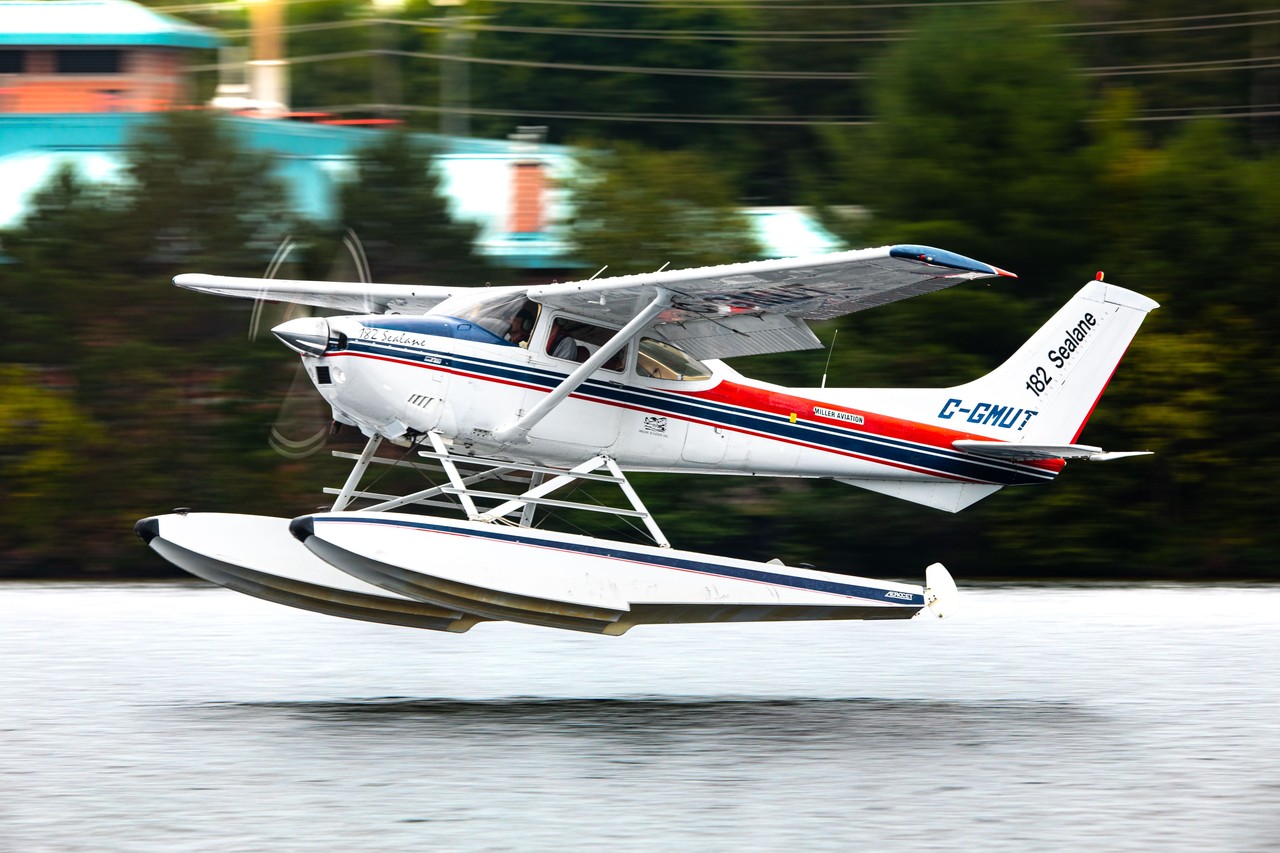
General Aviation Dominance
The Cessna 182 emerged as the second-most popular Cessna model still in production, trailing only the ubiquitous 172. Over its initial 30-year production run from 1956 to 1986, Cessna built 21,864 aircraft, establishing the 182 as a cornerstone of private aviation. When production resumed in 1997 after an 11-year hiatus, the aircraft had proven its enduring appeal to pilots seeking more performance than the 172 could provide.
Development and Early Years
Cessna developed the 182 as a tricycle-gear variant of their tailwheel 180 model, receiving certification on March 2, 1956, just four months after the 172's approval. The timing proved fortuitous, as the aviation industry was embracing tricycle landing gear for its superior ground handling characteristics. In its debut year, Cessna built 844 examples of the initial 182 model, powered by the Continental O-470-L engine producing 230 horsepower.
The 1957 182A variant introduced the iconic "Skylane" name that would define the model for decades. This iteration featured manual flaps, redesigned landing gear for improved ground handling, and an increased gross weight of 2,650 pounds. The early success was immediate, with 1,713 aircraft built during the 182A's two-year production run through 1958.
Peak Production and Evolution
The 182 reached its production zenith during the 1970s general aviation boom. Between 1972 and 1976, Cessna manufactured 4,371 examples of the 182P variant, representing nearly 875 aircraft annually. The 182Q followed from 1977 to 1980 with 2,537 units built, though declining market conditions began affecting output.
Throughout its evolution, the 182 received continuous improvements including a wider fuselage, swept tailfin with rear "omni-vision" window, and enlarged baggage compartment. The gross weight steadily increased from the original 2,550 pounds to 2,950 pounds by 1970, and finally to 3,100 pounds with the 1986 182R model.
International Production
Cessna expanded 182 production beyond Wichita through international partnerships. Argentina manufactured A182 models for regional markets, while Reims Aviation in France produced 69 F182 variants through 1985. These international variants helped establish the Skylane's global presence while adapting to local certification requirements and market preferences.
Engine Development
The 182's powerplant evolved significantly over its production history. Early models utilized the Continental O-470-L, which by 1985 had evolved into the higher-compression O-470-U for improved performance. The most dramatic change came with the 1997 production resumption, when Cessna adopted the fuel-injected Lycoming IO-540-AB1A5, maintaining the 230-horsepower output while providing better fuel efficiency and reliability.
Turbocharged variants appeared from 1981 through 1986 and again from 2001 until 2013, offering enhanced high-altitude performance for pilots operating in mountainous terrain or requiring improved climb rates.
Cessna Aircraft Company
Cessna Aircraft Company, founded in Wichita, Kansas, established itself as a dominant force in general aviation through aircraft like the 182. The company's engineering philosophy emphasized practical, reliable designs that could serve multiple roles from flight training to personal transportation. The 182 exemplified this approach, offering more performance than the entry-level 172 while remaining accessible to private pilots.
Pilot Perspective
Pilots appreciate the 182's combination of docile handling characteristics and solid cross-country performance. The high-wing configuration provides excellent visibility and stable flight characteristics, while the 230-horsepower engine delivers meaningful performance improvements over the 160-horsepower 172. The tricycle landing gear makes ground operations straightforward, contributing to the aircraft's popularity at flight schools and flying clubs.
Performance specifications vary by model year, but typical figures include a service ceiling of 19,800 feet for early variants, though this decreased to 14,900 feet for the 1985 model due to weight increases. The aircraft's four-seat configuration can be expanded with two additional child seats in the baggage area, making it suitable for small families.
Production Hiatus and Revival
The liability crisis that affected general aviation manufacturers forced Cessna to cease 182 production in 1986, with only 895 aircraft built during the final five-year run from 1981 to 1986. The 11-year production gap ended in April 1997 with the introduction of the 182S, featuring the new Lycoming powerplant and updated avionics.
By September 30, 1998, Cessna had delivered 332 examples of the revived 182S, proving continued market demand. Production has continued with various improvements, and as of July 2015, the 182T Skylane remained the primary variant in production.
Legacy and Current Status
The Cessna 182's longevity reflects its successful balance of performance, utility, and operating economics. With one of the longest production runs in general aviation history, spanning from 1956 through 2026 with only the 1986-1997 interruption, the Skylane has trained countless pilots and served diverse missions from personal transportation to utility flying. Its continued production into the modern era, incorporating fuel-injected engines and contemporary avionics, ensures the 182's relevance for future generations of aviators.