
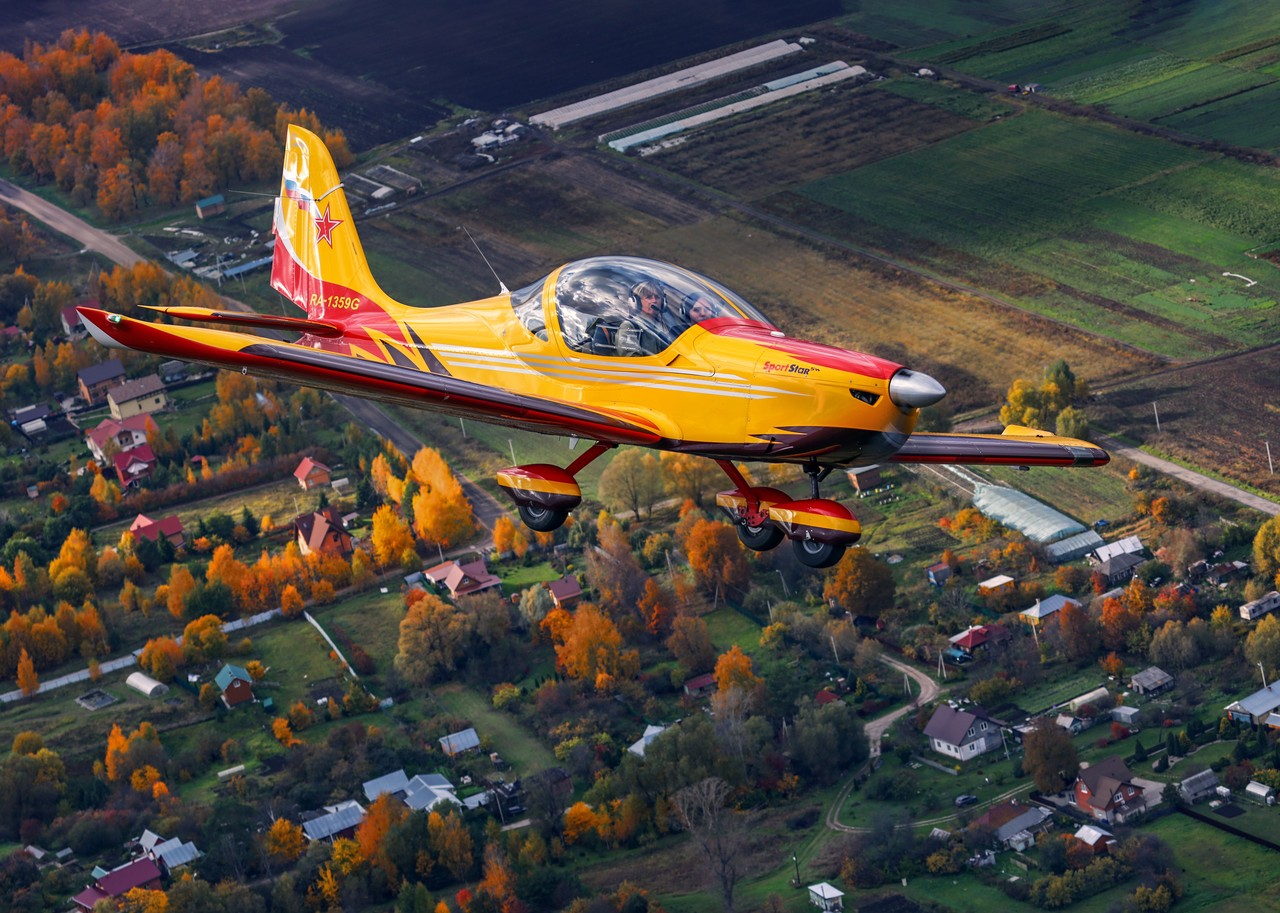
Pioneering Light Sport Aviation
The SportStar achieved a historic milestone in April 2005 when it became the first aircraft accepted by the Federal Aviation Administration under the newly established Sport Pilot/Light Sport Aircraft regulations. This certification marked the beginning of a new era in general aviation, opening recreational flying to pilots with reduced training requirements and medical certification burdens. By the end of 2006, approximately 600 SportStars were operating worldwide, establishing the aircraft as the foundation of the light sport aircraft movement.
Flight Training Dominance
Flight schools across the United States, Australia, and numerous other countries adopted the SportStar as their primary training platform, attracted by its relatively low operating costs and ease of maintenance. The aircraft proved exceptionally well-suited for basic and advanced pilot instruction, from Private Pilot License training through Commercial Pilot License preparation. Its spacious cabin and modern avionics, including optional Garmin G3X Touch glass displays, provided student pilots with contemporary flight deck experience while maintaining the simplicity essential for effective instruction.
The SportStar's training success led to recognition as "S-LSA Aircraft of the Year" in 2011 by AeroNews Network. Flight International reported that the SportStar held the number-one seller position in 2005, attributed to its extensive range of options and overall affordability compared to traditional training aircraft.
Manufacturing Excellence
Evektor-Aerotechnik operates from a production facility in Kunovice, Czech Republic, where aircraft manufacturing began in 1970. The company emerged from the 1996 acquisition of Aerotechnik by Evektor, combining decades of aviation experience with modern manufacturing capabilities. Aerotechnik had previously produced approximately 200 L-13 Vivat motor-gliders during the 1980s and 1990s, establishing the engineering foundation for future aircraft development.
The company celebrated its 50th anniversary of aircraft production at the Kunovice facility, during which time it evolved into one of the world's largest manufacturers of two-seat training and touring aircraft. Evektor's engineering expertise extends beyond light aircraft, with the company contributing to major commercial aviation programs including the Boeing 747-8 fuselage design and various Airbus projects including the A350 XWB.
Technical Innovation
The SportStar's design centers on a 100-horsepower Rotax 912ULS engine manufactured in Austria, providing reliable power with a 2,000-hour time between overhauls interval. Early production aircraft featured a centrally-mounted 65-liter fuel tank positioned behind the seats, while later variants incorporated 120 liters of fuel capacity in integral wing tanks, significantly extending the aircraft's 1,300-kilometer range capability.
The aircraft's structure employs modern composite construction techniques combined with traditional aluminum components, resulting in excellent strength-to-weight ratios. Optional equipment includes a ballistic recovery parachute system and night operation packages, expanding the aircraft's utility beyond basic daylight training missions.
Variants and Evolution
Evektor developed multiple SportStar variants to address specific market requirements. The SportStar RTC, representing the sixth generation of the design, received European Aviation Safety Agency type certification in May 2012, enabling expanded operations throughout Europe. The SportStar SL variant achieved Chinese Civil Aviation Authority certification in 2012, making Evektor the first Czech aircraft manufacturer to gain approval in the Chinese market.
The most ambitious variant, the SportStar EPOS, made its maiden flight on March 28, 2013, powered by a 75-kilowatt electric motor. Factory pilot Radek Surý conducted the historic flight from Kunovice airport, marking the aircraft as one of the world's first flying two-seat electric light sport aircraft. This electric variant was developed with support from the Technology Agency of the Czech Republic and collaboration with multiple technology partners.
Global Impact and Legacy
With over 1,400 aircraft delivered to operators in 50 countries, the SportStar family has accumulated an estimated one million flight hours in service. The aircraft's success extends beyond pure numbers, having established the viability of the light sport aircraft category and influenced regulations worldwide. The companion EuroStar variant, designed for the European ultralight market, ranked as the tenth-best-selling ultralight aircraft in Germany in 2014.
Today, SportStars continue rolling off the production line in Kunovice, with the aircraft maintaining its position as a preferred training platform for flight schools seeking modern, cost-effective instruction aircraft. The type's combination of advanced avionics, proven reliability, and regulatory compliance ensures its continued relevance in an evolving aviation training environment.