
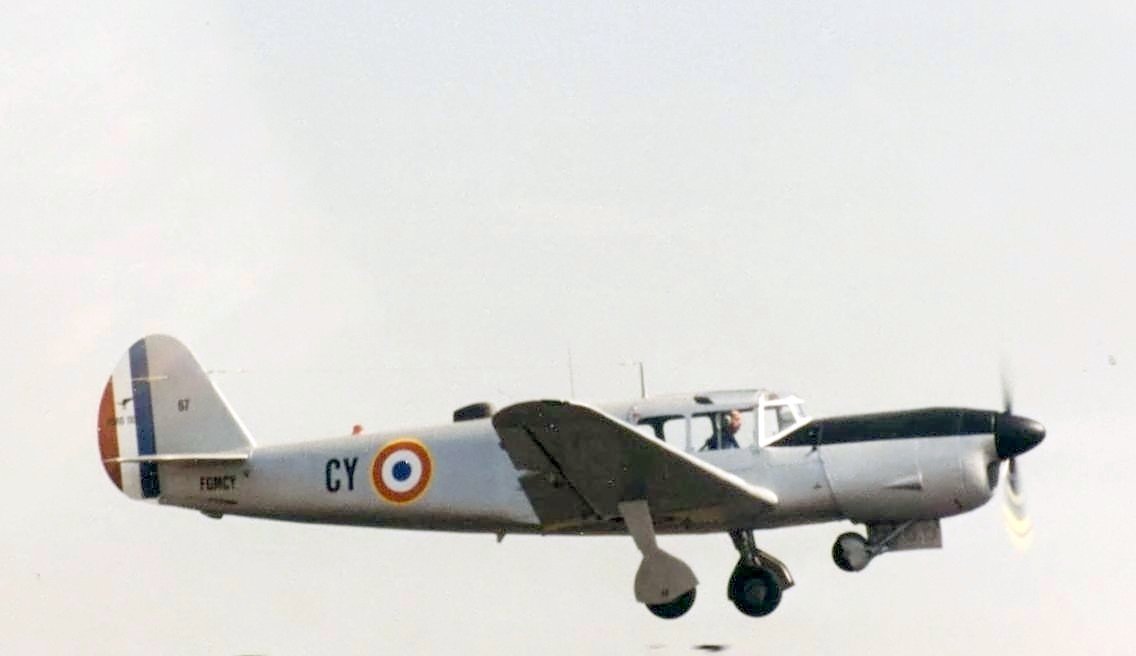
From German Prototype to French Workhorse
The Nord 1100 Noralpha emerged from the chaos of World War II as France transformed abandoned enemy aircraft designs into useful military assets. When Nord Aviation discovered uncompleted Messerschmitt Bf 108 airframes and engines after France's liberation in 1944, the company saw an opportunity to quickly establish aircraft production. The original German design by Willy Messerschmitt had shown promise but suffered fatal flaws—the Bf 108B-0 experienced dangerous airframe vibrations above 325 km/h that could destroy the aircraft, leading Germany to quietly abandon the project during wartime.
French engineers at Nord Aviation's Les Mureaux facility west of Paris methodically addressed these structural issues while adapting the design for post-war requirements. The sole surviving prototype, initially designated Me 208 during German development, became the foundation for what would become a remarkably successful French aircraft program.
Military Service and Variants
The French military embraced the Noralpha, designating it "Ramier" (Woodpigeon) and deploying 200 examples across the French Air Force and French Navy. The primary production variant, the Nord 1101, featured a 170-kilowatt Renault 6Q-10 inline piston engine that provided reliable performance for communications and liaison missions throughout the 1950s and 1960s.
Nord Aviation experimented with different powerplants to optimize performance. The Nord 1104 variant tested a single airframe with a 180-kilowatt Potez 6D-0 engine, while the original Nord 1100 prototypes had used 180-kilowatt Argus As 10C-1 engines salvaged from German stocks. The most dramatic transformation came in 1959 when two aircraft received complete powerplant conversions to become S.F.E.R.M.A.-Nord 1110 Nord-Astazou variants, each equipped with a 406-kilowatt Turbomeca Astazou II turboprop engine.
Technical Innovation and Modernization
The turboprop conversions demonstrated French engineering ambition to modernize the aging design. These aircraft required significant structural modifications including shorter wingspan with cut-off wingtips and enlarged vertical tail surfaces to maintain stability at higher speeds achievable with turboprop power. The dramatic increase from 230 horsepower to 545 horsepower fundamentally changed the aircraft's performance envelope, though specific speed and range improvements are not documented.
The baseline Noralpha configuration retained the clean lines of Messerschmitt's original design while incorporating French manufacturing standards and powerplants. As a low-wing monoplane, it offered good performance for its intended liaison role, though it never matched the speed capabilities that German engineers had originally envisioned.
Nord Aviation's Strategic Success
Nord Aviation's decision to complete the Noralpha program proved strategically sound for France's post-war aviation industry. The company, formally known as Société Nationale de Constructions Aéronautiques du Nord, had taken control of Bf 108 production when manufacturing transferred from Germany to occupied France in 1942. After liberation, continuing this program allowed Nord Aviation to maintain production capabilities and workforce expertise during the challenging transition from wartime to peacetime manufacturing.
The 200-aircraft production run provided steady work for the Les Mureaux facility while French military forces received a proven communications platform. This pragmatic approach of adapting existing designs rather than developing entirely new aircraft allowed France to rebuild its aviation capabilities more rapidly than would have been possible with clean-sheet designs.
Operational Longevity
The Noralpha's most impressive achievement was its operational longevity with French forces. Military service extended from the mid-1940s through the mid-1970s, with the final Air Force examples retiring from the Centre d'essais en vol at Bretigny-sur-Orge during 1974-75. French Navy Noralphas continued slightly longer, marking three decades of continuous military service.
This extended service life reflected the aircraft's fundamental soundness and the thoroughness of French engineering improvements over the flawed German original. Many examples transitioned to civilian use after military retirement, though specific details of their commercial service remain undocumented.
Legacy and Historical Significance
The Nord 1100 Noralpha program exemplifies post-war Europe's pragmatic approach to aviation development. Rather than discarding enemy designs, French engineers recognized the underlying value in Messerschmitt's work while addressing its fundamental flaws. The result was an aircraft that served reliably for thirty years, far exceeding the operational life of many purpose-built post-war designs.
The program also demonstrated successful international technology transfer, as French engineers not only mastered German design principles but improved upon them sufficiently to create a viable long-term military asset. The turboprop conversions of 1959 showed continued faith in the basic airframe design, even as aviation technology advanced rapidly during the jet age.