
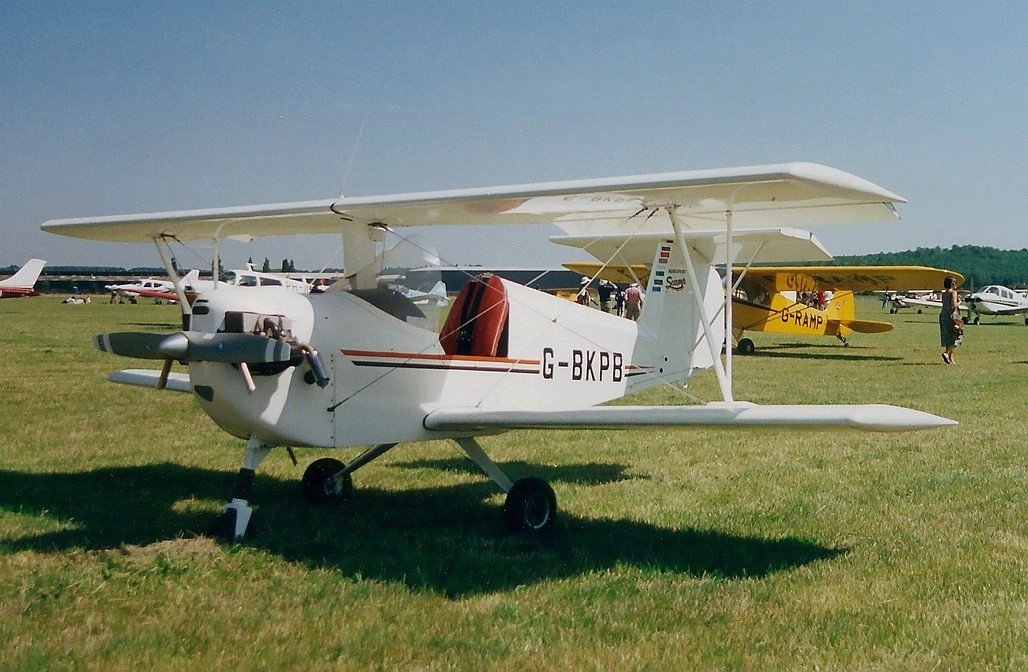
Design Philosophy and Development
Harris Woods conceived the Scamp with a revolutionary approach to homebuilt aircraft design, prioritizing simplicity and affordability over complexity. Woods founded Aerosport in 1970 specifically to market aircraft plans to amateur builders, recognizing an untapped market for accessible aviation construction. His design philosophy proved remarkably effective when the prototype progressed from drawing board to first flight in just 90 days, demonstrating the efficiency of his streamlined approach.
The Scamp's construction methodology represented a significant departure from traditional aircraft building techniques. Rather than requiring extensive welding skills or specialized tools, Woods designed the structure around pop-rivets, bolts, and self-tapping screws, with minimal welded components. This approach allowed builders with basic mechanical skills to complete their aircraft using standard workshop tools, dramatically lowering the barrier to entry for homebuilt aviation.
Construction and Kit Distribution
Aerosport marketed the Scamp through multiple pathways, offering plans, component sets, and complete kits to accommodate builders with varying skill levels and budgets. By 1993, the company had sold 1,050 sets of plans, indicating sustained interest in the design over two decades. The aircraft's popularity extended beyond American borders, with completed examples appearing in the United Kingdom and other countries.
The construction process utilized light alloy throughout the primary structure, creating a robust yet lightweight airframe. Woods stressed the design to +6g and -3g loads, clearing it for limited aerobatic operations despite its homebuilt origins. This structural integrity, combined with the aircraft's docile handling characteristics, made it suitable for both recreational flying and basic aerobatic training.
Agricultural Variant Development
The Scamp's versatility became evident with the development of the Scamp B agricultural variant, which first flew on May 27, 1977. This specialized version incorporated a 15.85-gallon fiberglass chemical tank mounted beneath the fuselage, along with a wind-driven pressure pump and spray bars capable of covering a 28-foot swath width. The entire agricultural application system added only 38 pounds to the aircraft's weight, demonstrating efficient engineering.
Agricopteros Ltda, a Colombian crop-spraying company, ordered five Scamp B kits from Aerosport in 1983, though only four were ultimately completed as sports aircraft rather than agricultural sprayers. This variant utilized the more powerful 128 cubic inch Revmaster converted Volkswagen engine producing 100 horsepower, compared to the standard Scamp's 60-horsepower powerplant.
Engine Configuration and Performance
The Scamp's engine installation represented one of its most innovative aspects, adapting Volkswagen automobile engines for aircraft use. The prototype employed a modified 1,853cc Volkswagen four-cylinder air-cooled horizontally-opposed engine, while production aircraft could accommodate engines ranging from 98 to 128 cubic inches (1,600cc to 2,100cc). This flexibility allowed builders to select powerplants based on availability, budget, and desired performance characteristics.
Performance figures reflected the aircraft's efficient design, with maximum speeds reaching 105 mph and cruise speeds of 90 mph. The Scamp demonstrated impressive short-field capabilities, requiring only 400 feet for both takeoff and landing runs. Service ceiling reached 12,000 feet, while range extended to 124 miles, making it suitable for local recreational flying and training operations.
Flying Characteristics and Pilot Experience
Pilots consistently praised the Scamp's forgiving flight characteristics, describing it as easy to fly even for novice aviators. The aircraft exhibited docile stall behavior and predictable spin recovery responses, contributing to its reputation as a safe trainer. Control sensitivity provided good feedback without being twitchy, allowing pilots to develop precision flying skills.
The open cockpit design, extending down to waist level, provided exceptional visibility in all directions. This feature particularly benefited training operations and recreational flying, where situational awareness proved crucial. The biplane configuration offered inherent stability while maintaining sufficient performance for engaging flight experiences.
Legacy in Homebuilt Aviation
The Scamp's influence on homebuilt aviation extended beyond its production numbers, demonstrating that sophisticated aircraft design could be made accessible to amateur builders. Woods' approach of providing ready-made components alongside detailed plans established a template that numerous other kit manufacturers would later adopt.
The aircraft's continued availability as plans and kits decades after its introduction testifies to the soundness of the original design. Modern builders still construct Scamps, often incorporating contemporary avionics and engine modifications while maintaining the fundamental airframe configuration that proved so successful in 1973.
The Scamp's combination of aerobatic capability, short-field performance, and construction simplicity created a unique niche in general aviation that few aircraft have matched. Its success validated the homebuilt movement's potential to produce capable, safe aircraft outside traditional manufacturing channels, inspiring countless builders to pursue their aviation dreams through amateur construction.