
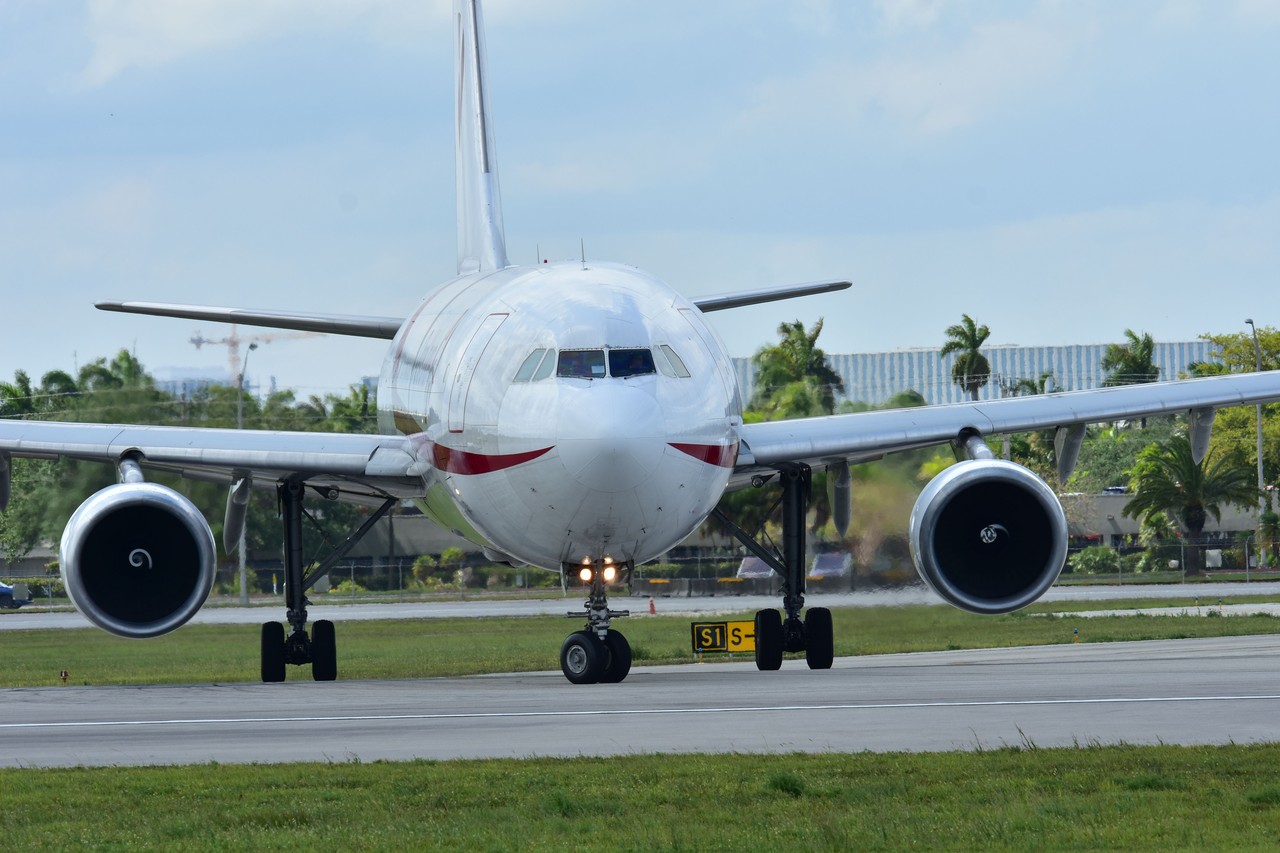
Commercial Revolution
The A300B4-200 entered service on May 23, 1975, when Germanair took delivery of the first production aircraft. This milestone marked the beginning of Airbus's challenge to Boeing's widebody monopoly, offering airlines a fuel-efficient alternative to the larger Boeing 747 on medium-to-long-haul routes. By the program's conclusion in 2007, the entire A300 family had achieved 561 deliveries, with the final aircraft—a freighter variant—delivered to FedEx on July 12, 2007.
The aircraft's success stemmed from its ability to serve routes previously uneconomical for four-engine aircraft. Airlines could now operate widebody comfort and capacity on routes connecting secondary cities, fundamentally changing network planning strategies. Early operators beyond Germanair included Air France and Saudi Arabian Airlines, with the type gradually building momentum after initial market skepticism.
The Airbus Consortium
Airbus Industrie emerged from a December 18, 1970 agreement between France and Germany, following Britain's withdrawal from the project on April 10, 1969. The consortium faced immediate challenges, producing numerous "whitetail" unsold aircraft between December 1975 and May 1977 as airlines remained hesitant to embrace European engineering. The company relocated its headquarters from Paris to Toulouse in January 1974, establishing the final assembly line that would become the heart of European aircraft production.
Under production director Felix Kracht's leadership, the engineering team overcame early skepticism through methodical development and certification processes. The original A300 prototype first flew on October 28, 1972, leading to the specialized B4 variant's maiden flight on December 25, 1974. Certification followed on March 26, 1975, clearing the way for commercial service.
Today's Airbus SE evolved from this consortium through a 2001 restructuring into Airbus SAS as part of EADS, maintaining the collaborative European approach while streamlining operations. The company now ranks as Boeing's primary global competitor, validating the original consortium vision.
Engine Technology and Innovation
The A300B4-200 offered operators choice between two powerplant options: General Electric CF6 or Pratt & Whitney JT9D turbofans, each delivering 227-236 kN of thrust. These high-bypass-ratio engines represented cutting-edge technology, providing the fuel efficiency necessary for the aircraft's commercial success. The CF6, entering production in 1971, demonstrated remarkable longevity with over 50 years of continuous service, while the JT9D served from 1968 into the 1990s across multiple aircraft types.
This engine flexibility proved crucial for market acceptance, allowing airlines to standardize on their preferred powerplant manufacturer while accessing the A300's capabilities. The high reliability of both engines later enabled 180-minute ETOPS certification for the A300-600R variant, expanding operational possibilities over oceanic routes.
Technical Innovations
The A300B4-200's most significant advancement over the earlier B2 variant was its center fuel tank, increasing capacity to 47,500 kilograms and extending range to 7,400 kilometers. This modification transformed the aircraft from a regional widebody into a true long-haul performer, opening new market opportunities for operators.
Perhaps more revolutionary was the 1982 introduction of the A300B4-200FF (Forward Facing) variant for Garuda Indonesia, featuring the world's first two-crew widebody glass cockpit. This innovation eliminated the flight engineer position, reducing operating costs while maintaining safety standards through advanced automation and display technology. The system included Krueger flaps for enhanced performance characteristics and established design principles that would influence all subsequent Airbus aircraft.
Modern Legacy
While passenger service has largely ended, the A300B4-200 found new life as a freighter. Major operators including FedEx Express, UPS Airlines, European Air Transport, and Mahan Air continue operating converted examples, with approximately 200-250 A300 family aircraft remaining in active service. Airbus has committed to supporting these aircraft until at least 2025, ensuring continued parts availability and technical support.
The aircraft's cultural significance extends far beyond operational statistics. As Airbus's inaugural success, it validated the European consortium model and established technical foundations for the A310, A330, and A340 families. The two-crew widebody concept pioneered in the FF variant became industry standard, influencing cockpit design philosophy across all manufacturers.
The A300B4-200's maximum operating ceiling of 12,200 meters and cruise speed of Mach 0.86 may seem modest by contemporary standards, but these specifications perfectly matched 1970s route requirements while establishing Airbus as a credible Boeing competitor. Its success provided the financial foundation and market credibility necessary for subsequent Airbus programs, ultimately reshaping the global airliner industry from European-American duopoly to today's competitive landscape.