
Revolutionary Design Philosophy
The A310 emerged from Airbus's ambitious vision to challenge American dominance in commercial aviation through European collaboration. Originally designated the A300B10, the aircraft represented a calculated response to post-oil crisis demands for fuel-efficient wide-body aircraft capable of serving "long and thin" routes—intercontinental flights with moderate passenger loads that narrow-body aircraft couldn't handle economically.
Bernard Ziegler, Airbus's chief test pilot, lifted the prototype into the skies over Toulouse on April 3, 1982, accompanied by co-pilot Günter Scherer and flight engineer Jean Pinet. This maiden flight marked the culmination of four years of development since production launch in July 1978, driven by launch orders from Swissair and Lufthansa.
Service History and Market Impact
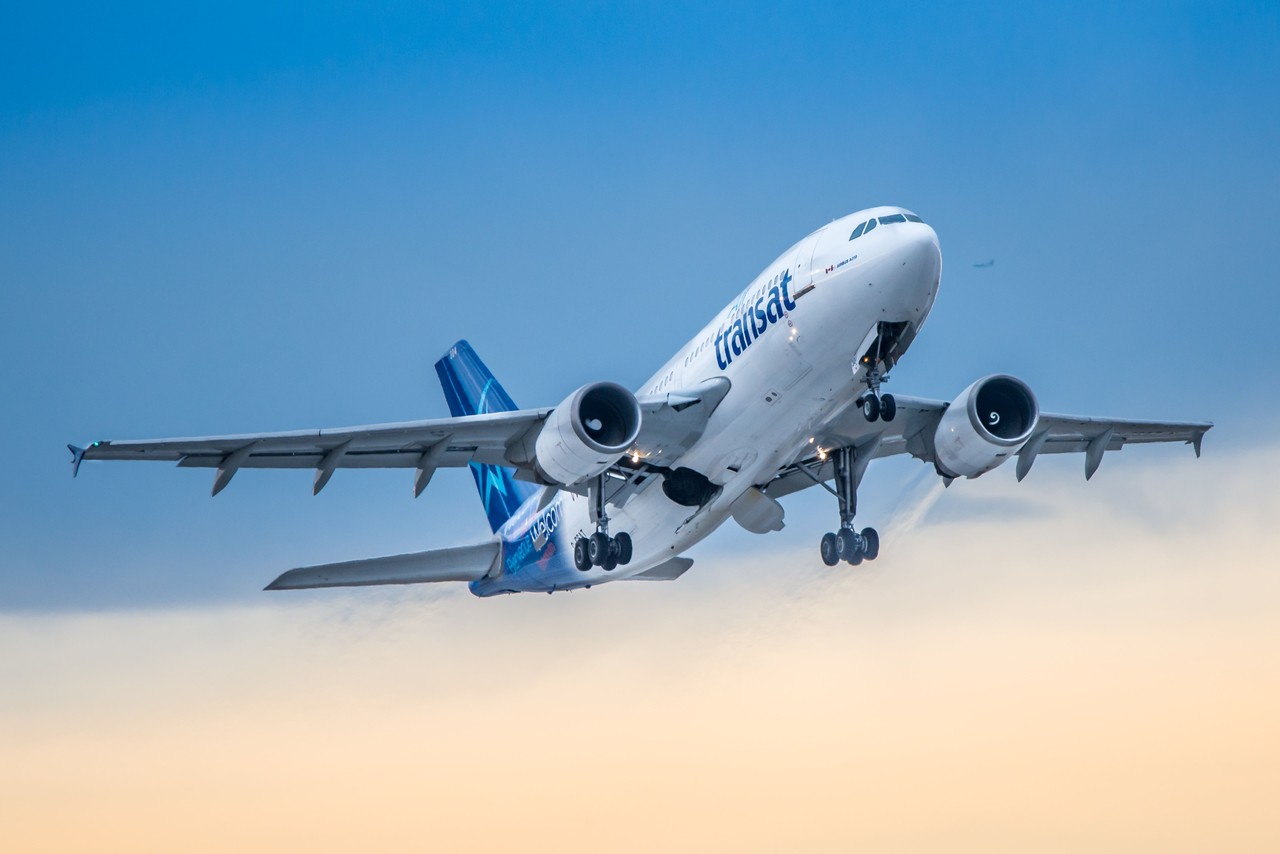
Swissair introduced the A310 to revenue service in April 1983, followed immediately by Lufthansa. The aircraft quickly gained traction among European and Asian carriers seeking an alternative to Boeing's competing 767-200, which had launched six months earlier. Major operators including Iran Air, Royal Jordanian, Air Transat, and FedEx recognized the A310's unique combination of range and efficiency.
The A310-200, the original variant, offered a range of 4,150 nautical miles, while the extended A310-300 introduced in 1985 pushed intercontinental capability beyond 5,000 nautical miles through additional fuel capacity and higher maximum takeoff weight. This flexibility allowed airlines to deploy a single aircraft type across diverse route networks, from European regional services to transatlantic operations.
The Manufacturer's Vision
Airbus Industrie originated as a European consortium established through a memorandum of understanding signed by British, French, and West German governments on September 26, 1967. This collaborative structure pooled resources and expertise across national boundaries, creating a unified challenge to American manufacturers Boeing and McDonnell Douglas. The consortium has since evolved into Airbus SE, now one of the world's two dominant commercial aircraft manufacturers.
The A310 played a crucial role in validating Airbus's family concept—offering aircraft with common flight decks and components across different sizes. This philosophy would later define the company's entire product strategy, from the A320 family through the modern A350.
Engine and Technical Innovation
Pratt & Whitney JT9D high-bypass turbofan engines powered the A310, representing proven technology already successful on Boeing 747s and other wide-body aircraft. However, the A310's most revolutionary feature was its two-crew cockpit—the first wide-body aircraft to eliminate the flight engineer position through advanced digital avionics.
The aircraft introduced a completely redesigned wing optimized for fuel efficiency, updated digital flight management systems, and comprehensive ETOPS (Extended-range Twin-engine Operations) certification enabling transatlantic flights. These innovations established new standards for wide-body aviation and influenced subsequent aircraft design across the industry.
Pilot Perspective and Performance
Pilots praised the A310's handling characteristics and advanced avionics suite, which simplified complex flight operations while maintaining safety margins. The aircraft's two-crew configuration reduced operating costs while its fly-by-wire precursor systems provided enhanced flight envelope protection.
With a cruising speed of Mach 0.8 and a service ceiling of 41,000 feet, the A310 delivered competitive performance metrics. Its twin-aisle cabin configuration offered superior passenger comfort compared to narrow-body alternatives, while maintaining operational economics that single-aisle aircraft couldn't match on longer routes.
Production Legacy and Current Status
Airbus manufactured 255 A310s before production ended in 1998, when the larger A330-200 assumed its market position. While never achieving the commercial success of later Airbus models, the A310 proved essential in establishing the company's credibility and technical capabilities.
Most A310s have retired from passenger service, but significant numbers continue operating as cargo aircraft and military transports well into the 21st century. FedEx and various air forces worldwide have extended the type's service life, recognizing its reliability and cargo capacity.
The A310's true legacy lies not in production numbers but in its role as a technological and commercial stepping stone. Its introduction of two-crew wide-body operations, advanced avionics integration, and family commonality concepts became fundamental principles that Airbus has applied across all subsequent aircraft programs. The A310 demonstrated that European aerospace collaboration could produce world-class commercial aircraft, establishing the foundation for Airbus's eventual position as Boeing's primary global competitor.