
Commercial Dominance
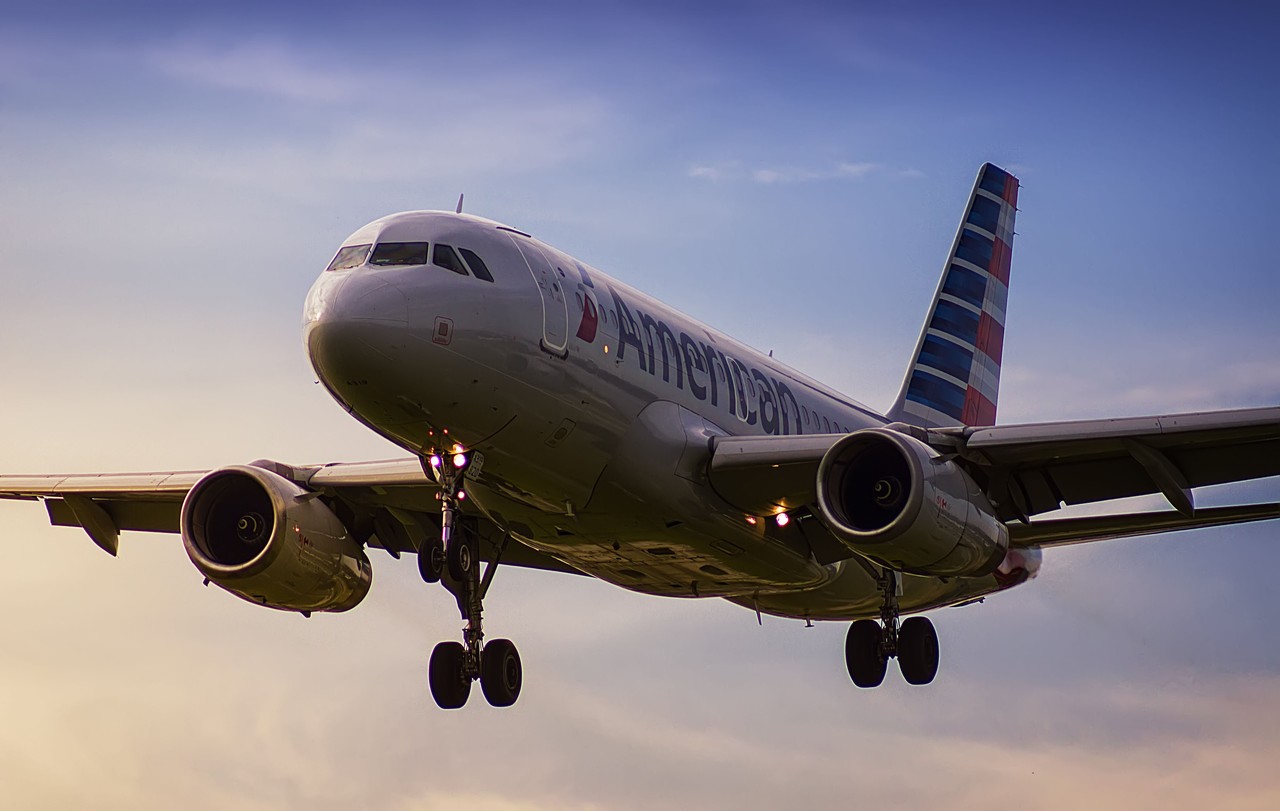
The A319 transformed short- to medium-haul aviation by enabling airlines to operate efficiently on routes where larger aircraft proved uneconomical. With 1,264 aircraft remaining in active service as of August 2025, the type serves 84 carriers worldwide. American Airlines operates the largest fleet with 133 A319ceo aircraft, while EasyJet has taken delivery of 172 units, demonstrating the aircraft's appeal to both traditional and low-cost carriers. United Airlines maintains 81 active A319s, and Lufthansa continues operating some of the oldest examples still flying.
Swissair became the launch customer, receiving its first A319 on April 25, 1996, and entering commercial service that same month. Northwest Airlines marked a significant milestone when it received its first A319, christened "City of Duluth" with tail number N3101, on August 12, 1999, operating from Duluth, Minnesota. The aircraft proved its long-range capabilities early in its career with a record demonstration flight covering 3,588 nautical miles from Hamburg to Winnipeg in January 1997, completing the journey in 9 hours and 5 minutes.
The Manufacturer Legacy
Airbus traces its origins to 1970 when French Aerospatiale, German Deutsche Airbus (DASA), and Britain's Hawker Siddeley formed a consortium called Airbus Industrie. This groupement d'intérêt économique restructured into a single corporate entity in 2001 and adopted the Airbus SE designation in 2017. The company revolutionized commercial aviation by introducing digital fly-by-wire controls with the A320 family launch in 1984, making the A319 part of a groundbreaking technological lineage that has delivered over 10,000 A320-family aircraft by 2025.
The A319 emerged from a specific market request by Steven Udvar-Hazy, then-president and CEO of International Lease Finance Corporation (ILFC), who identified demand for a smaller capacity aircraft within the A320 family. Airbus engineering teams in Toulouse, France, developed the design by shortening the A320 fuselage while maintaining commonality for pilot type-rating sharing and operational cost savings.
Production and Manufacturing
Production began in 1994 with final assembly taking place primarily in Hamburg, Germany, where the first flight occurred on August 25, 1995. Airbus expanded manufacturing to include assembly lines in Tianjin, China, and previously operated facilities in Toulouse, France, and Mobile, USA. The original A319ceo variant continued production until 2021, when Tibet Airlines received the final classic engine option aircraft.
The A319neo (New Engine Option) variant entered production in 2017, incorporating advanced powerplants and sharklet wingtips for improved fuel efficiency. As of August 2025, 17 A319neo aircraft have been delivered from 62 total orders, with 24 additional units on order, representing the aircraft's continued relevance in modern fleets.
Engine Technology and Performance
The A319ceo operates with two engine options: CFM56-5B series turbofans manufactured by CFM International, a joint venture between GE Aviation and Safran Aircraft Engines, or IAE V2500 series engines produced by International Aero Engines consortium. The CFM56 engines, producing 22,000 to 27,000 pounds of thrust per engine, achieved over 99 percent dispatch reliability rates throughout their production run from 1979 to 2020, with over 33,000 units built across all variants.
The V2500 alternative, manufactured from 1987 to approximately 2018 with over 7,000 total units produced, featured wide-chord fan technology for enhanced efficiency. A319neo operators can select between CFM LEAP-1A or Pratt & Whitney PW1100G turbofans, both promising 15 percent fuel savings compared to previous generation engines when combined with sharklet wing extensions.
Operational Excellence
Pilots appreciate the A319's consistent handling characteristics derived from the A320 family's digital fly-by-wire system, which provides precise control inputs through side-stick controllers rather than traditional yokes. The aircraft maintains a service ceiling of 12,500 meters with a climb rate of approximately 2,800 feet per minute, enabling efficient operations in congested airspace.
Two-pilot crews operate the 11.76-meter tall aircraft across its full performance envelope, with typical passenger configurations ranging from 124 to 156 seats in mixed-class arrangements or up to 160 in single-class high-density layouts. The 3,700 nautical mile range enables transcontinental routes while the aircraft's fuel efficiency makes it economically viable on shorter regional services.
Enduring Legacy
Some of the oldest A319s continue active commercial service, including Lufthansa's D-AILA, delivered in June 1996 and accumulated over 68,104 flight hours, and United's N802UA from June 1997. The aircraft's modular design philosophy, pioneered within the A320 family, established industry standards for narrow-body commonality that competitors subsequently adopted.
The A319's contribution to low-cost carrier expansion cannot be overstated, as its efficiency enabled airlines like EasyJet to offer affordable air travel across European markets. This operational flexibility, combined with the ongoing neo variant improvements, ensures the A319 remains relevant for airline operations extending well into the 2030s, cementing its position as a defining aircraft of the digital fly-by-wire era.