
Market Dominance and Service History
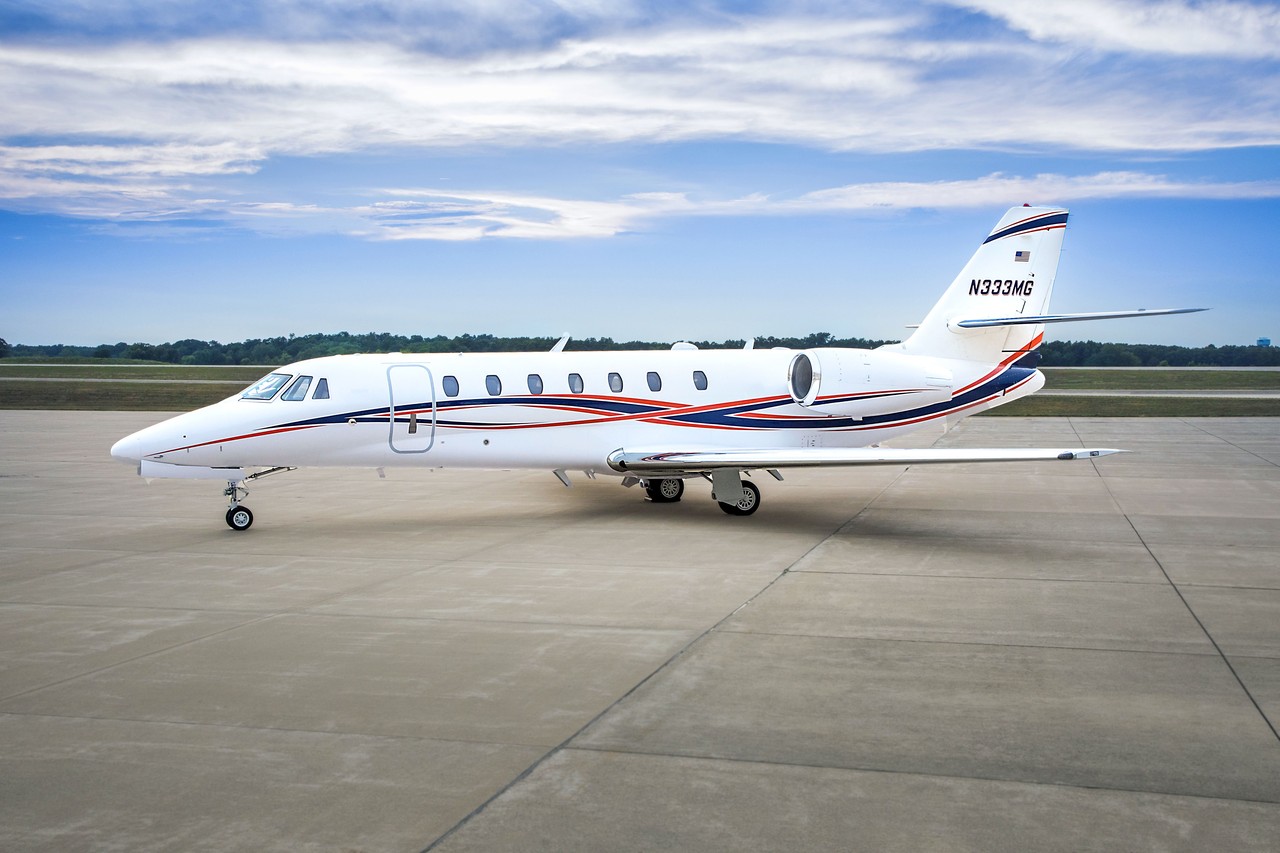
The Citation Sovereign established itself as a formidable presence in the super-midsize business jet market during its 17-year production run. By December 2013, the Citation Sovereign fleet had accumulated more than 802,000 flying hours across 349 aircraft, demonstrating remarkable operational reliability. The aircraft filled a crucial niche in corporate aviation, representing the second-largest member of the Citation product line by takeoff weight at 30,000 pounds, exceeded only by the Citation X by approximately 6,000 pounds.
The Sovereign's transcontinental capabilities proved particularly valuable for corporate operators, with the aircraft certified to fly routes such as Los Angeles to Hawaii with greater than 98 percent reliability while meeting Extended Twin-Engine Operations (ETOPS) requirements. This reliability factor became a cornerstone of its market appeal, attracting operators who needed dependable long-range performance without stepping up to large-cabin aircraft.
The Manufacturer Legacy
Cessna Aircraft Company, founded in 1927 by Clyde Cessna, developed the Citation Sovereign as part of its expanding business jet portfolio. By the time of the Sovereign's introduction, Cessna had become part of Textron Aviation, a division of Textron Inc., which continues to operate today as one of the world's leading general aviation manufacturers. The company's Citation series, launched in 1972 with the original CitationJet, had evolved into a comprehensive family of business aircraft ranging from light jets to large-cabin aircraft.
Textron Aviation's decision to cease Sovereign production in March 2021 reflected strategic market positioning rather than aircraft deficiencies. The company stated that the newer Citation Latitude, introduced in 2015, and Citation Longitude had created product line overlap, with 340 Citation Latitude aircraft in service worldwide by 2023. The manufacturer's focus shifted toward these newer designs that better addressed contemporary market demands.
Engine and Technical Innovation
The Citation Sovereign utilized two Pratt & Whitney Canada PW306C turbofan engines, each producing 5,690 pounds of thrust. These powerplants, manufactured by the Canadian division of Pratt & Whitney, provided the aircraft with a maximum cruise speed of 457 knots and the ability to reach a service ceiling of 47,000 feet. The 2013 Sovereign+ variant upgraded to PW306D engines featuring autothrottles, improving top speed to 848 kilometers per hour and enhancing climb performance to Flight Level 450 with full fuel payload.
The aircraft's design represented a significant evolution from its Citation Excel predecessor, featuring a fuselage stretched by 6 feet 6 inches and an entirely new, larger wing design. This wing incorporated enlarged trailing-edge flaps that contributed to the Sovereign's renowned short-field performance, achieving a remarkable 92-knot reference speed (Vref) and requiring only 3,640 feet for takeoff and 2,200 feet for landing.
Advanced Avionics and Pilot Experience
The Citation Sovereign featured a Honeywell Primus Epic glass cockpit avionics suite, considered advanced for its introduction period. The system included four color flat-panel LCD displays measuring 20 by 25 centimeters, dual Honeywell FMZ2000 Flight Management System units, digital dual-channel autopilot, Traffic Collision Avoidance System (TCAS), and Enhanced Ground Proximity Warning System (EGPWS). The Sovereign+ variant later upgraded to the Garmin G5000 avionics suite, providing enhanced flight deck capabilities and improved pilot interface.
Pilots particularly appreciated the aircraft's handling characteristics and operational flexibility. The Sovereign required a two-pilot crew and offered impressive time-to-climb performance, reaching cruising altitude in just 26 minutes. With a typical cruise speed of 445 knots indicated airspeed and a maximum range of 5,273 kilometers, the aircraft provided transcontinental capability while maintaining the operational economics that made the Citation series successful.
Production Achievement and Market Legacy
Cessna produced exactly 443 Citation Sovereign aircraft during the model's production life, comprising 349 original Sovereign models and 94 Sovereign+ variants. Peak production occurred during the mid-2000s economic boom, but annual deliveries declined significantly in the aircraft's final years: 18 delivered in 2018, 8 in 2019, and only 6 in 2020, compared to 44 combined deliveries of the newer Citation Longitude and Citation Latitude models in 2019 alone.
The Citation Sovereign received Federal Aviation Administration certification on June 2, 2004, with European Aviation Safety Agency approval following in March 2005. Customer deliveries began in September 2004, marking the start of nearly two decades of continuous production. Current market valuations for pre-owned Sovereigns range from the mid-$5 million to high $12 million range, depending on airframe hours and overall condition.
The aircraft's legacy continues in active service within the corporate aviation market, where its combination of transcontinental range, short-field performance, and operational reliability maintains its reputation as a capable super-midsize business jet, despite production cessation in 2021.