
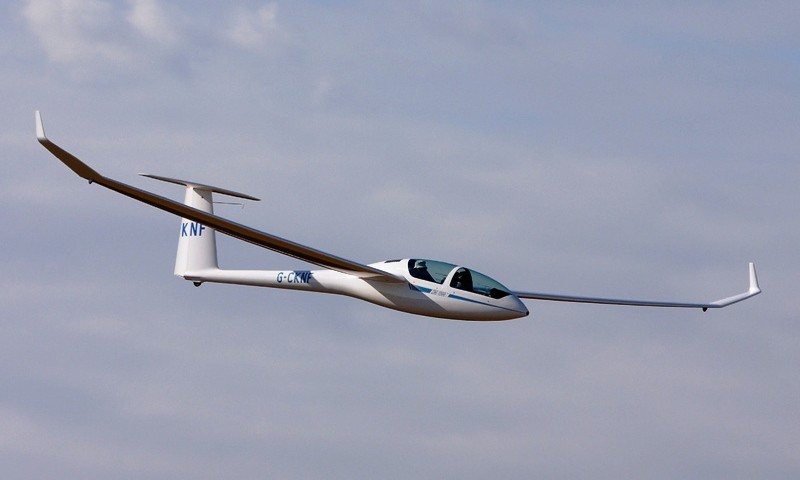
Service History
The DG-1000T established itself as the premier choice for advanced glider training and competition flying within its first decade of operation. In 2011, the United States Air Force Academy selected the DG-1000 series as the TG-16A to replace the aging Blanik TG-10 fleet, recognizing its superior safety record and training capabilities for cadet instruction. The aircraft serves as the primary platform for the Academy's Aerobatic Demonstration Team, showcasing its exceptional aerobatic capabilities with load limits of +7/-5g in the 18-meter configuration.
The Manufacturer
DG Flugzeugbau emerged in the 1970s under the leadership of founders Gerhard Glaser and Wilhelm Dirks, establishing itself as a premier manufacturer of high-performance sailplanes. Operating from their primary facility in Speyer, Germany, the company built a reputation for innovative composite construction and aerodynamic excellence. DG produced 172 aircraft across their model range, with the DG-1000 series representing their most successful two-seat design. The company continues operations today, having evolved their designs through variants like the DG-1001e neo, with recent examples such as HB-2565 delivered as late as 2023.
Engine & Technical Innovation
The DG-1000T's revolutionary design centers on its Solo 2350C powerplant, a 68-kilowatt two-cylinder two-stroke engine mounted on a retractable pylon behind the tandem cockpit. This configuration allows the 91-horsepower engine to fold completely into the fuselage during soaring flight, eliminating drag penalties that plagued earlier motor-glider designs. The engine drives a custom DG-designed carbon-fiber propeller through a 2.3:1 reduction gear, providing a climb rate of 1.3 meters per second while consuming fuel from a 38-liter tank.
The airframe incorporates the HQK-51 airfoil developed specifically by DLR Braunschweig, optimizing the wing's 22.8 aspect ratio for maximum efficiency. Available in both 18-meter and 20-meter wingspan configurations, the aircraft demonstrates DG's mastery of composite construction with a wing area of 17.5 square meters and an empty weight of just 1,016 pounds.
Performance Excellence
Pilots praise the DG-1000T for combining the pure soaring performance of a competition sailplane with the convenience and safety of powered flight. The aircraft achieves a maximum glide ratio of 46.5:1, rivaling single-seat racing gliders, while maintaining a minimum sink rate of just 0.55 meters per second in optimal conditions. With a maximum speed of 168 mph and stall speed as low as 42 mph, the DG-1000T provides an enormous flight envelope for both training and competition use.
The tandem seating arrangement accommodates two pilots with a maximum takeoff weight of 1,653 pounds, including up to 353 pounds of water ballast for penetration flying in strong conditions. This ballast capacity allows pilots to optimize wing loading from 6.6 pounds per square foot up to competitive levels matching single-seat gliders.
International Operations
Production aircraft found homes across multiple continents, with notable examples including N100DG delivered to the United States in 2003, G-WYVN registered in the United Kingdom in 2005, and HA-4528 operating in Hungary. The aircraft's serial number system follows DG's format of 10-XXX designation, with "T" suffix variants clearly identifying the powered models among the fleet.
An experimental variant designated AK-9 and registered as D-KAKJ "Jet" tested alternative propulsion through a 0.400 kN AMT Titan turbojet manufactured by Dutch producer Draline. This research project, conducted in cooperation with KIT's Institute for Thermal Flow engines, demonstrated the airframe's adaptability for advanced propulsion research.
Legacy and Current Status
Approximately 10-15 DG-1000T examples remain active based on recent registration activity, representing a significant portion of DG's total production run. The aircraft's influence extends beyond its production numbers through its demonstration that modern sailplanes could successfully integrate power without compromising soaring performance. This breakthrough paved the way for subsequent self-launching gliders across the industry.
The DG-1000T continues serving in its primary roles of advanced training and competition flying, with examples regularly appearing at national and international soaring competitions. Its selection by the U.S. Air Force Academy validates the design's training effectiveness and safety record, ensuring continued operation well into the future as cadets learn fundamental soaring skills on this technologically advanced platform.