
Development and Design Philosophy
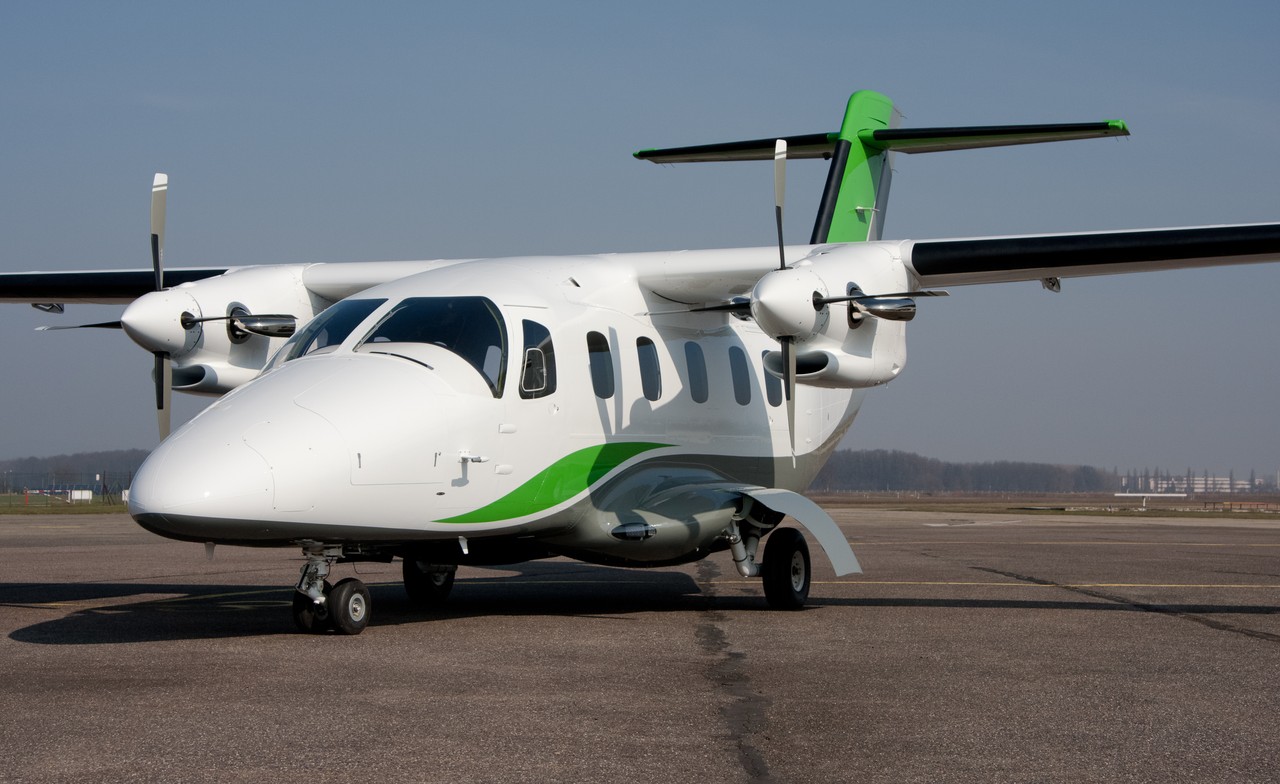
Evektor-Aerotechnik launched the EV-55 Outback project in 2004 with support from the Czech Ministry of Industry and Trade, aiming to fill a specific market gap between aging piston twins and larger turboprop aircraft. The design team envisioned an aircraft capable of replacing workhorses like the Cessna 421 and Britten-Norman Islander while offering superior performance and modern systems. The nearly-square fuselage accommodated five windows per side, optimizing passenger comfort and cargo loading flexibility.
The aircraft's high-wing configuration with T-tail was specifically chosen for operations from unimproved airstrips, a critical requirement for operators in South America, Africa, and Asia where infrastructure often limits aviation options. Trailing-link tricycle landing gear retracts into the nose section and lower fuselage pods, providing durability for rough-field operations while maintaining aerodynamic cleanliness in flight.
First Flight and Testing
On June 24, 2011, Evektor test pilot Josef Charvát and military pilot Major Jiří Hána lifted the EV-55 prototype from Kunovice Airport for its maiden flight. The 30-minute test flight reached 125 knots at 3,500 feet, marking a significant milestone for the Czech manufacturer's most ambitious project to date. The flight demonstrated basic handling characteristics and systems functionality, validating five years of design and engineering work.
The prototype testing phase revealed the aircraft's intended versatility through three distinct configurations: passenger transport, cargo hauling, and a combined version allowing cabin conversion in approximately 20 minutes. This flexibility represented a key selling point for operators requiring multi-role capability without maintaining separate aircraft types.
The Manufacturer's Legacy
Evektor-Aerotechnik brought substantial experience to the EV-55 project, having manufactured aircraft at its Kunovice facility since 1970. By the time of the Outback's development, the company had established itself as one of the world's largest light sport aircraft manufacturers, delivering over 1,400 aircraft to 50 countries with an estimated 1,000,000 flight hours accumulated across the fleet.
The company's expertise in composite construction and light aircraft design, demonstrated through successful models like the EV-97 Eurostar with nearly 1,000 deliveries since 1997, provided the technical foundation for scaling up to turboprop aircraft manufacturing. However, the jump from light sport aircraft to certified commercial aircraft proved significantly more challenging than anticipated.
Powerplant and Performance
Two Pratt & Whitney Canada PT6A-21 turboprop engines, each producing 536 shaft horsepower, drive four-blade AVIA AV-844 constant-speed propellers with 2.082-meter diameter. This powerplant combination promised impressive performance specifications: maximum cruise speed of 220 knots, takeoff distance of just 410 meters, and landing distance of 520 meters, enabling operations from short, unimproved airstrips.
The aircraft's 1,656-kilogram fuel capacity provided an 800-nautical-mile range with nine passengers, positioning it competitively against the Cessna Caravan while offering twin-engine safety margins. The PT6A-21 engines, proven powerplants with extensive global support networks, represented a conservative choice aimed at minimizing operator concerns about maintenance and parts availability.
Production Conforming Aircraft
April 2016 marked another significant milestone when the first production-conforming EV-55 completed its maiden flight from Kunovice. This aircraft incorporated refinements identified during prototype testing and moved closer to the final certification standard required for commercial sales. By June 2018, Evektor had established a $4 million price point for the completed aircraft, positioning it competitively within the twin-turboprop market segment.
The bulk of initial orders originated from operators in South America, Africa, and Asia, validating the design team's market analysis. Evektor targeted expansion into North America, Brazil, Russia, India, China, and Australia, recognizing these regions' substantial markets for utility aircraft capable of operating from challenging airfields.
Project Suspension and Future Prospects
Development suspension on March 16, 2017, dealt a devastating blow to the EV-55 program due to "some uncertainties" with Malaysian investors. The company had secured backing from a Malaysian firm supported by former Premier Mahathir Mohamad to complete certification scheduled for 2017, but funding proved insufficient for full production launch.
By December 2018, Evektor was exploring an EVE-55 hybrid electric conversion scheduled to fly in 2020. This variant would feature a single PT6A-21 engine driving a 400-kilowatt generator in the rear compartment, promising 18 percent fuel savings and reduced noise while maintaining payload and performance capabilities. However, the hybrid program's current status remains unclear.
Legacy of an Unfinished Dream
The EV-55 Outback represents both the ambition and challenges facing smaller aircraft manufacturers attempting to enter certified commercial aviation. While Evektor successfully demonstrated the aircraft's technical feasibility and market appeal, the financial requirements for certification and production scaling ultimately proved insurmountable without sustained major investment. The project stands as a reminder that engineering excellence alone cannot guarantee commercial aviation success in an industry where certification costs and market access barriers favor established manufacturers.