
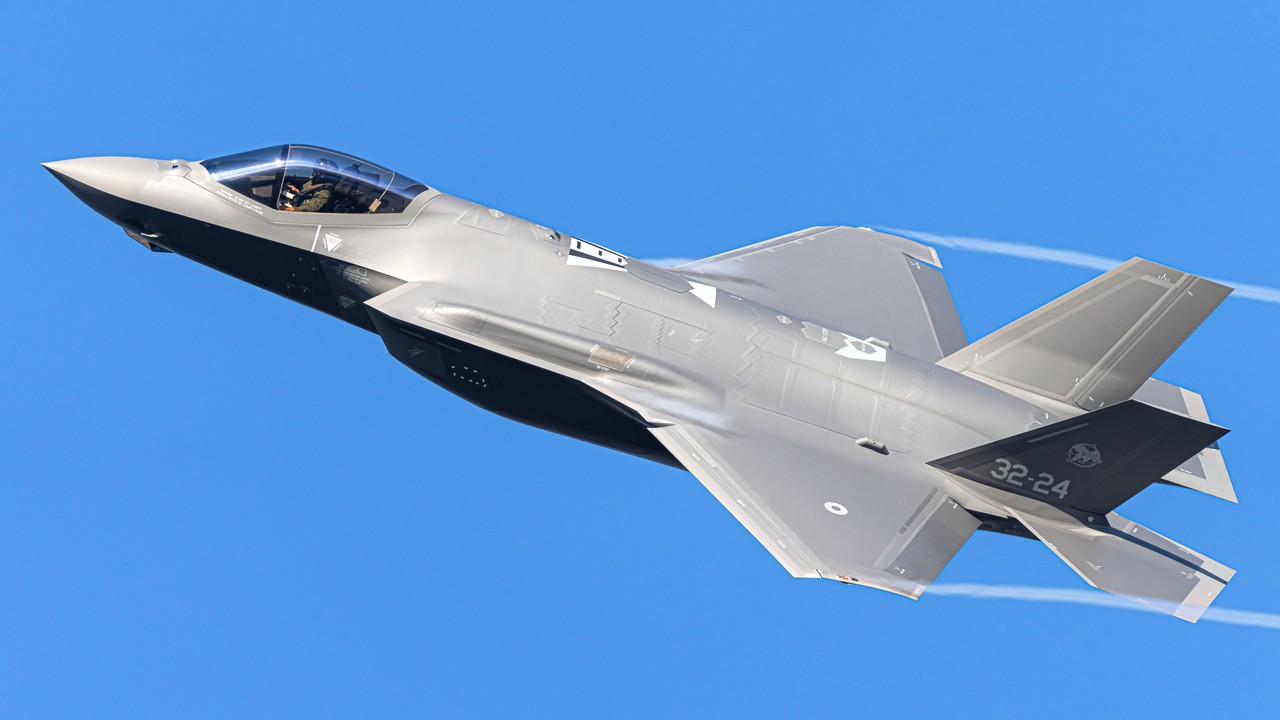
Development and Design
The F-35C emerged from the Joint Strike Fighter program launched in 1995, representing the most ambitious fighter development effort in aviation history. Lockheed Martin's Skunk Works division in Palmdale, California, developed the X-35C prototype, which completed its maiden flight on December 16, 2000, flying from Palmdale to Edwards Air Force Base. The prototype accumulated 73 flights by March 11, 2001, demonstrating the viability of a carrier-based stealth fighter.
Unlike its Air Force and Marine Corps siblings, the F-35C required extensive modifications for the demanding environment of aircraft carrier operations. Engineers enlarged the wings compared to the F-35A and F-35B variants, providing the additional lift necessary for carrier approaches and landings. The landing gear received substantial reinforcement to withstand the tremendous stresses of arrested landings, while the airframe was strengthened throughout to handle catapult launches.
The Manufacturer
Lockheed Martin emerged as the prime contractor following the merger of Lockheed Corporation, founded in 1926, and Martin Marietta in 1995. The company's victory over Boeing in the Joint Strike Fighter competition was announced on October 26, 2001, marking one of the largest defense contracts in history. The Skunk Works division, famous for developing revolutionary aircraft like the U-2 and SR-71, earned the prestigious Collier Trophy in 2002 specifically for developing the F-35B's innovative lift fan system.
Final assembly and checkout operations take place at Air Force Plant 4 in Fort Worth, Texas, with additional production lines established in Italy and Japan to serve international partners. Major subcontractors Northrop Grumman and BAE Systems contribute critical components, making the F-35 program a truly international effort.
Engine and Technical Innovation
The F-35C draws its power from the Pratt & Whitney F135-PW-400 turbofan engine, a derivative of the F119 that powers the F-22 Raptor. Pratt & Whitney, now part of RTX Corporation, received the engine development contract alongside the overall JSF award on October 26, 2001. The F135 enables supersonic flight, a milestone first achieved by the F-35 program on November 13, 2008.
The aircraft's stealth characteristics represent a fundamental departure from previous carrier-based fighters. Internal weapons bays maintain the aircraft's low radar signature while carrying both air-to-air and air-to-ground ordnance. The sophisticated sensor fusion system integrates data from multiple sources, providing pilots with unprecedented situational awareness in combat environments.
Production and Service Entry
Production began with low-rate initial production starting in 2008-2009, with the first production-representative F-35C unveiled on July 28, 2009. The program faced significant delays and cost overruns, with Initial Operating Capability originally planned for 2010 but not achieved until February 2019 with the U.S. Navy.
The first operational squadron achieved safe-for-flight status in December 2018, following extensive operational testing throughout 2018. The F-35 program accumulated more than 17,000 flight test hours by April 2018, validating the aircraft's complex systems and capabilities. Full-rate production approval finally came in March 2024, enabling production of 156 aircraft annually across all manufacturing sites.
Operational Capability
As of 2024, the F-35C serves exclusively with the U.S. Navy, filling multiple roles including air superiority, strike missions, electronic warfare, and reconnaissance. The aircraft's multirole capability allows it to replace several legacy types with a single platform, simplifying logistics and training requirements.
The F-35C has not yet seen combat operations, but its advanced capabilities position it as the cornerstone of future naval aviation. The aircraft's 8,000-hour service life and ongoing Block 4 upgrade program, targeted for completion by 2031 with some enhancements deferred to the mid-2030s, ensure its relevance for decades to come.
Legacy and Future
With over 1,000 F-35s of all variants produced by 2024, the Lightning II program represents the largest fighter production effort of the 21st century. While the F-35C constitutes the smallest portion of total production, focusing on U.S. Navy requirements, its development validated critical technologies for carrier-based stealth operations.
The aircraft's significance extends beyond pure military capability, representing a fundamental shift in how modern air forces approach multirole combat aircraft. Despite early program challenges, the F-35C's achievement of full operational capability with the U.S. Navy establishes it as the foundation of American carrier aviation for the foreseeable future.