
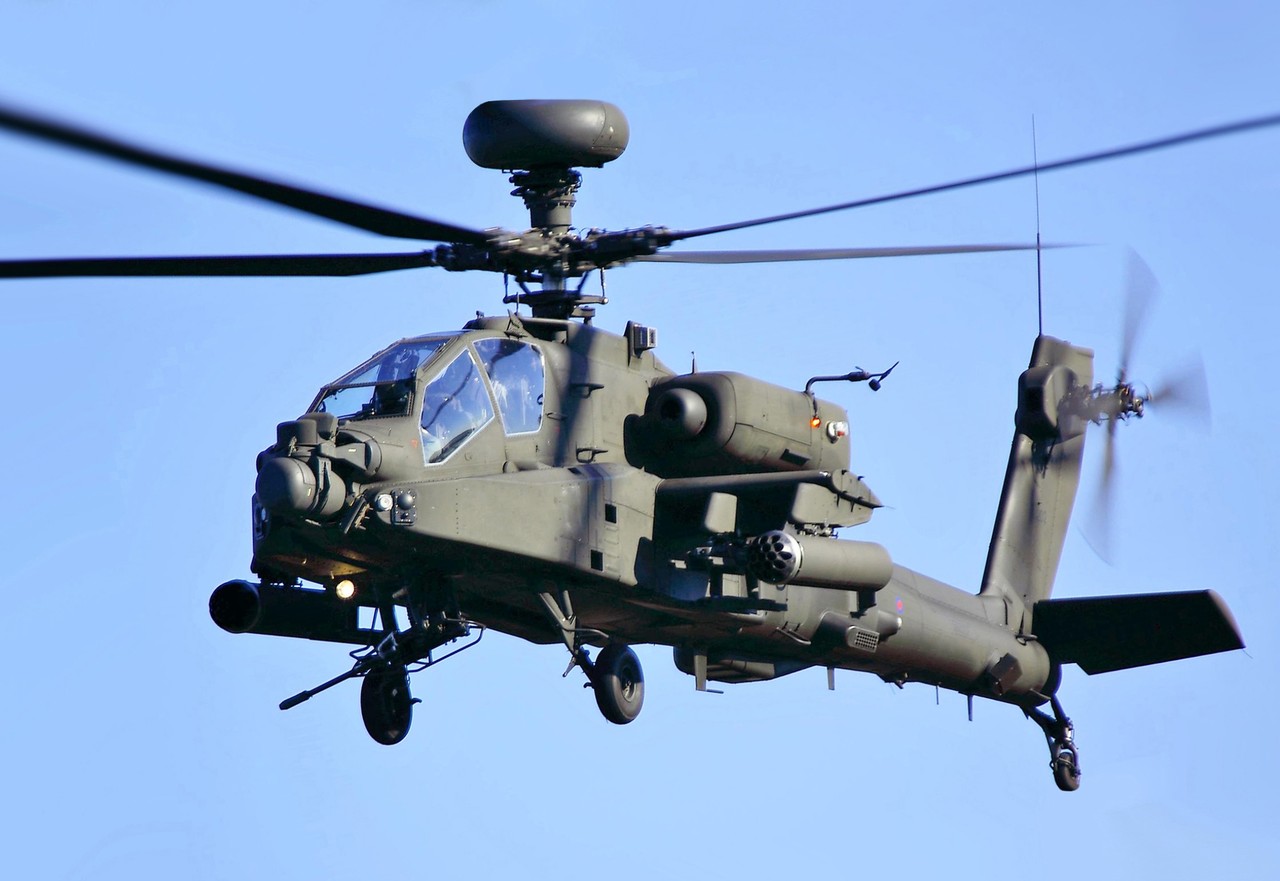
Development and Selection
The Apache AH.1's origins trace back to July 1995, when Westland Helicopters and the Apache platform emerged victorious over competing Tiger and Cobra variants. British military officials favored the Apache specifically because it was already combat-proven, while rival designs required additional development that introduced unacceptable risk. The UK Ministry of Defence formalized this decision in April 1996, signing a contract for 67 helicopters with AgustaWestland serving as prime contractor alongside Boeing, Lockheed Martin, and Longbow International.
Manufacturing and Production
Production began in earnest during 1998, with the first prototype WAH-64 Apache rolling out in September of that year. Boeing constructed the initial eight aircraft in the United States, while the remaining 59 helicopters were assembled at Westland's Yeovil facility in Somerset from Boeing-supplied component kits. This arrangement allowed British workers to gain expertise with Apache systems while maintaining quality control standards established by the original manufacturer.
The British Army authorized the first nine helicopters for service on January 16, 2001, marking a significant milestone in the program. Production continued steadily until July 2004, when the 67th and final Apache AH.1 was delivered to the Army, completing the contracted fleet exactly on schedule.
Technical Modifications
British requirements necessitated significant modifications from the standard AH-64D configuration. Most notably, the AH.1 features twin Rolls-Royce Turbomeca RTM322 turboshaft engines rather than the American General Electric T700 powerplants. Each RTM322 engine delivers 1,566 kW of maximum takeoff power and incorporates full authority digital engine control (FADEC) systems for enhanced reliability and performance.
These powerplant changes required extensive integration work but provided the British Army with engines already familiar to their maintenance personnel through other helicopter programs. The twin-shaft RTM322 design offered excellent power-to-weight characteristics while maintaining commonality with existing British logistics chains.
Operational Performance
The Apache AH.1 demonstrates impressive performance capabilities suited to British tactical doctrine. The helicopter achieves a cruise speed of 259 kilometers per hour and maintains a maximum operational range of 537 kilometers. Internal fuel capacity reaches 1,421 liters, providing an endurance of 2 hours and 45 minutes during typical combat missions.
These specifications enabled the AH.1 to fulfill its intended role as replacement for the aging Westland Lynx AH7 in British Army service. The Apache's superior firepower, advanced sensors, and all-weather capability represented a substantial upgrade over previous British attack helicopter capabilities.
Service Entry and Combat Debut
The first Apache-equipped British regiment achieved full operational status in May 2005, nearly four years after initial aircraft deliveries began. This extended workup period reflected the complexity of transitioning to an entirely new weapons system while training pilots and maintenance personnel on unfamiliar American-derived technologies.
The Apache AH.1 made its combat debut during February 2007, when eight aircraft deployed to Afghanistan as part of 16 Air Assault Brigade operations. These helicopters were drawn from No. 656 Squadron and No. 664 Squadron of 9 Regiment Army Air Corps, based at Dishforth Airfield. The Afghan deployment validated British modifications and demonstrated the AH.1's effectiveness in demanding operational conditions.
Modernization Programs
Recognizing the need for continuous capability improvements, the Ministry of Defence awarded a $212 million contract in May 2005 for Apache Arrowhead sensor system upgrades across all 67 aircraft. This enhancement program was scheduled for completion by 2010 and significantly improved the helicopter's surveillance and target acquisition capabilities.
Additional modifications followed in 2009, when AgustaWestland announced integration of new external fuel tanks featuring ballistic protection. These improvements extended operational range while providing enhanced survivability during extended missions in hostile environments.
Current Operations
Today, the Apache AH.1 serves with two Army Air Corps regiments: 3 Regiment AAC and 4 Regiment AAC, both integral components of 16 (Air Assault) Brigade. This organizational structure ensures rapid deployment capability while maintaining high readiness standards for British rapid reaction forces.
In October 2009, AgustaWestland secured a €480 million Apache Integrated Operational Support contract extending through 2014. This comprehensive support arrangement maintained fleet availability while managing lifecycle costs for the 67-aircraft inventory.
Service Life Extension
Originally scheduled for retirement around 2030, the Apache AH.1 fleet has undergone capability sustainment programs extending service life to 2040. However, American withdrawal of support for AH-64D Block I systems created upgrade pressures, with major modifications anticipated by 2017 but subsequently delayed to 2019-2020 due to US budget constraints.
This extended service life reflects the Apache's continued relevance to British military requirements and the substantial investment represented by the 67-aircraft fleet.