
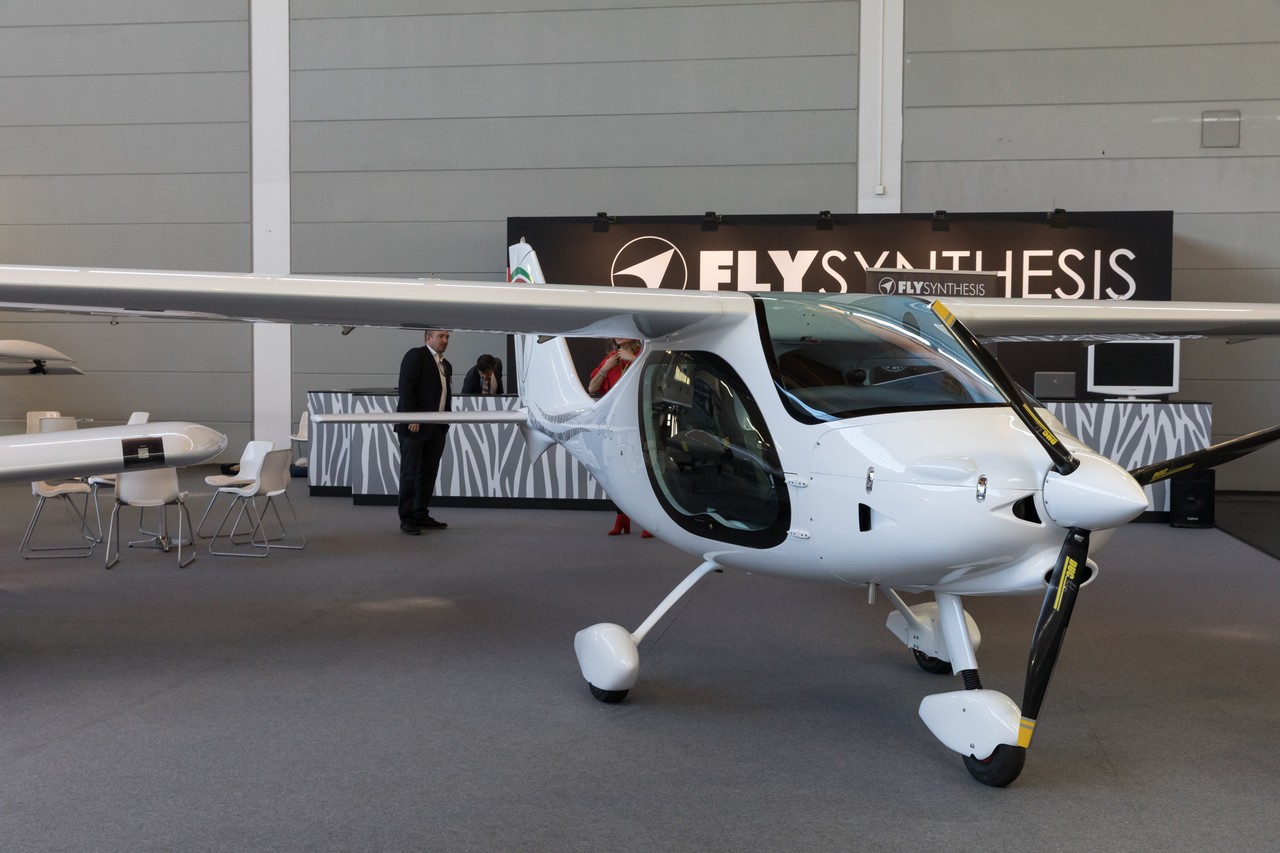
Revolutionary Design Philosophy
The Syncro emerged from Fly Synthesis's commitment to pushing the boundaries of what ultralight aircraft could achieve. Unlike traditional ultralights that prioritized simplicity over performance, the Syncro incorporated advanced aerodynamics and carbon fiber composite construction to deliver airliner-like cruise speeds while maintaining compliance with both European microlight regulations and US Light Sport Aircraft rules. The aircraft's mirror-polished surfaces and harmonious fluid shapes made it an immediate standout at the 2009 Aero show in Friedrichshafen, where aviation journalists described it as "one of the most attractive aircraft" unveiled that year.
Record-Breaking Performance
The Syncro's capabilities were dramatically demonstrated in 2015 when a standard production aircraft departed from Fly Synthesis headquarters in Italy and flew solo to La Tierra del Fuego at the southern tip of South America, completing the journey in just 28 days. This Guinness World Record flight included an unassisted Atlantic crossing, proving that modern ultralight aircraft could undertake intercontinental voyages previously reserved for much larger aircraft. The journey showcased the Syncro's exceptional fuel efficiency of 18 liters per hour at 75 percent power and its ability to maintain cruise speeds of 230-250 km/h over vast distances.
Manufacturing Heritage and Transition
Fly Synthesis, founded in the late 1980s in Gonars, Italy, established itself as an innovative ultralight manufacturer with its first aircraft, the Storch, in 1990. The company changed ownership in 2000 and relocated to a 3,000-square-meter facility in Mortegliano in 2006, positioning itself beside a former World War II military base. This strategic location provided the infrastructure necessary for manufacturing advanced composite aircraft like the Syncro.
In 2024, Gryphen Aircraft Industries Srl acquired all assets of Fly Synthesis, including the Mortegliano factory, ensuring continued production of the Syncro alongside other models in the lineup. The transition maintained the aircraft's Italian heritage while securing its future in the competitive light sport aircraft market.
Technical Innovation
The Syncro's performance stems from its sophisticated engineering approach. The cantilever high-wing design eliminates external bracing while providing excellent stability and ground clearance. Wing flaps enhance low-speed handling, enabling takeoff and landing runs of just 150 meters despite the aircraft's high cruise speeds. The 10.54-square-meter wing area delivers a wing loading of 44.83 kg/m² in the microlight variant, contributing to the aircraft's impressive maximum speed of 295 km/h.
The Rotax 912 ULS powerplant, manufactured by BRP-Rotax, provides 100 horsepower through its four-cylinder, four-stroke design combining liquid and air cooling. This engine choice proved ideal for the Syncro's mission profile, delivering sufficient power for high-speed cruise while maintaining the fuel efficiency necessary for long-range flights.
Operational Variants
Fly Synthesis developed two primary variants to serve different regulatory environments. The Syncro ULM variant complies with FAI microlight rules, featuring a maximum gross weight of 472.5 kilograms and an empty weight of 289 kilograms. The LSA variant, certified for the US market, operates at a higher gross weight of 600 kilograms and carries 130 liters of fuel compared to the ULM's 100-liter capacity.
Both variants maintain similar performance characteristics, with the LSA version achieving slightly higher cruise speeds and extended range capabilities. The aircraft's stall speed ranges from 64 km/h in the ULM variant to 73 km/h in the LSA configuration, providing excellent low-speed handling characteristics essential for sport flying.
Legacy in Light Aviation
The Syncro represents a pivotal moment in ultralight aircraft development, demonstrating that recreational aircraft could achieve performance levels approaching those of traditional general aviation aircraft while maintaining the accessibility and operating economics of the ultralight category. Its success influenced subsequent designs across the industry and helped establish carbon fiber construction as the standard for high-performance light sport aircraft.
Today, Syncro aircraft continue flying in private hands across Europe, with documented registrations in Italy, Belgium, and Hungary. While exact production numbers remain proprietary, the aircraft's continued availability under Gryphen Aircraft Industries ensures that its innovative design philosophy will influence future generations of light aircraft. The 2015 record flight remains a testament to the transformative potential of modern ultralight aircraft, proving that adventure flying knows no boundaries when supported by thoughtful engineering and advanced materials.