
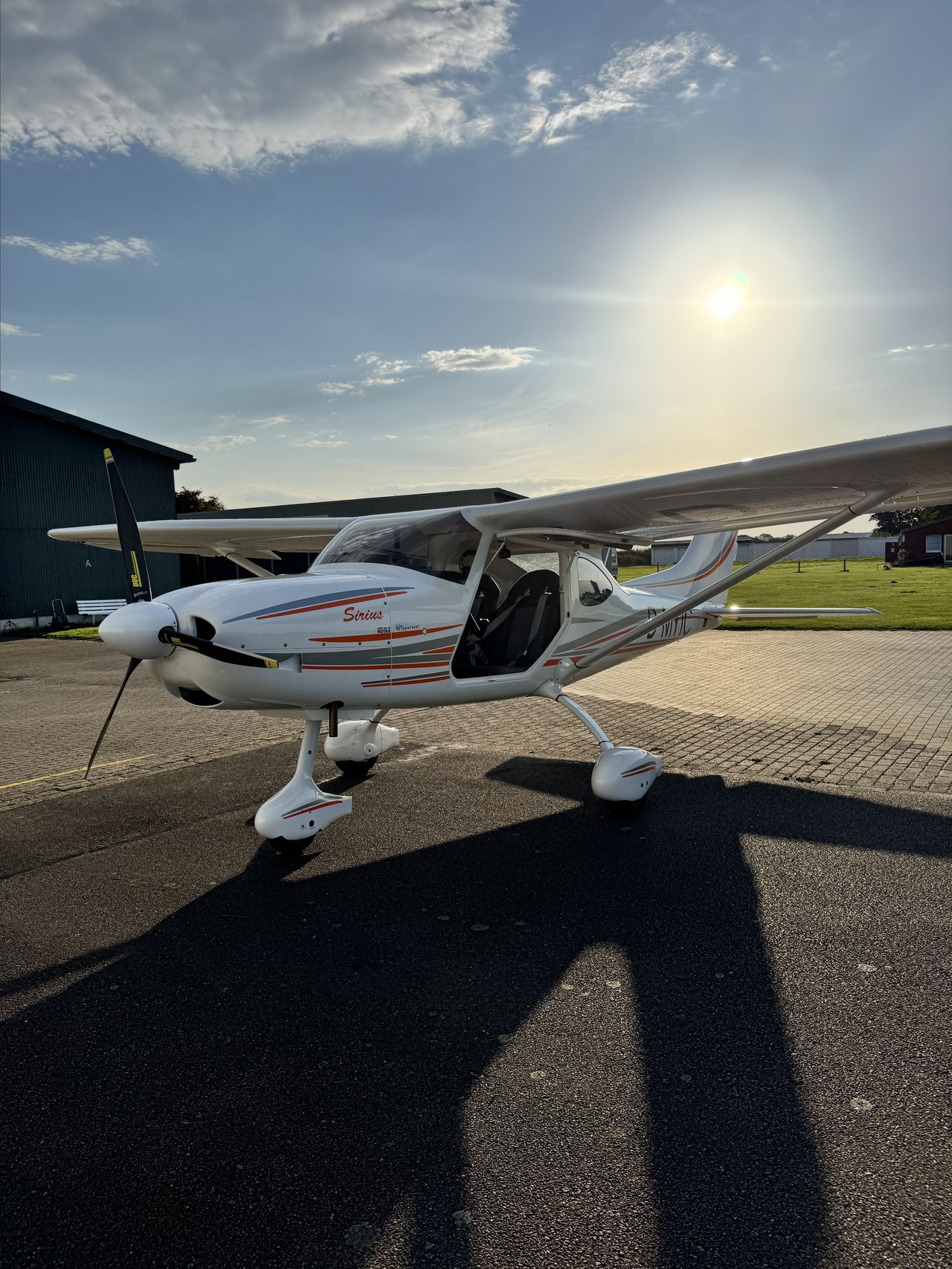
Development and Design Philosophy
The TL-3000 Sirius emerged from TL Ultralight's two decades of experience building over 700 aircraft from their Star and Sting families. Company founder Jiri Tlusty, who established the firm in 1989 after initially designing powered hang gliders, personally led the Sirius design team with ambitious goals: create an aircraft that could satisfy both European ultralight regulations and the newly established American Light Sport Aircraft category.
First announced at Aero '07 as an unflown prototype, the Sirius represented a significant technological leap for TL Ultralight. The company invested heavily in CAD/CAM and CNC manufacturing methods, departing from their earlier aluminum construction in favor of advanced composites. The carbon fiber wing paired with a glass-carbon fiber fuselage delivered exceptional strength-to-weight ratios while enabling the sleek aerodynamics that would define the aircraft's performance.
Tragedy struck the development program in July 2008 when the prototype was lost in a fatal accident, just two months after its successful maiden flight on May 21, 2008. Despite this setback, TL Ultralight pressed forward with development, ultimately launching production in 2010.
Manufacturing Excellence
TL Ultralight's commitment to quality control distinguished the Sirius production program. Operating from their facilities at Hradec Králové airport, the company maintained complete vertical integration, conducting all design, production, testing, and quality assurance in-house. This approach enabled them to sustain a steady production rate of 9 to 10 aircraft monthly across their entire product line.
Jiri Tlusty personally test-flew every aircraft before delivery, a practice that ensured consistent quality and provided direct feedback for continuous improvement. This hands-on approach reflected the company's evolution from its humble beginnings building hang gliders to becoming a sophisticated manufacturer producing FAA-approved special light-sport aircraft.
By September 2010, 22 Sirius aircraft had found homes with customers spanning six countries: Angola, Australia, the Netherlands, New Zealand, Norway, and the United States. This early international acceptance validated the aircraft's cross-regulatory appeal. Production accelerated through the following years, reaching 100 completed aircraft by 2015.
Technical Innovation
The Sirius incorporated several innovative design features that set it apart from competitors. The "conformed cowl" engine installation minimized drag while housing the reliable Rotax 912 ULS powerplant. This Austrian-built four-stroke engine delivered 79.9 horsepower through a 2.43:1 reduction gearbox, driving a three-bladed Woodcomp propeller.
The fixed tricycle landing gear featured wheels almost completely enclosed in aerodynamic spats, reducing drag without the complexity and weight penalties of retractable systems. For operators requiring water capability, TL Ultralight designed float installation provisions, expanding the aircraft's operational envelope.
Inside the cockpit, designers prioritized visibility and comfort. The high-wing configuration provided unlimited upward and lateral visibility, while the side-by-side seating arrangement facilitated instruction and passenger comfort. Despite the compact external dimensions, engineers incorporated a surprisingly spacious luggage compartment, addressing practical touring requirements.
Performance and Capabilities
The Sirius delivered impressive performance figures that justified its premium composite construction. Maximum speed reached 140 mph, with a comfortable cruise speed of 116 knots. At the low end, stall speed dropped to just 35 knots with full flaps, providing excellent short-field capability. The never-exceed speed of 160 mph offered a substantial margin above normal cruise speeds.
Range performance particularly impressed operators, with 870 miles possible from the 34.3-gallon fuel capacity. This endurance, combined with a maximum rate of climb exceeding 1,180 feet per minute at sea level, made the Sirius suitable for serious cross-country touring despite its ultralight category.
The aircraft's dual certification approach proved successful, with empty weight of 655 pounds allowing operation under ultralight rules with a maximum takeoff weight of 1,042 pounds, while LSA certification permitted operations up to 1,320 pounds gross weight.
Market Reception and Legacy
Despite its technical achievements, the Sirius faced market challenges in Europe, where by mid-2010 only four aircraft appeared on civil registers outside Russia - three in the Czech Republic and one in Norway. This limited European adoption contrasted with stronger acceptance in other markets, particularly where LSA regulations provided clearer operational frameworks.
The aircraft found particular favor in flight training applications, where its docile handling characteristics, excellent visibility, and modern avionics fit well with contemporary training philosophies. Its composite construction also appealed to owners seeking low maintenance requirements and corrosion resistance.
TL Ultralight continued developing the Sirius platform, working on modifications including an electrically adjustable propeller system and an amphibian LSA version. These enhancements demonstrated the design's adaptability and the manufacturer's commitment to evolutionary improvement.
As the fifth production aircraft model from TL Ultralight, the Sirius represented the company's maturation from ultralight specialist to sophisticated aircraft manufacturer, capable of meeting international certification standards while maintaining the performance and economic advantages that defined the light sport aircraft revolution.