
Production and Manufacturer History
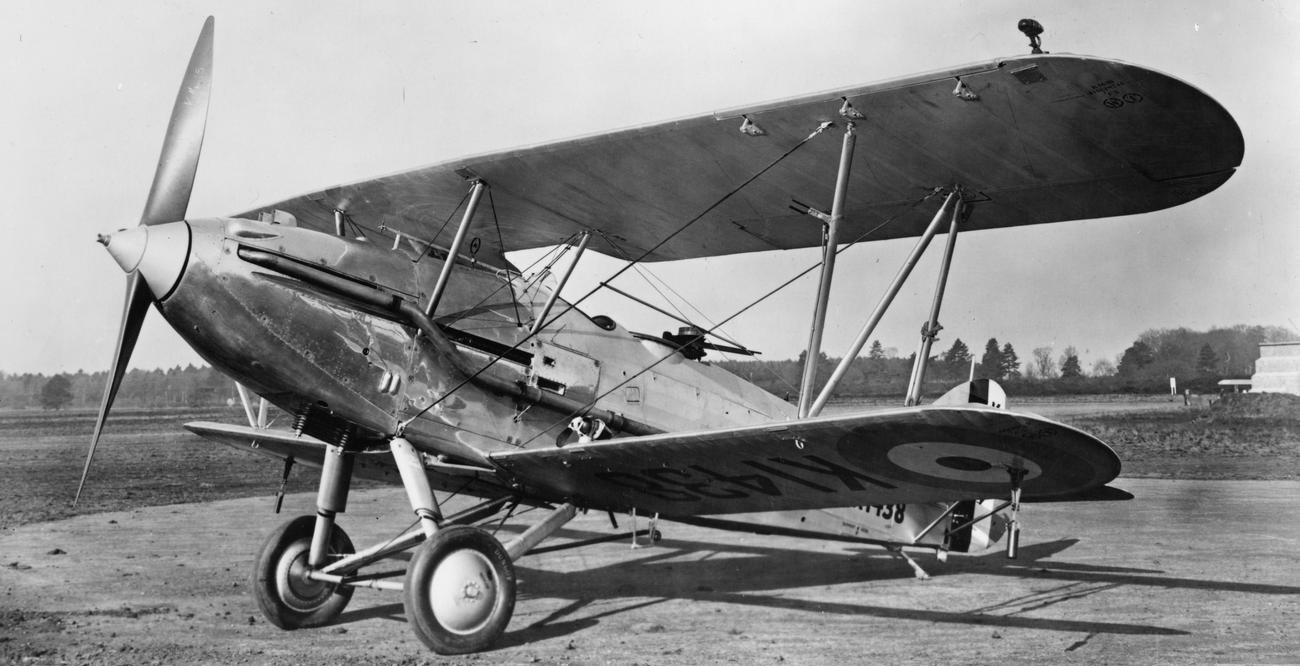
The Hawker Audax was developed by Hawker Aircraft as a specialized army cooperation variant of the Hawker Hart. The first production aircraft, serial K1995, took its maiden flight on December 29, 1931. While a precise production window is not explicitly documented, the aircraft was manufactured during the early-to-mid 1930s, with total production exceeding 700 airframes. The aircraft's lineage is tied to the evolution of Hawker Aircraft, which grew from the H.G. Hawker Engineering Company formed in 1920 by former Sopwith Aviation Company personnel. By the late 1930s, the company was integrated into the Hawker Siddeley group. Following the nationalization of Hawker Siddeley Aviation into British Aerospace (BAe) in 1977 and a subsequent 1999 merger with Marconi Electronic Systems, the corporate successor is BAE Systems plc.
Design and Technical Specifications
Designed under the leadership of Sir Sydney Camm, the Audax utilized the basic airframe of the Hart to provide high performance for its role. To meet the requirements of army cooperation—including artillery spotting and liaison—the design incorporated specific modifications, most notably a message-pickup hook used to retrieve communications from the ground during flight. It also featured specialized equipment for air-to-ground signaling and radio communication. The aircraft was powered by a single liquid-cooled, supercharged V-12 piston engine from the Rolls-Royce Kestrel family. This configuration allowed the Audax to reach a maximum speed of 170 mph (274 km/h).
Military Service and Legacy
Primarily operated by the Royal Air Force (RAF) and other British Empire air arms, the Audax saw widespread service in Africa, India, and the Middle East. Its primary tactical roles involved reconnaissance and directing artillery fire. For defense, the aircraft was armed with a fixed forward-firing .303 in (7.7 mm) Vickers machine gun and a flexible .303 in (7.7 mm) Lewis light machine gun in the rear cockpit. While the type was declared obsolete from front-line service by the late 1930s, some aircraft continued to operate in secondary roles during the Second World War, particularly in outlying theaters. Service finally concluded by 1945. A notable South African derivative, the Hawker Hartbees, saw 65 units produced locally by the end of 1938. The Audax remains a key example of the versatility of the Hart family airframe, bridging the gap between early biplanes and modern monoplane cooperation aircraft.