
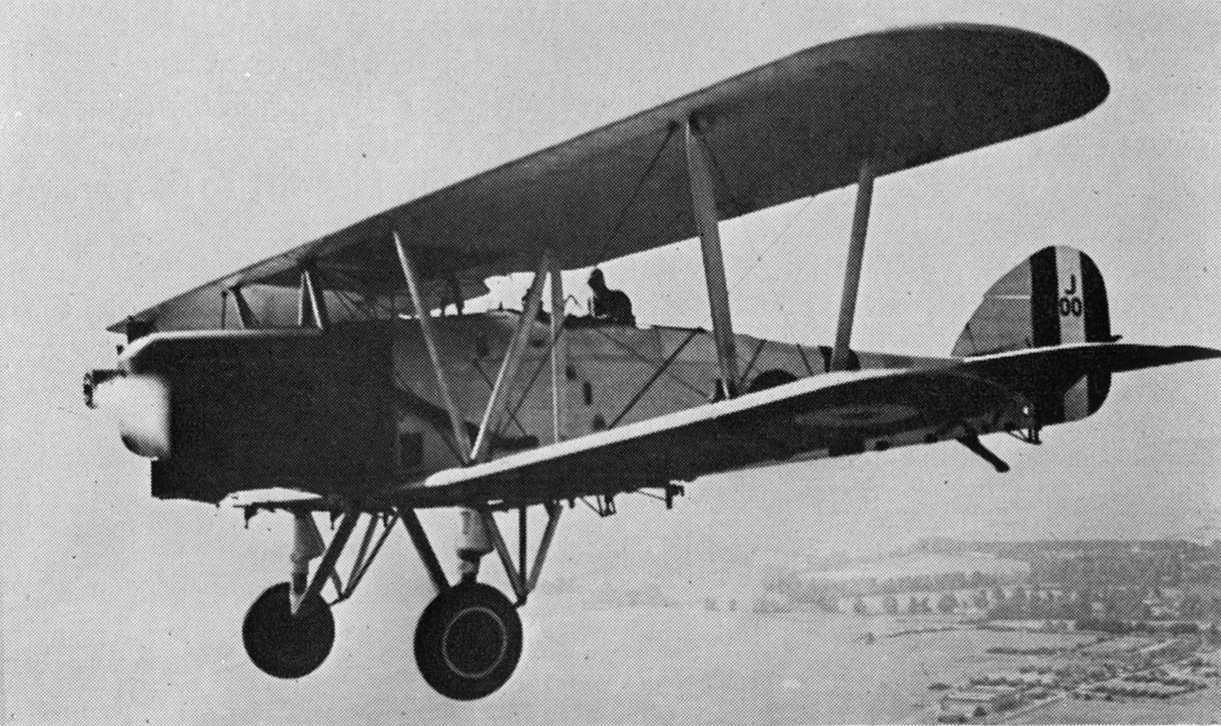
The Hawker Horsley was developed to meet Air Ministry Specification 26/23, with later adaptations to specifications 23/25 and 24/25 to accommodate increased torpedo and bomb loads. Designed by Sydney Camm, who joined H.G. Hawker in 1923 and became chief designer in 1925, the Horsley represented Camm's first major production success. The aircraft was named after Horsley Towers, the home of T.O.M. Sopwith. The prototype, J7511, first flew at Brooklands in March 1925 and was delivered to the Aeroplane and Armament Experimental Establishment (A&AEE) at Martlesham Heath on May 4, 1925.
Production began with the wooden Mk I and transitioned to the mixed-construction Mk II and eventually to all-metal structures. A total of 124 aircraft were built, primarily at Hawker facilities in the Kingston-upon-Thames area. The aircraft was powered by a Rolls-Royce Condor IIIA water-cooled V12 piston engine producing 665 hp, driving a 14 ft 6 in two-bladed Watts wooden propeller. The Horsley was highly regarded by pilots for its agility and outperformed the Fairey Fawn in terms of speed, range, and payload. It featured an internal bomb bay capable of carrying 1,500 lb of bombs or a single torpedo weighing up to approximately 2,800 lb.
The Royal Air Force integrated the Horsley into service between January and September 1927. No. 100 Squadron was the first recipient, and the type served in various roles across several units, including No. 11, No. 15, and No. 33 Squadrons. No. 36 Squadron utilized the Horsley as a torpedo bomber, deploying to Singapore in 1930 and participating in the suppression of a rebellion in Burma. Beyond standard service, the Horsley was used as an engine testbed for various powerplants, including the Napier Lion, Rolls-Royce Buzzard, and early versions of the Rolls-Royce Merlin. One notable long-distance attempt occurred on May 20, 1927, when aircraft J8607, piloted by Flight Lieutenant Charles Roderick Carr and L.E.M. Gillman, flew 3,420 miles from RAF Cranwell before ditching in the Persian Gulf due to fuel exhaustion, briefly setting a world distance record.
Export versions included six Mk II aircraft for the Hellenic Naval Air Service and two Hawker-built Dantorps for Denmark. The Dantorp variant featured an 805 hp Armstrong Siddeley Leopard IIIA radial engine and a crew of three. The RAF phased out the Horsley by 1935, though a Merlin-powered testbed flew as late as March 7, 1938. No complete airframes are known to survive today.