
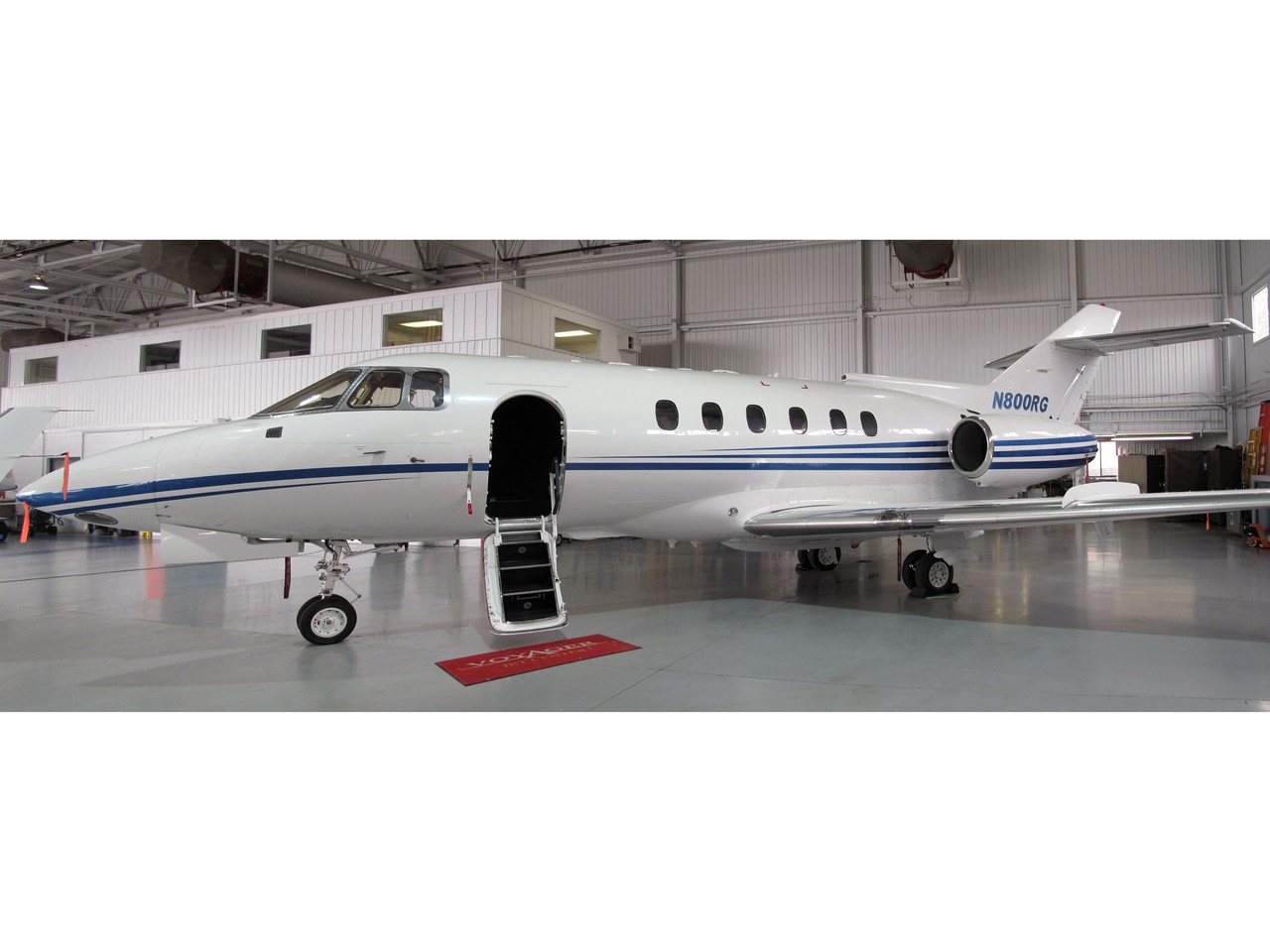
Commercial Dominance
The HS-125-1 established immediate market dominance in the emerging corporate jet sector, becoming the world's highest-selling British civil airliner. Between 1964 and 1970, the Series 1 variant captured significant market share among business aviation customers seeking reliable jet transport for executive operations. The aircraft's design emphasis on small-field capability distinguished it from competitors, allowing corporate operators unprecedented flexibility in airport selection and route planning.
Design Evolution and Development
Originally conceived by de Havilland as the DH.125 Jet Dragon in 1961, the aircraft underwent substantial development before entering production. The first prototype took to the skies on August 13, 1962, followed by a second prototype on December 12, 1962. Production aircraft incorporated significant improvements, including a fuselage extended by 1.2 meters and wingspan increased by 0.9 meters compared to the prototypes. The first production-standard aircraft flew on February 12, 1963, with initial customer delivery occurring on September 10, 1964.
Manufacturing Heritage
Hawker Siddeley had acquired de Havilland in 1960, one year before the DH.125 project commenced, leading to the aircraft's designation change from DH.125 to HS.125 when production began in 1964. All production models were manufactured at the Broughton factory near Chester, though the two prototypes were assembled at de Havilland's Hatfield facility. This manufacturing arrangement established Broughton as the primary production center for what would become Britain's longest-running commercial aircraft program.
The corporate lineage evolved through multiple transformations: Hawker Siddeley was absorbed into British Aerospace in 1977, leading to the BAe 125 designation. In 1993, British Aerospace sold its Business Jets Division to Raytheon, creating Raytheon Hawker. From 1996 onwards, final assembly transferred to Wichita, Kansas, though Broughton continued producing major components under contract.
Engine Technology and Performance
The production HS-125-1 was powered by Bristol Siddeley Viper 520 turbojet engines, an advancement over the Rolls-Royce Viper 20 engines that powered the prototypes. Later Series 1A and 1B variants utilized Bristol Siddeley Viper 521 engines producing 3,100 pounds of thrust each. The Viper engine family represented proven British turbojet technology, providing reliable performance for the demanding business aviation environment.
Series 1A aircraft, specifically configured for US FAA certification requirements, numbered 62 units, while the Series 1B variant for international markets comprised 13 aircraft. This early differentiation between US and international specifications established a pattern that would continue throughout the aircraft's production life.
Operational Excellence
The HS-125-1's operational capabilities centered on its small-field performance and executive transport efficiency. Corporate operators valued the aircraft's ability to access airports unsuitable for larger commercial jets, expanding business aviation's geographic reach. The twin-engine configuration mounted on the rear fuselage provided excellent performance characteristics while maintaining passenger comfort in the forward cabin area.
Pilots appreciated the aircraft's handling characteristics and reliability, factors that contributed to its sustained market acceptance. The combination of jet performance with operational flexibility made the HS-125-1 particularly attractive to corporate flight departments seeking to maximize travel efficiency for executive passengers.
Production Legacy
The HS-125-1 launched what would become aviation's most enduring business jet program, with production spanning from 1962 to 2013 when Hawker Beechcraft's bankruptcy finally ended the line. Over 1,700 examples were built across all variants, making it one of history's most successful business jets. The aircraft achieved several unique distinctions, including being the only business jet model to survive an air-to-air missile strike and the only recorded business jet hijacking.
The November 20, 1975 accident involving demonstrator G-BCUX at Dunsfold Aerodrome marked a tragic chapter in the aircraft's history. Piloted by World War II fighter ace John Cunningham, the HS.125-600B overran the runway following a bird strike, ultimately striking a car on the A281 road and killing six people.
Enduring Impact
The HS-125-1 established design principles and operational standards that influenced business aviation for decades. Its success validated the market for dedicated corporate jets and demonstrated British aerospace industry capability in the commercial sector. The aircraft's 51-year production run from 1962 to 2013 represents an unprecedented achievement in aviation manufacturing, cementing its position as Britain's most successful commercial aircraft program measured by both longevity and numerical production success.