
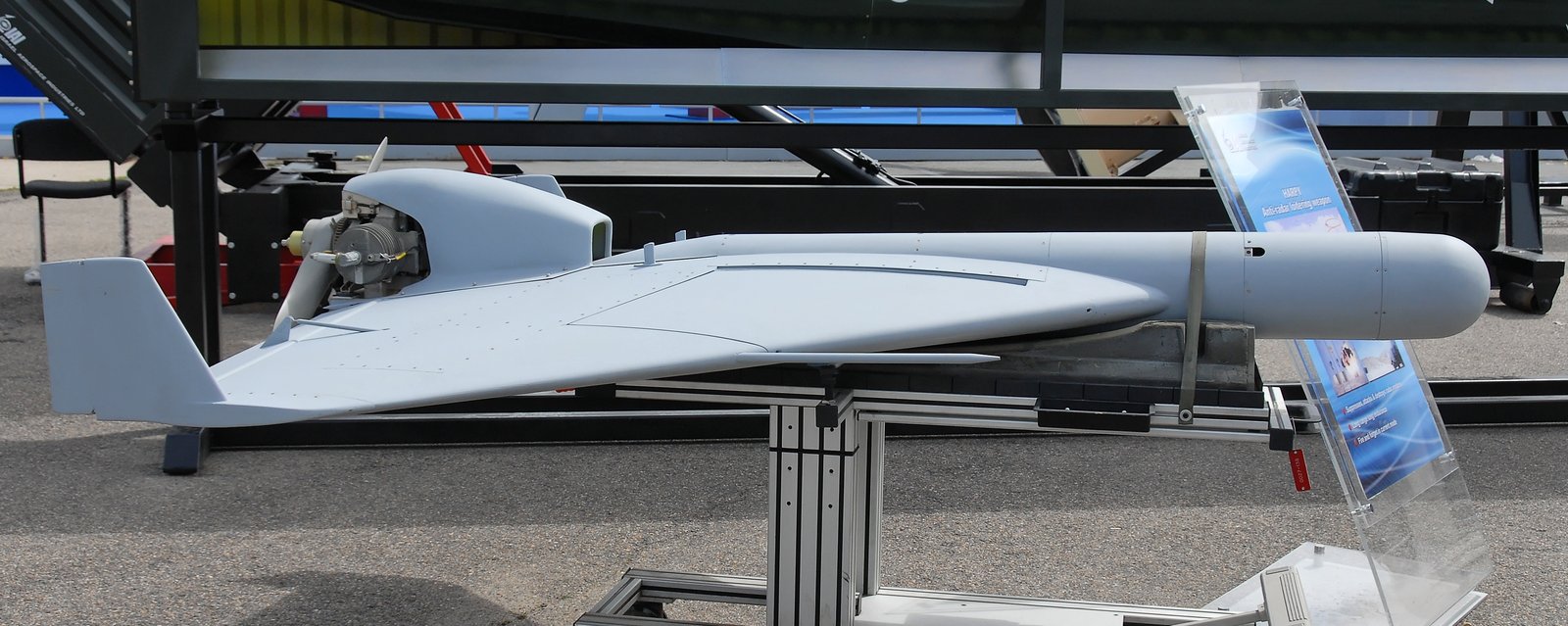
Production and Manufacturer History
The IAI Harpy was developed by Israel Aerospace Industries (IAI), a state-owned aerospace and defense company based in the Tel Aviv and Yehud area of Israel. IAI evolved from the Bedek Aviation Company, which was established in 1953 as a governmental aviation institute. While the specific assembly plant for the Harpy is not detailed in available records, the system remains a core part of IAI's defense portfolio and is currently being marketed for modernization and potential production partnerships within the United States.
Design and Technical Capabilities
Designed as a hybrid between a missile and an unmanned aerial vehicle (UAV), the Harpy is categorized as a loitering munition. Its primary purpose is the suppression and destruction of enemy air defenses (SEAD/DEAD). The system is distinguished by its autonomous search-and-attack capabilities, utilizing an anti-radiation (AR) seeker to identify and target enemy radar emitters.
Technically, the Harpy is an unmanned platform with zero crew. It is designed for long-range missions and is capable of operating in all weather conditions. Notably, the system is engineered to function effectively in contested battlefields or environments where Global Navigation Satellite System (GNSS) signals are denied. While the specific engine model and power output are not disclosed, the aircraft is powered by an internal propulsion system that allows for an endurance of up to nine hours.
Service History and Legacy
The Harpy is launched from either naval or ground-based canisters. It has been adopted by several air forces globally and has established a combat-proven record of success. Specifically, reports indicate that the system has seen battlefield employment by India and Azerbaijan.
As the world's first operational anti-radiation loitering munition, the Harpy's legacy is defined by its influence on the broader category of "kamikaze drones." By integrating autonomous target acquisition with loitering capabilities, it set the architectural precedent for modern loitering-weapon developments used in contemporary electronic warfare and air defense suppression.