
Service History
The MS-230 revolutionized pilot training for the French Armée de l'Air throughout the 1930s, serving as the service's primary elementary trainer. Its widespread adoption meant that nearly every French military pilot who flew combat missions at the start of World War II in 1939 had learned to fly on this aircraft. The design's inherent stability and forgiving flight characteristics made it ideal for transforming civilian recruits into competent aviators.
Beyond France, the MS-230 achieved remarkable international success. Greece operated 43 aircraft between 1930 and 1931, while Romania acquired 20 units. Portugal purchased 16 examples of the MS-233 variant, and Belgium operated 28 aircraft including 19 license-built MS-236 variants produced by SABCA starting in July 1932. Other operators included Brazil with 9 aircraft, Czechoslovakia, Spain's Republican Air Force, Switzerland, Venezuela, and even the United States Army Air Corps.
The Manufacturer
Morane-Saulnier was founded in 1911 by Léon Morane and Raymond Saulnier, establishing itself as a prominent French aircraft manufacturer during World War I. The company gained recognition for producing innovative fighter aircraft, including the famous MS-406 that would later serve as France's primary fighter at the start of World War II. Following the war, Morane-Saulnier was acquired by the Société Nationale des Constructions Aéronautiques du Sud-Est (SNCASE) in 1945 as part of France's aircraft industry nationalization. The company eventually became part of Aérospatiale and ultimately was absorbed into Airbus, no longer existing as an independent manufacturer.
Engine & Technical Innovation
The baseline MS-230 utilized the reliable Hispano-Suiza 9Qa inline piston engine producing 230 horsepower. This powerplant choice proved instrumental in the aircraft's success, providing consistent performance and reliability crucial for training operations. The engine's reputation for dependability made it a preferred choice for training aircraft throughout the interwar period.
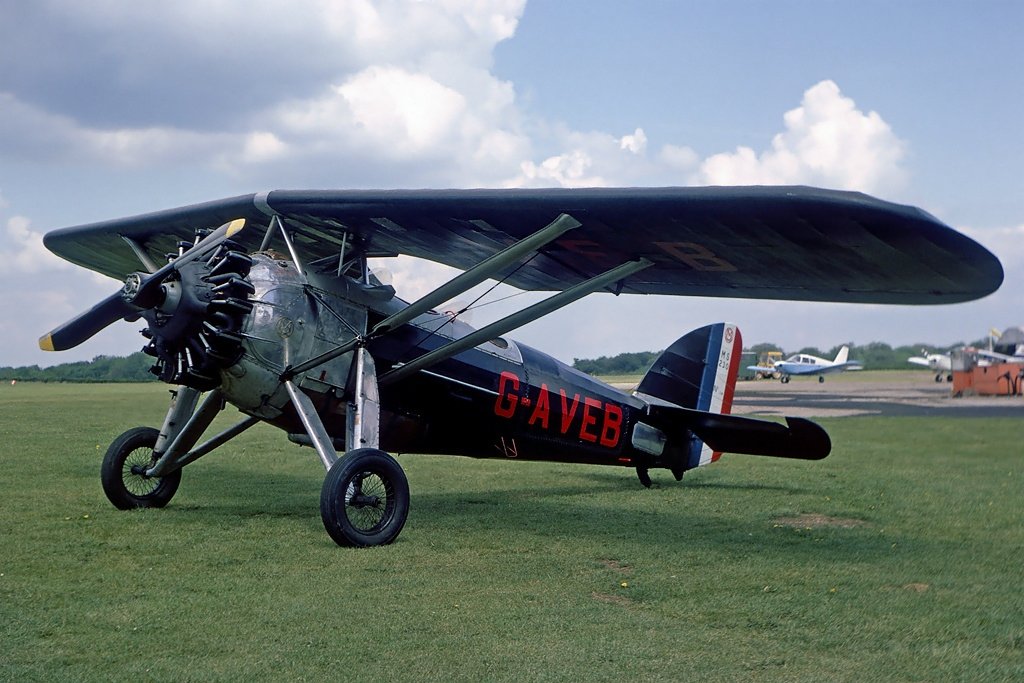
The aircraft's most distinctive feature was its parasol-wing monoplane configuration, which differed significantly from the biplane trainers common in the 1920s. The high-mounted wing provided inherent stability and excellent visibility for both instructor and student in their tandem open cockpits. The fuselage featured metal tubular framing covered in fabric, except for the forward section which was metal-covered for durability.
Variants and Development
Morane-Saulnier developed numerous variants to meet different operational requirements and engine availability. The MS-229 used the Hispano-Suiza 8a V8 engine, with Switzerland operating this version. The MS-231 featured the 240-horsepower Lorraine 7Mb engine, with six built in 1930. The experimental MS-232 utilized the Clerget 9Ca diesel engine producing 200 horsepower, though only one example was constructed in 1930.
The MS-233 variant proved popular internationally, powered by the Gnome-Rhône 5Ba or 5Bc engine producing 230 horsepower. Portugal operated 16 of these aircraft. The MS-234 used the more powerful Hispano-Suiza 9Qa engine rated at 250 horsepower, while the MS-235 featured the 300-horsepower Gnome-Rhône 7Kb engine, with only one built in 1930.
Notable Operations and Recognition
The MS-230's capabilities extended beyond basic training. One example won the prestigious Michelin Cup in 1929, demonstrating the aircraft's versatility and performance. The type also served in specialized roles, with some aircraft fitted with Handley Page slats for advanced handling trials and others equipped with skis for winter operations.
Famous aviator Michel Detroyat flew an MS-234/2 variant aerobatically until 1938, showcasing the aircraft's structural integrity and maneuverability. This particular aircraft, designated as a former MS-130 racer, demonstrated the design's adaptability to different mission requirements.
Production and Legacy
Total production reached 1,005 aircraft across all variants, making it one of the most successful training aircraft of the interwar period. Manufacturing occurred primarily at Morane-Saulnier facilities in France during the early 1930s, with license production of 19 MS-236 variants by SABCA in Belgium.
The MS-230's influence extended into popular culture, appearing as the "new monoplane" in the 1966 aviation film "The Blue Max." Today, at least one example remains airworthy, assembled by Levasseur and available for sale. The Palm Springs Air Museum displays an MS-230, preserving this important chapter in aviation training history for future generations.
The aircraft's legacy lies in its role as France's premier training platform during a critical period in military aviation development, bridging the gap between post-World War I reconstruction and World War II preparedness through innovative monoplane design and exceptional flight stability.