
Service History
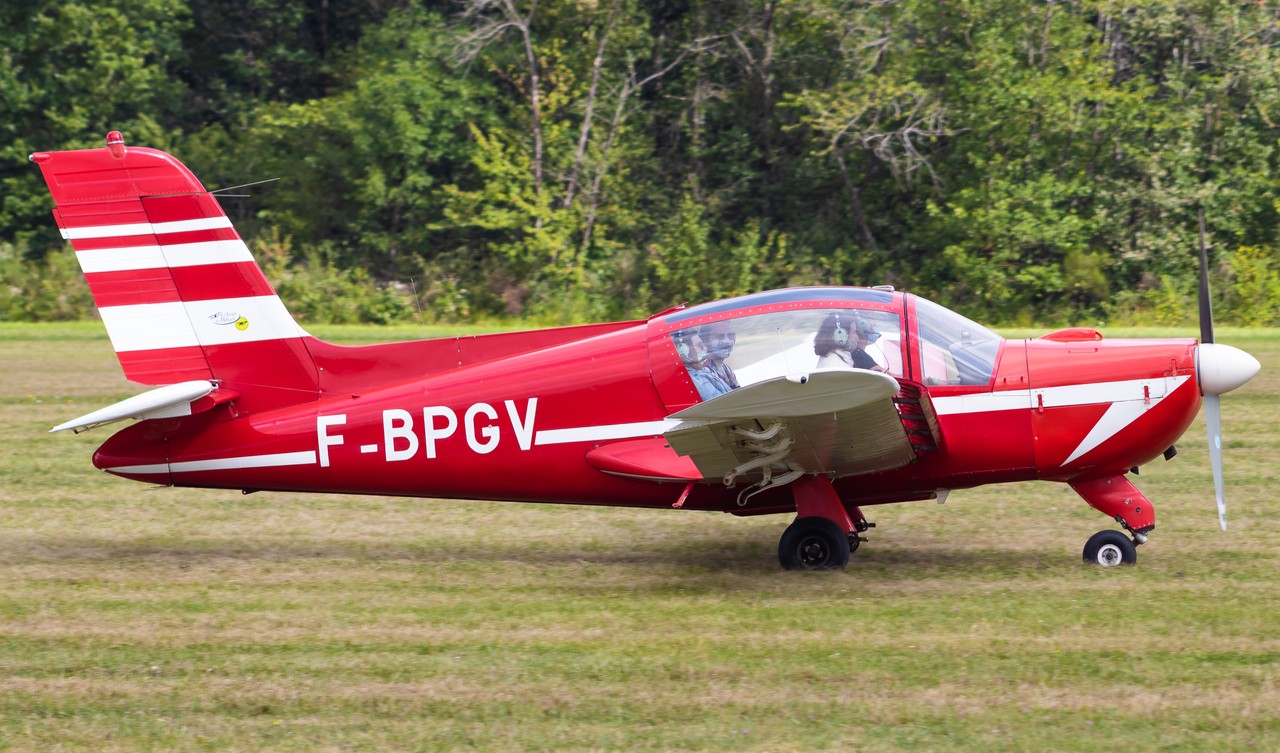
The MS-880 Rallye achieved remarkable success in European aviation training, becoming the most widespread aircraft in French aero clubs within a decade of its introduction. By the early 1970s, it ranked as Europe's second most common training aircraft after the Cessna 172. The type was exported to 65 countries, serving roles in tourism, flight training, sport aviation, and glider towing operations. Its fixed tricycle landing gear and docile handling characteristics made it ideal for ab initio pilot training, replacing aging Stampe SV-4 biplanes throughout French aviation schools.
Military Operations
Approximately 500 of the 3,500 Rallye aircraft built served military operators. The French military incorporated the type into training squadrons Escadrilles de Servitude 50S and 51S for basic pilot instruction. Poland became the largest military customer in 1967, ordering approximately 30 aircraft designated Koliber for manufacture under license by PZL. The Polish Air Force operated these aircraft until 1989, utilizing them for glider towing and aerial target operations alongside pilot training duties.
The Manufacturer
Morane-Saulnier, established in 1911, designed the Rallye in 1958 to meet a French government competition for modern training aircraft. The company had built its reputation on innovative designs throughout both world wars. In 1965, Sud-Aviation acquired Morane-Saulnier, with production subsequently transferred to SOCATA following corporate restructuring. When DAHER purchased SOCATA in early 2009, they inherited the Rallye's legacy along with the successful TB series that replaced it in 1985.
Engine & Technical Innovation
The prototype MS-880 initially flew with an underpowered 90-horsepower Continental C90-14F engine, which Jean Cliquet, the test pilot, immediately identified as inadequate during the first flight at Villacoublay on June 10, 1959. Engineers upgraded the production MS-880B Rallye Club to the reliable 100-horsepower Continental O-200-A, a four-cylinder, horizontally-opposed engine that became the standard powerplant. The aircraft's most significant innovation was its combination of leading-edge slats and trailing-edge flaps, enabling exceptional low-speed handling characteristics crucial for training operations.
Design Excellence
The Rallye represented a revolutionary departure from traditional training aircraft design. Its all-metal construction replaced fabric-covered structures, while fixed tricycle landing gear eliminated the ground handling challenges associated with tailwheel aircraft. The low-wing configuration provided excellent stability, and the side-by-side seating arrangement facilitated effective instruction. With an empty weight of 465 kilograms and maximum takeoff weight of 800 kilograms, the aircraft offered a useful load of 335 kilograms for fuel, passengers, and equipment.
Performance Characteristics
Pilots praised the Rallye's forgiving flight characteristics and robust construction. The aircraft cruised at 180 kilometers per hour with a maximum speed of 270 kilometers per hour, while its range of 1,090 to 1,140 kilometers made it suitable for cross-country training flights. The leading-edge slats provided exceptional stall characteristics, automatically deploying at low speeds to maintain aileron effectiveness—a critical safety feature for student pilots. Its service ceiling and climb performance, while modest, proved entirely adequate for its training mission.
Production Legacy
Production spanned 23 years, from 1960 to 1983, with manufacturing responsibilities passing through multiple corporate entities including S.E.E.M.S., G.E.M.S., and SOCATA as the French aerospace industry consolidated. The final French-built examples rolled off production lines in 1983, though Polish manufacture under license continued until 1989. The aircraft's commercial success validated the French government's original vision of creating a modern, standardized training platform for European aviation.
Current Status
Many Rallye aircraft remain active in private ownership and flight training operations across Europe and beyond. The type's robust construction and reliable Continental engines have enabled decades of continued service. Aviation museums preserve examples of the various Rallye variants, including serial number 410, an MS-881 variant displayed in French aviation collections. The aircraft's influence on pilot training methodology and aircraft design continues through its spiritual successor, the SOCATA TB series, which adopted many of the Rallye's successful design principles while incorporating more modern powerplants and avionics.