
The SPAD S.XII was a specialized French single-seat fighter developed during World War I to provide heavy firepower in aerial combat. The aircraft was a derivative of the SPAD VII, modified to accommodate a large-caliber weapon and adjust the center of gravity. The concept was heavily influenced by the renowned French ace Georges Guynemer, who proposed a maneuverable single-seat aircraft capable of carrying a 37 mm cannon.
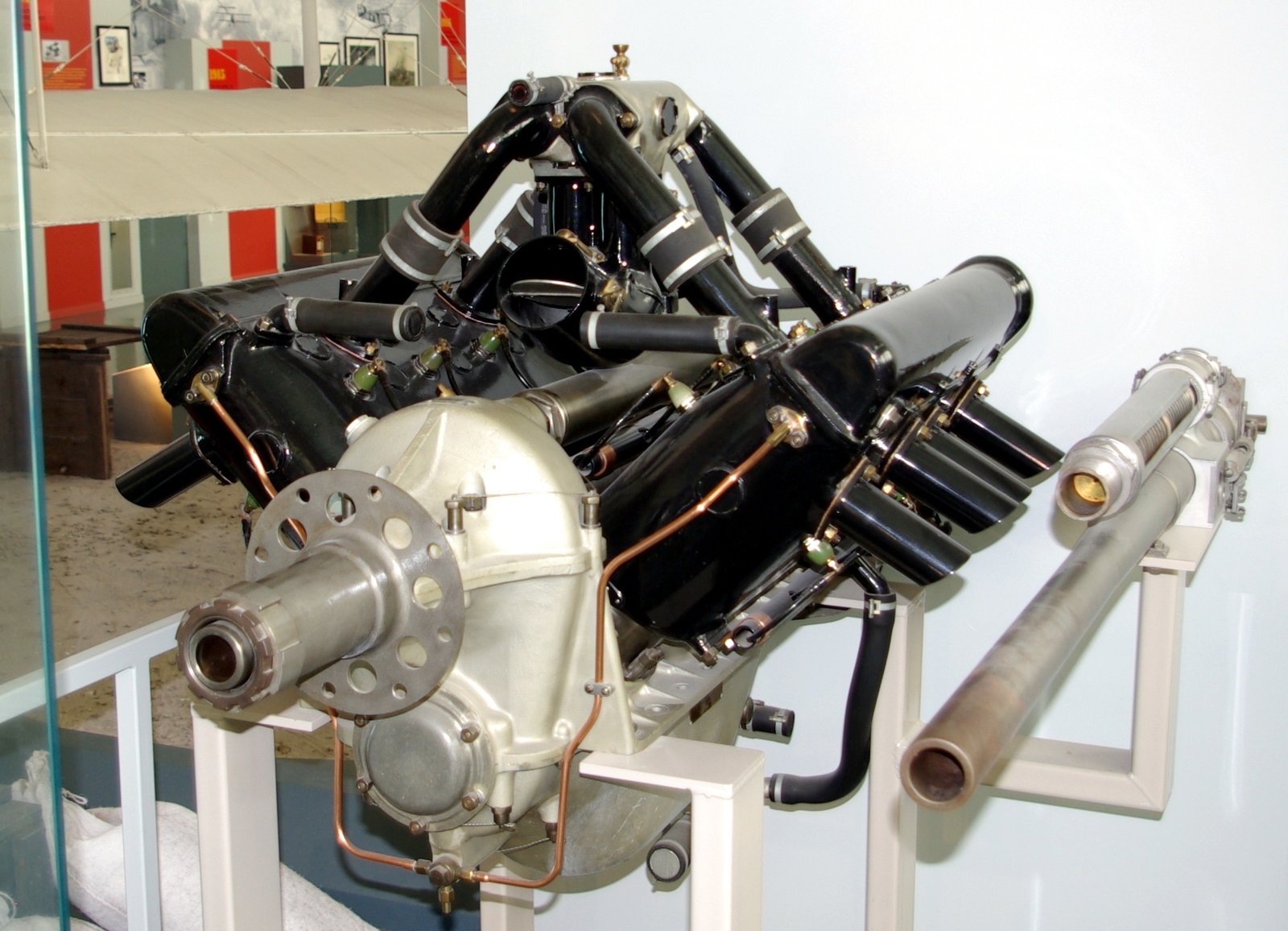
Technical design was led by chief engineer Louis Béchereau and his team at SPAD. The aircraft's most defining feature was a 37 mm S.A.M.C. cannon mounted in the V of the engine, which fired through the propeller shaft. This weapon weighed between 40 and 45 kg and carried 10 to 12 shells. To complement the cannon, the S.XII was equipped with a synchronized 7.65 mm Vickers machine gun mounted on the right side of the engine cowling, providing approximately 400 rounds of ammunition.
Power was provided by a Hispano-Suiza 8-cylinder water-cooled V-engine, specifically a cannon-mount derivative of the 8B/8C family (often cited as the 8Cb). This piston engine produced approximately 220 to 230 hp. While the airframe dimensions remained similar to the SPAD VII—with a wingspan of roughly 7.8 to 7.9 meters and a length of 6.2 to 6.3 meters—the added weight of the cannon made the aircraft demanding to fly, with pilots reporting issues regarding recoil, reloading, and cockpit fumes.
Production took place at SPAD's facility in Suresnes, France. While an initial order for 300 aircraft was placed, only a small fraction were completed. Exact production numbers are uncertain, though sources indicate between 30 and 44 aircraft were delivered by July 1917. The prototype, designated "S" or "SPAD XII Canon 1," undertook its first recorded combat mission on July 5, 1917, flown by Georges Guynemer against German DFW two-seaters.
Due to its complexity, the Aéronautique Militaire reserved the S.XII for its most skilled pilots. By April 1, 1918, five aircraft were active at the front, increasing to eight by November 1, 1918. Small numbers were also exported, likely to Great Britain and Italy. The original manufacturer, Société Pour L'Aviation et ses Dérivés (founded in 1911 as Société de production des aéroplanes Deperdussin), merged with Blériot Aéronautique in 1921 to become Blériot-SPAD, and the original entity is now defunct. No complete original SPAD S.XII is known to survive today.