
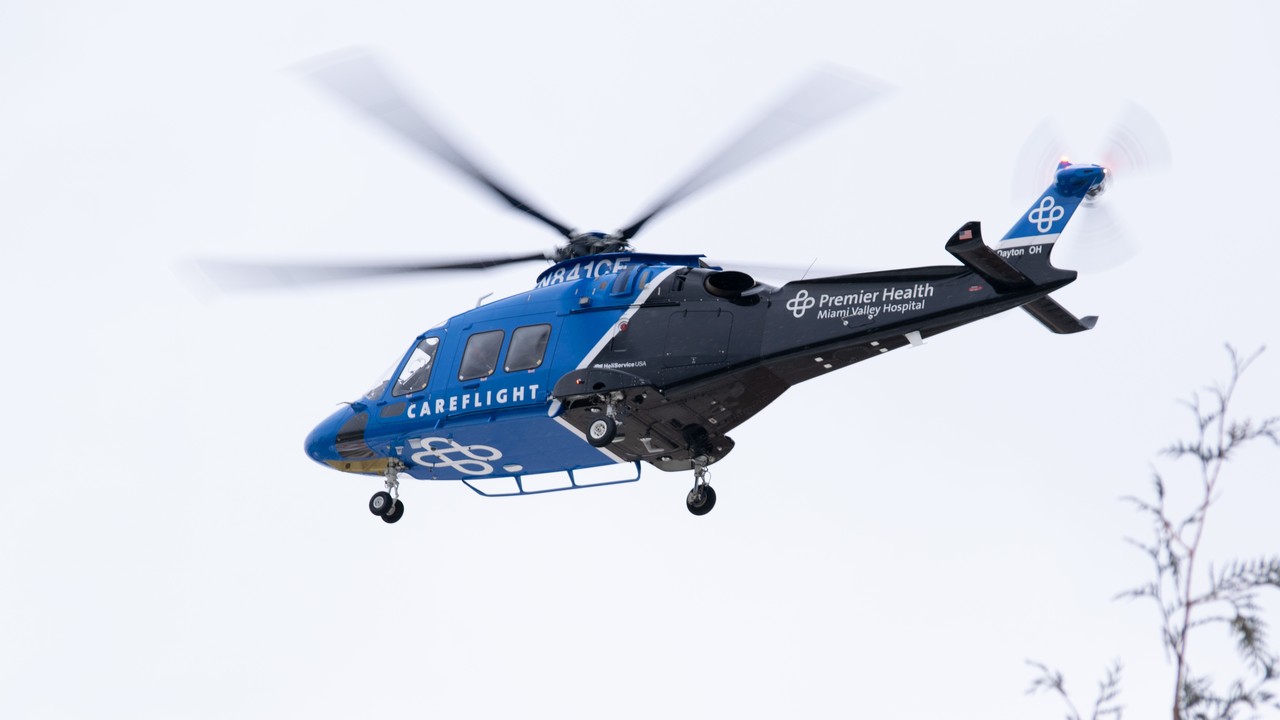
Development and Innovation
AgustaWestland formally announced the AW169 project at the July 19, 2010 Farnborough International Air Show, responding to market demand for a modern intermediate helicopter with reduced operational costs. Chief Test Pilot Giuseppe Lo Coco lifted the first prototype into the sky on May 10, 2012, at the company's Cascina Costa facility in Italy, beginning a certification program that would span three years.
The helicopter represented a significant technological leap forward, becoming the first production aircraft in its category to feature electronically actuated landing gear. Bruno Spagnolini, AgustaWestland's Chief Executive Officer, emphasized the aircraft's groundbreaking nature, stating that decades had passed since a new-generation helicopter had been launched in this weight class.
Technical Excellence
Engineered around twin Pratt & Whitney Canada PW210A turboshaft engines, each producing 735 kilowatts (1,000 shaft horsepower), the AW169 incorporated Full-Authority Digital Engine Control (FADEC) systems for optimal performance management. The variable-speed main rotor system, driven by these sophisticated engines, reduced external noise while increasing operational efficiency—a critical advancement for urban operations.
The aircraft's 12.12-meter main rotor diameter and newly developed dampers between rotor blades minimized vibration, creating an exceptionally smooth passenger experience. With a maximum takeoff weight of 4,536 kilograms (10,000 pounds) and payload capacity of 600 kilograms, the AW169 could accommodate up to 10 passengers while maintaining impressive performance specifications including a 306 km/h maximum speed and 820-kilometer range.
Certification and Production Launch
The European Aviation Safety Agency granted certification on July 15, 2015, followed by FAA approval in February 2016, opening global markets to the new helicopter. Production commenced in January 2015 at AgustaWestland's Vergiate, Italy facility, with Lease Corporation International serving as the launch customer with 12 aircraft configured for offshore operations.
AgustaWestland initially planned expansion to a second production line at their Philadelphia facility, targeting 20 aircraft annually by 2017. However, following the company's 2016 merger into Finmeccanica (later rebranded as Leonardo), the US production program was abandoned in October 2016, consolidating manufacturing in Italy.
Military Ambitions
In April 2013, AgustaWestland unveiled the AW169 AAS (Armed Aerial Scout) variant for the United States Army's helicopter replacement program. At 10,000 pounds gross weight, the AW169 AAS was notably the largest contender, weighing nearly double the Bell OH-58 Kiowa it aimed to replace. Despite its advanced capabilities, the program concluded without selection before year's end.
The military market remained a focus with development of the AW169M for armed reconnaissance and patrol missions, accompanied by the UH-169M trainer variant. These military configurations demonstrated the platform's versatility beyond civilian applications.
Commercial Success
By February 2016, at least 20 AW169s had entered service worldwide across diverse missions including air ambulance, law enforcement, executive transport, and offshore operations. The helicopter's design philosophy emphasized commonality with the larger AW139 and AW189 models, sharing cockpit configurations and components to reduce training costs and maintenance complexity for multi-aircraft operators.
The aircraft achieved remarkable market penetration, with 75 units produced by 2018 across global customers. Its 4-hour 20-minute endurance and auxiliary fuel tank capability made it particularly suitable for extended missions, while the standard 10-seat configuration provided flexibility for various commercial applications.
The Manufacturer's Evolution
AgustaWestland, the AW169's original manufacturer, underwent significant corporate transformation during the helicopter's development. The 2016 merger into Finmeccanica, subsequently rebranded as Leonardo, consolidated the Italian aerospace giant's helicopter operations. Leonardo continues production today as a major defense and aerospace contractor, marketing the aircraft as the Leonardo AW169 while maintaining the design's original specifications and capabilities.
Legacy and Impact
The AW169 established new benchmarks for intermediate helicopter design, introducing technologies that influenced subsequent rotorcraft development. Its electronically actuated landing gear, variable-speed rotor system, and advanced vibration reduction represented meaningful innovations that enhanced operational efficiency and passenger comfort. The helicopter's success validated the market demand for modern, fuel-efficient aircraft in the 4.5-ton category, filling a gap that had existed for decades in commercial aviation.