
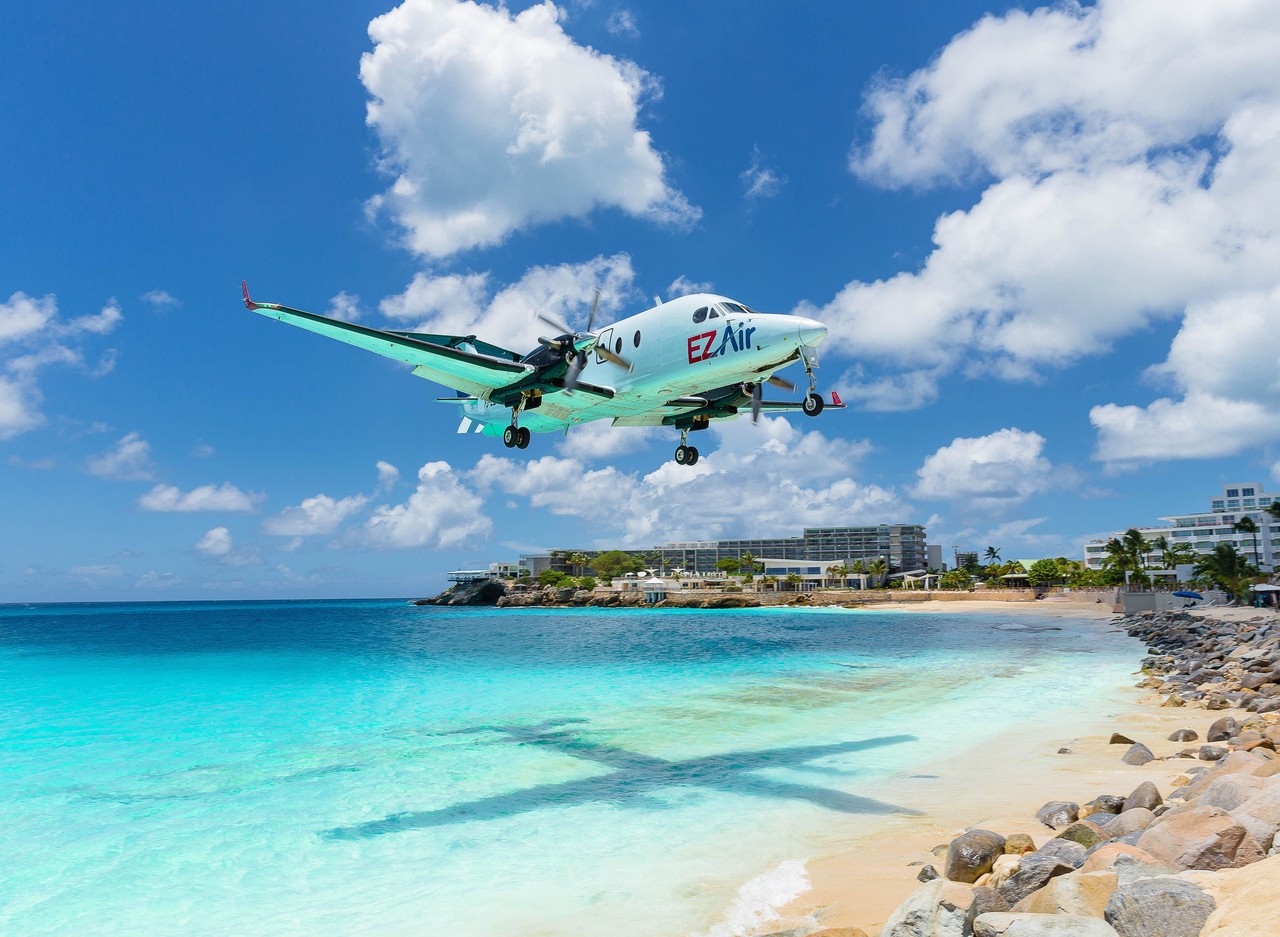
Service History
The Beechcraft 1900 entered commercial service in February 1984, quickly establishing itself as the dominant force in 19-passenger regional aviation. Airlines worldwide adopted the aircraft for its unique combination of pressurized comfort and short-runway capability, filling a crucial gap between smaller unpressurized aircraft and larger regional jets. By the time production ended in October 2002, the 1900 had captured the entire market segment for 19-seat airliners, with no serious competitor matching its sales numbers. Over 300 aircraft remained in active service as of 2018, primarily with regional carriers across North and Latin America.
The Manufacturer
Beechcraft, founded in 1932 with the revolutionary Model 17 Staggerwing, had established itself as America's premier builder of business and utility aircraft by the 1980s. The company's first regional airliner, the Model 18 Twin Beech, had dominated its era with over 9,000 units built from 1937 to 1970, including 4,500 for military service during World War II. The Model 99, first flown in July 1966, served as Beechcraft's second airliner before the 1900's development. Raytheon acquired Beechcraft and made the decision to end 1900 production in 2002 due to increasing market demand for larger regional jets. The company later became part of Hawker Beechcraft and eventually Textron Aviation, which continues Beechcraft production today.
Design Evolution and Technical Innovation
The 1900's design traced its lineage to the 1949 Beechcraft Model 50 Twin Bonanza, a five-passenger utility aircraft originally developed for the U.S. Army, which was later stretched into the Model 65 Queen Air. Beechcraft's engineering team designed the 1900 as a pressurized successor to compete directly with aircraft like the British Aerospace Jetstream and Fairchild Metroliner. The design objectives were ambitious: carry 19 passengers in all weather conditions from short runways with a 600-mile range.
The aircraft featured several key innovations that set it apart from its predecessors. Unlike the unpressurized Model 18, the 1900 offered passengers airline-level comfort with a pressurized cabin. Three main variants emerged during production: the original 1900 with dual airstairs (only three built), the 1900C with a single front door and enlarged cargo door, and the 1900D featuring a stand-up cabin with 4 feet 3 inches of headroom and distinctive winglets.
Engine and Performance
The 1900 was powered by two Pratt & Whitney Canada PT6A turboprop engines, widely regarded as the most reliable turboprop engines ever built. The original 1900 and 1900C models used PT6A-65B engines, each flat-rated at 1,100 shaft horsepower, while the later 1900D employed more powerful PT6A-67D engines producing 1,279 shaft horsepower each. Hartzell manufactured the four-bladed composite propellers that gave the aircraft its distinctive appearance and performance characteristics.
The PT6A engine series, which entered production in 1963, provided exceptional reliability with quick start times and had powered over 50,000 engines across numerous variants by the 1900's production era. This powerplant choice proved crucial to the aircraft's success, as operators valued the PT6A's proven track record across diverse applications from helicopters to airliners.
Military Applications
While primarily designed for civilian use, the 1900 saw limited military service with several air forces. Raytheon built six 1900C aircraft with UD-1 through UD-6 serial numbers for the U.S. military, along with three additional airframes carrying UA-1 through UA-3 serials. The U.S. military designated over 250 1900C units as C-12J aircraft for transport duties. UA-1 and UA-2 remain stored at the Beechcraft facility in Wichita, Kansas, while UA-3 served with Bolivia's air force as FAB-043 until crashing in November 2011.
Production Variants and Commercial Success
Beechcraft produced 695 total aircraft across all variants, with the 1900D representing the largest production run at 439 units. The 1900C accounted for over 250 aircraft, including 74 UB models and 174 UC "wet wing" variants with extended fuel capacity for longer range operations. The corporate ExecLiner version, first delivered in 1985, could accommodate 10 or more passengers in luxury seating configurations, while standard airline versions seated 19 passengers in a 1-1 configuration.
In 1991, a new 1900D Airliner carried a list price of $3.95 million, representing significant value in the regional aircraft market. Raytheon celebrated delivery of the 500th aircraft in 1997, marking the type's commercial success in its core market segment.
Legacy and Current Operations
The Beechcraft 1900's 39-year service history demonstrates its enduring value in regional aviation. As the bridge between Beechcraft's piston-era designs and modern turboprop aircraft, it advanced short-field regional operations through its pressurization capability and reliable powerplants. The aircraft's continued operation more than two decades after production ended testifies to its robust design and ongoing utility in markets requiring 19-passenger capacity with short-runway performance. Its success established Beechcraft as a major player in the regional airliner market and provided the foundation for the company's continued presence in commercial aviation.