
Service History
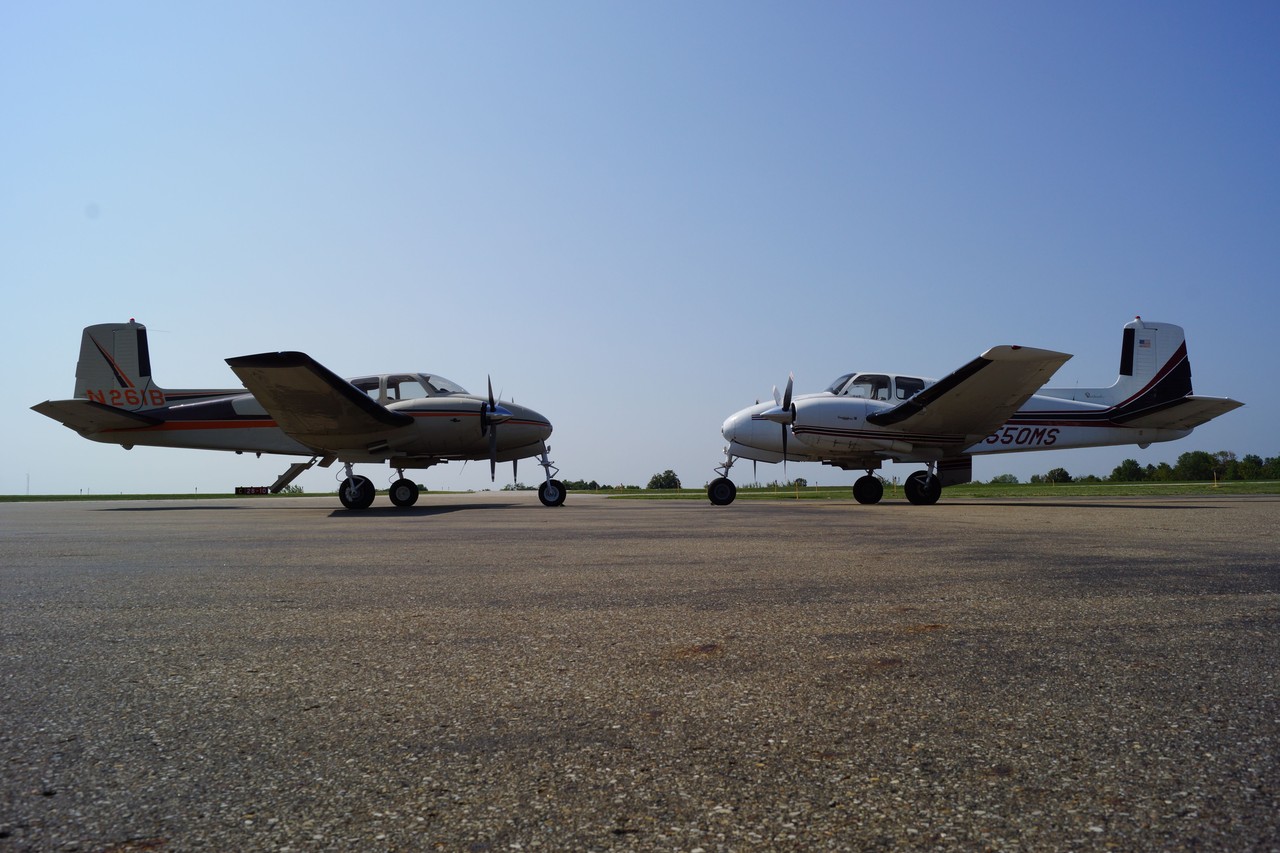
The Twin Bonanza established itself as the pioneering aircraft in the executive twin-engine market, with 994 examples built during its 12-year production run. The United States Army became its largest single operator, purchasing 216 aircraft and designating them L-23 Seminole utility transports. At the time of its military adoption, the Twin Bonanza represented the largest fixed-wing aircraft in the Army's inventory, demonstrating its substantial size advantage over existing utility aircraft.
The Korean War dramatically influenced production patterns, with the Army absorbing virtually the entire 1952 and 1953 manufacturing output. This military demand validated the aircraft's utility design and robust construction, particularly after a demonstration flight where a fully loaded Twin Bonanza crashed while attempting to clear a 50-foot obstacle, yet all occupants walked away uninjured, impressing Army evaluators with the aircraft's structural integrity.
The Manufacturer
Beechcraft developed the Model 50 to fill a critical gap in their product lineup between the single-engine Model 35 Bonanza and the larger Model 18 twin. The company's Wichita facility manufactured all 994 examples, with production spanning from the initial A50 through the final J50 variant in 1963. Beechcraft leveraged the Twin Bonanza's successful design philosophy for subsequent aircraft development, directly inspiring the Queen Air with its enlarged cabin and eventually the King Air series with turboprop powerplants.
The aircraft's development timeline was remarkably compressed, beginning in April 1949 and achieving first flight just seven months later in November. This rapid development cycle reflected Beechcraft's urgency to capture the emerging business aviation market.
Engine & Technical Evolution
The Twin Bonanza's powerplant history reflects both design challenges and continuous improvement. Originally conceived for Franklin supercharged engines, the aircraft required hasty redesign when Preston Tucker diverted Franklin Aviation's resources to his Tucker 48 automobile project. Beechcraft substituted Lycoming GO-435 engines rated at 260 horsepower, but crucially retained the original nacelle dimensions, creating generous maintenance clearances that became a distinctive advantage for mechanics.
Engine power progression marked each major variant: the initial Model 50 used 260-hp GO-435-C2 engines, while the 1954 C50 introduced 275-hp GO-480-F1A6 powerplants. The D50 of 1956 increased output to 295 horsepower with GO-480-G2C6 engines and added three-blade propellers. The supercharged revolution began with the 1957 E50, featuring 340-hp GSO-480 engines that became standard through the final J50 variant.
Design Innovation
Beechcraft incorporated several pioneering safety features, most notably making the Twin Bonanza the first production light aircraft equipped with shoulder belts as standard equipment. The aircraft's utility category certification distinguished it from most contemporary twins, reflecting its robust construction standards and expanded operational envelope.
With a fuel capacity of 180 gallons, the Twin Bonanza offered substantial range for its era. The supercharged variants achieved gross weights of 7,300 pounds, significantly exceeding the 6,300-pound limit of normally aspirated models and enabling operation at higher altitudes and increased payload capacity.
Pilot Perspective
Pilots appreciated the Twin Bonanza's substantial feel and predictable handling characteristics, attributes that distinguished it from lighter twins. The generous engine nacelle spacing simplified maintenance procedures, while the aircraft's utility category certification permitted more aggressive maneuvering than typical business twins. The progression from two-blade wooden propellers nearly eight feet in diameter on early models to three-blade metal units on later variants improved both performance and ground clearance.
Production & Legacy
Production concluded in 1963 with 994 total aircraft delivered, including significant military variants: 216 for the U.S. Army, 181 E50s primarily for military service, and smaller quantities for specialized roles. The aircraft's influence extended far beyond its production numbers, establishing the template for modern business aviation twins.
By 2010, only one Model 50 remained registered and flying - serial number H-7, owned by W. Hulsey Smith through Archangel Technologies as part of the Archangel Collection. This sole survivor represents the end of an era for one of aviation's most influential business aircraft designs.
The Twin Bonanza's legacy lives on through its direct descendants, the Queen Air and King Air families, which adopted its fundamental design philosophy while incorporating larger cabins and turboprop powerplants. Its position as the first successful twin-engine business aircraft established Beechcraft's dominance in the corporate aviation market that continues today.