
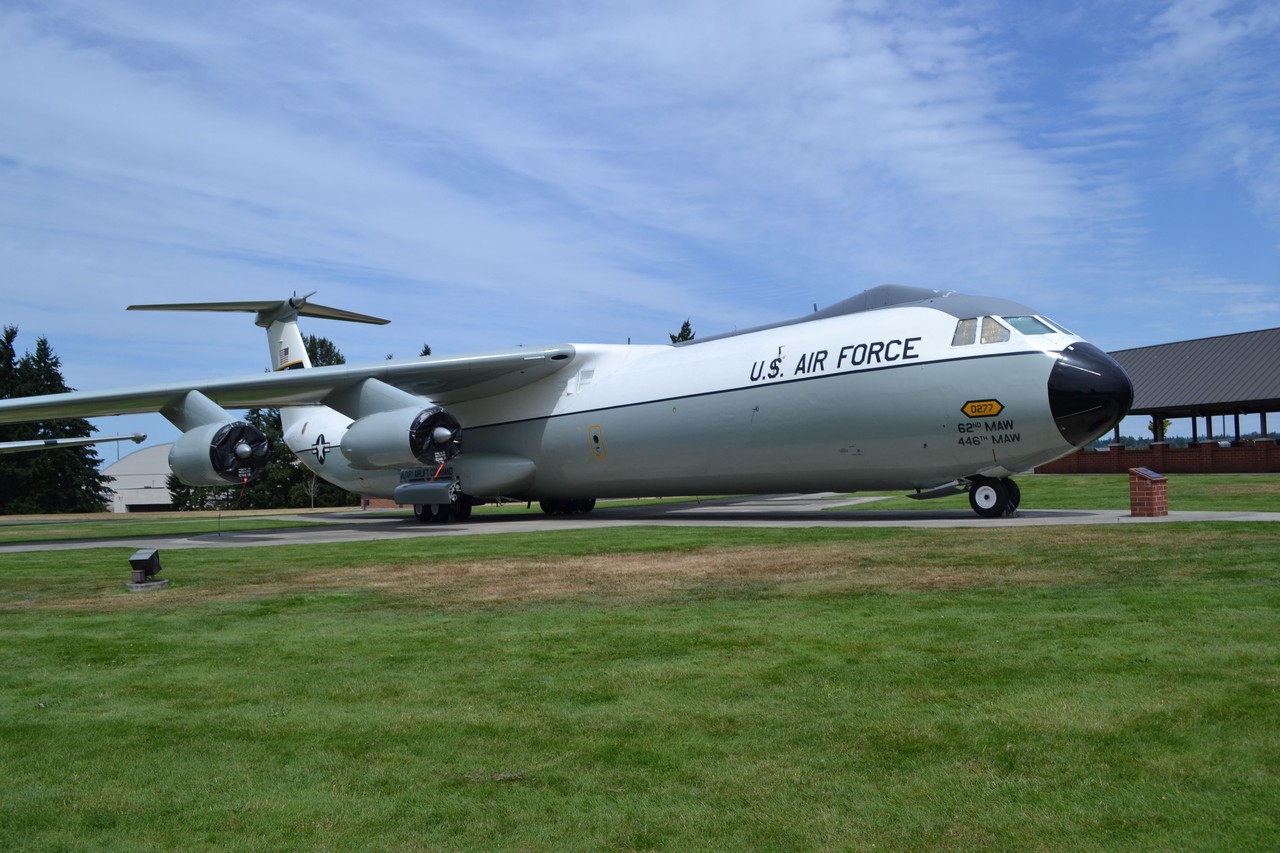
Service History
The C-141 Starlifter dominated American strategic airlift operations for over four decades, becoming the backbone of the Military Airlift Command. During the Vietnam War, just 256 C-141s carried an astounding 82.3 percent of the 2.72 billion tons of cargo transported in 1968 alone. The aircraft began near-daily Vietnam missions in April 1965, with the first operational aircraft arriving at Tinker Air Force Base, Oklahoma in October 1964. By the program's end in 2006, the fleet had accumulated more than 7 million flight hours across global operations.
Wartime and Operational History
The Starlifter served as America's primary strategic transport through multiple conflicts including Vietnam, Grenada in 1983, Panama in 1989, the Gulf War in 1991, and operations in Somalia, Bosnia, Afghanistan, and Iraq. The aircraft proved so capable that the Air Force converted 270 of the original 284 C-141A aircraft into the stretched C-141B variant between 1979 and 1982. This modification added 23 feet 4 inches to the fuselage length and installed an aerial refueling receptacle, creating cargo capacity equivalent to 90 additional new aircraft without requiring more powerful engines.
The conversion program demonstrated the foresight of the original design team, who had specified engines more powerful than initially needed. A single prototype YC-141B completed its first flight on March 24, 1977, validating the stretch concept. Later aircraft received avionics upgrades under the C-141C designation.
The Manufacturer
Lockheed Corporation's Georgia Division, based in Marietta, manufactured all 285 Starlifters between 1963 and 1968. The company's experience producing the C-130 Hercules gave them a significant advantage in winning the Air Force contract, and they delivered the C-141 program both on time and under budget. Lockheed operated as an independent company from 1926 until merging with Martin Marietta in 1995 to form Lockheed Martin, which continues aircraft production today.
The C-141 program responded to President Kennedy's 1960 directive for an all-jet military transport fleet, replacing aging piston-engine aircraft like the C-124 Globemaster II. The Air Force specification SOR 182 called for a jet transport capable of carrying 60,000 pounds of cargo over 4,025 miles, with emphasis on easy maintenance, efficient loading capabilities, and short runway performance.
Engine and Technical Innovation
Four Pratt & Whitney TF33-P-7 turbofan engines powered the Starlifter, each providing more thrust than the original airframe required. This deliberate over-specification enabled the later fuselage stretch without performance degradation or engine replacement. The aircraft's design innovations included rapid cargo loading capabilities, with ground crews able to offload 70,000 pounds per hour through the aircraft's distinctive high-wing configuration and rear cargo doors.
The C-141A measured approximately 144 feet in length, while the stretched C-141B extended to roughly 168 feet. The cargo bay provided 7,019 cubic feet of space in the A-model and 9,190 cubic feet in the B-variant. Empty weight reached 134,200 pounds for the original configuration.
Performance Characteristics
Pilots appreciated the Starlifter's reliable performance across diverse operating conditions. The aircraft achieved maximum speeds exceeding 500 miles per hour with a service ceiling above 40,000 feet. Range varied with payload, reaching 4,000 miles with maximum 70,000-pound cargo loads and extending beyond 5,200 miles with reduced loads. The aircraft could alternatively transport 154 fully equipped troops in its passenger configuration.
The TF33 engines proved exceptionally reliable throughout the aircraft's service life, contributing to the impressive safety record accumulated over 7 million flight hours between 1982 and final retirement in 2006.
Production and Legacy
Lockheed completed production of 284 aircraft for the Air Force plus one additional airframe for NASA as an airborne observatory. Four additional aircraft served with the National Weather Service by the early 1970s, but the type never entered commercial airline service. The first production aircraft rolled off the Marietta assembly line on August 22, 1963, with the final example completed on February 27, 1968.
The last operational C-141 completed its final flight on May 5, 2006, ending 43 years of continuous military service. The Air Force retired the entire fleet in favor of the larger C-17 Globemaster III. Today, no Starlifters remain in flying condition, but several are preserved in museums including a C-141B at the Air Mobility Command Museum at Dover Air Force Base, Delaware, and examples at McChord Air Museum in Washington. The aircraft's legacy lives on as the foundation for modern strategic airlift capabilities, having established the template for rapid global military transport that continues to influence aircraft design today.