
Service History
The EC-225 Super Puma Mk2+ established itself as the backbone of offshore oil operations worldwide, with major helicopter service companies operating substantial fleets by the 2010s. CHC Helicopter became the largest operator with 22 aircraft ordered between 2008-2012, representing one-fifth of their total rotorcraft fleet by 2015. Bristow Helicopters accumulated 21 EC-225s between 2007-2011, receiving the 100th production aircraft in 2011. The helicopter's significance in offshore operations stemmed from its ability to transport workers and supplies to oil platforms in challenging North Sea and Gulf of Mexico conditions.
Military Operations
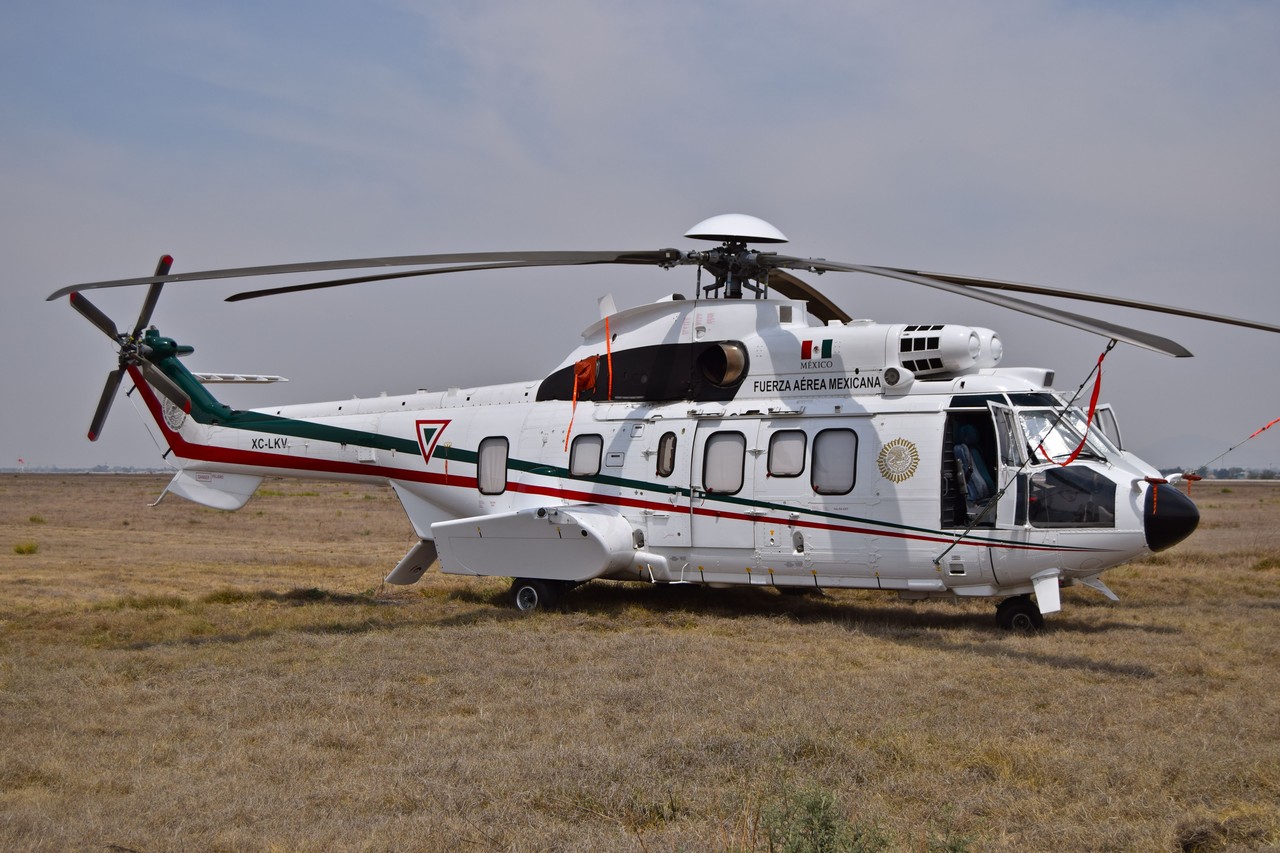
The military variant, designated EC725 Caracal (initially Cougar Mk II+), entered French Air Force service in 2005 specifically for combat search and rescue missions. The prototype made its first flight on November 27, 2000, with public presentation following on January 15, 2001. France became the primary military operator, while Japan's Defence Agency ordered three aircraft in March 2005, and the Japanese Coast Guard received two units in April 2008. The military version emphasized enhanced endurance and combat durability over its civilian counterpart.
The Manufacturer
Eurocopter developed the EC-225 as an advanced derivative of the AS332 Super Puma, incorporating lessons learned from decades of helicopter manufacturing experience. The company operated from 1992 until 2014, when Airbus Group rebranded it as Airbus Helicopters following acquisition of the helicopter division from EADS. EADS itself had formed in 2000 from the merger of Aérospatiale Matra of France, DASA of Germany, and CASA of Spain. Manufacturing took place at the company's Marignane, France facility, where Eurocopter's engineering team designed the aircraft to achieve 25% higher load capacity than its predecessors.
Engine and Technical Innovation
Two Turbomeca Makila 2A1 turboshaft engines, each producing 1,566 kW of takeoff power, represent a 15% increase over the previous Makila 1A2 powerplants. The engines feature dual-channel full authority digital engine control (FADEC) and mount above the main cabin for optimal weight distribution. Eurocopter's engineers incorporated innovative Spheriflex rotor technology with a five-bladed main rotor system, paired with a redesigned main gearbox and LCD glass cockpit displays. The marinised airframe construction utilizes high-strength light alloy and titanium components specifically engineered for harsh offshore environments.
Pilot Perspective
The EC-225 requires either a single pilot under DGAC Category B certification or two pilots for IFR operations, reflecting its sophisticated avionics and flight management systems. Pilots appreciate the helicopter's fast cruise capability of 278 km/h and extended range of 987 kilometers with optional fuel tanks. The integrated flight displays and advanced engine management systems reduce pilot workload during demanding offshore missions, while the robust construction provides confidence in severe weather conditions common to North Sea operations.
Production Challenges and Legacy
Production began in 1999 and continued through 2016 with over 170 units delivered, though the program faced significant challenges. A series of main gearbox failures led to fleet groundings between 2012-2016, including the May 10, 2012 ditching of G-REDW and an October 22, 2012 crash. Investigation revealed 360-degree circumferential cracks in vertical shafts caused by fatigue. The European Aviation Safety Agency lifted restrictions in October 2016, but several operators, including Statoil, switched to alternative aircraft types. Despite these setbacks, production was projected to continue until at least 2030, with variants including the enhanced EC225e announced in February 2014. The aircraft received JAR-29 certification in July 2004, FAA approval in January 2008, and Russian certification in December 2015. As of March 2025, at least 20 EC-225/H225 helicopters continue operating with Air Center Helicopters under US Government contracts.