
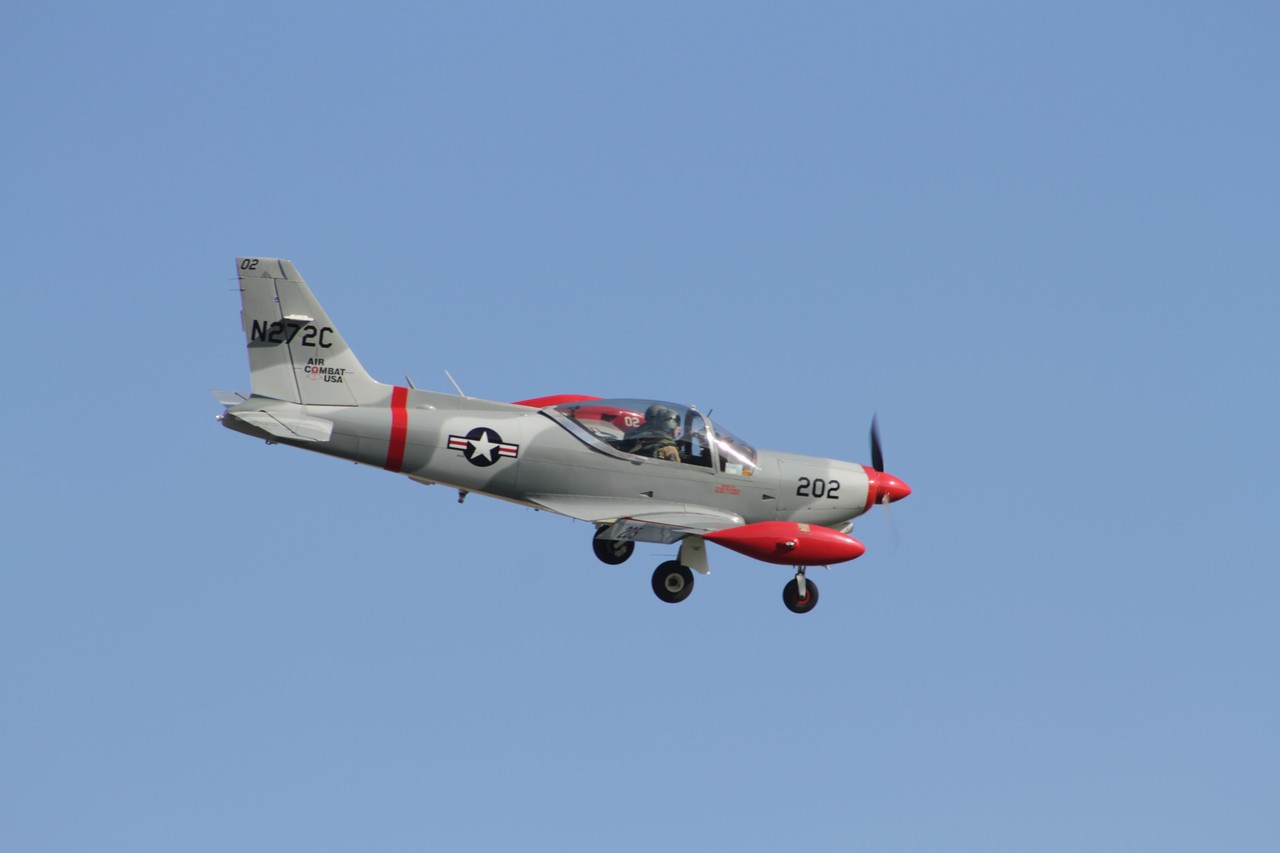
Service History
The SF-260T emerged from one of aviation's most remarkable success stories, with the broader SF-260 family achieving over 976 aircraft delivered across all variants by 2017. More than 27 air forces worldwide adopted the type for basic training, making it Italy's top-selling peacetime aircraft. The turboprop variant specifically addressed military requirements for modern powerplant training, incorporating the proven Allison Model 250 turboprop engine flat-rated at 350 shaft horsepower.
Military Operations
While the SF-260T itself saw limited combat deployment, the series served extensively as a trainer and light attack platform across diverse global conflicts. Libya operated the largest fleet with 240 units of the SF-260WL/ML variants, beginning deliveries around 1977-1978. The program faced complications due to US avionics embargoes, forcing substitution with French electronics systems. Other significant operators included Italy with 33 SF-260AM aircraft, along with air forces from Belgium, Bolivia, Ethiopia, Indonesia, Philippines, Thailand, and numerous African nations including Chad, Somalia, Uganda, and Zimbabwe.
The Manufacturer
SIAI-Marchetti traced its origins to SIAI (Società Idrovolanti Alta Italia), established in 1915 as a seaplane manufacturer. The company acquired rights to the SF-260 design from Aviamilano in 1964, transforming from a regional manufacturer into an international aerospace supplier. SIAI-Marchetti operated from facilities in Venegono Superiore until Aermacchi acquired the company in 1997. The acquisition chain continued when Alenia Aermacchi, later renamed Leonardo SpA, assumed control and maintains production capabilities today.
Engine & Technical Innovation
Stelio Frati's original design philosophy emphasized lightweight construction with full aerobatic capability, representing his first all-metal aircraft after the successful Falco series. The SF-260T's Allison Model 250 turboprop provided significant advantages over the baseline piston variants, which used the Textron Lycoming O-540-E4A5 six-cylinder horizontally-opposed engine producing 260 horsepower. The turboprop installation offered improved reliability, reduced maintenance requirements, and enhanced performance characteristics crucial for military training operations.
Pilot Perspective
The aircraft achieved FAA certification for civil operations on April 1, 1966, with military certification following on October 10, 1970. Pilots praised the SF-260's docile handling characteristics combined with genuine aerobatic capability when flown with two occupants. The design incorporated reinforced structures specifically engineered for spinning recovery, night operations, and instrument training. Gates Learjet modified the SF-260TP variant in 1986 to achieve FAR Part 23 compliance, expanding its appeal to civilian training organizations.
Production & Legacy
Production commenced in 1964 and continued at varying rates until 2017, representing one of the longest production runs in general aviation history. By 1987, over 800 SF-260s had been delivered globally, with the milestone 900th aircraft celebrated in 2012. Major airlines including Air France and Sabena adopted early civil variants for pilot training, validating the design's professional capabilities.
The SF-260T's legacy extends beyond mere production numbers to encompass its role in democratizing aerobatic training worldwide. Unlike previous generations of military trainers that required extensive maintenance infrastructure, the SF-260 series provided reliable, cost-effective advanced training capabilities to nations with limited aviation resources. Examples continue flying with military units, flight schools, and private owners across six continents, testament to the fundamental soundness of Frati's original design philosophy.
Today, Leonardo SpA maintains the SF-260 production line as part of its trainer aircraft portfolio, ensuring continued parts support and new aircraft availability for existing operators. The type's enduring success reflects the intersection of innovative Italian design, robust engineering, and adaptability to diverse operational requirements spanning over five decades of continuous service.