
Development and Design Origins
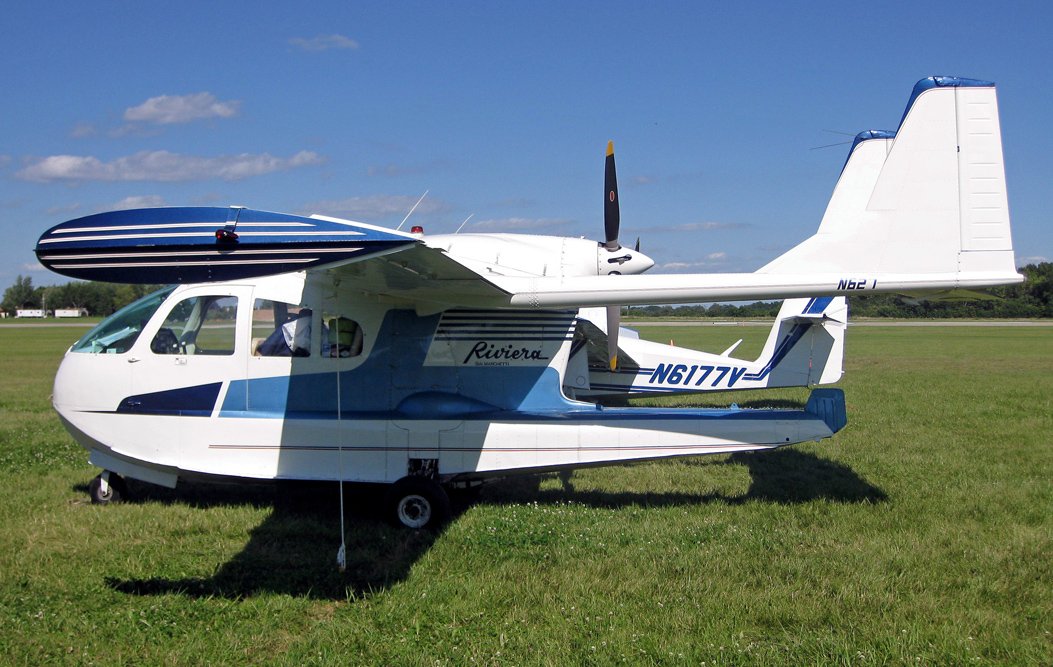
The FN.333 originated from the design offices of Fratelli Nardi in the 1950s, when amphibious aircraft represented a promising market for luxury touring aviation. Mario Stoppani piloted the original prototype on its maiden flight on December 4, 1952, powered by a 145-horsepower Continental fan-cooled engine. However, development proved challenging when the second prototype, completed in 1954, was destroyed in a crash in January 1955 during flight testing.
Nardi's design philosophy centered on creating an all-metal amphibian that could match the performance and luxury appointments of contemporary land-based touring aircraft. The pusher configuration allowed for an unobstructed forward view while keeping the propeller away from water spray during marine operations.
Manufacturing Transfer
Recognizing the aircraft's potential but lacking resources for full production, Nardi negotiated with FIAT for financial backing. In March 1959, manufacturing rights transferred to SIAI-Marchetti at their Sesto Calende facility near Milan. SIAI-Marchetti engineers extensively redesigned the aircraft for production, focusing on parts interchangeability, maintenance accessibility, and corrosion protection—critical factors for an amphibian operating in marine environments.
The first SIAI-Marchetti-built Riviera emerged from the factory in February 1962. By January 1963, four aircraft had reached customers, marking the beginning of the type's brief but notable commercial career.
Technical Excellence
Production Rivieras featured the Continental IO-470-P fuel-injected engine producing 250 horsepower, driving a two-bladed Hartzell constant-speed feathering pusher propeller. This powerplant provided the Riviera with impressive performance: maximum speeds of 180 mph at sea level and cruise speeds of 165 mph at 8,000 feet. The aircraft's fuel capacity of 79.3 gallons in two wing tanks enabled extended touring range.
The amphibious capability required sophisticated engineering. Wing-tip floats retracted to reduce drag during flight, while the hull design allowed water takeoffs in just 1,380 feet compared to 900 feet on land. Landing performance was equally impressive, requiring only 660 feet on prepared surfaces.
American Market Focus
SIAI-Marchetti targeted the wealthy American private pilot market, where amphibious aircraft enjoyed popularity among owners of lakefront properties. Southwest Airmotive received aircraft for final assembly and delivery to U.S. customers. ServAir took delivery of the first production model on July 13, 1962, when it arrived by ship at Newark, New York.
The American market proved receptive to the Riviera's combination of luxury appointments and versatile operating capability. However, the aircraft's high price and specialized maintenance requirements limited its appeal to a select clientele.
The Manufacturer's Legacy
SIAI-Marchetti, formed from the merger of SIAI and Savoia-Marchetti companies, possessed extensive experience with both seaplanes and military aircraft production. The company's expertise in marine aviation dated to the glory days of Italian seaplane racing and military flying boats of the 1930s. This background proved invaluable in refining the Riviera's amphibious systems.
Fratelli Nardi, the original designer, had rebuilt after World War II when their Loreto factory was destroyed. The new facility at Aeroporto Forlanini in Milan specialized in aircraft components including wheels, brakes, retractable landing gear, and hydraulic systems—technologies directly applicable to the complex Riviera design.
Operational Challenges
The Riviera's sophisticated systems demanded careful maintenance and pilot proficiency. A tragic accident on October 25, 1968, highlighted these requirements when Serial #007 crashed at Akron Municipal Airport, Ohio, killing pilot Perry Strohl Jr. Investigation revealed the aircraft had taken off with the fuel selector positioned on an empty tank while the other tank contained adequate fuel. The pilot had also operated without proper maintenance releases or preflight inspection.
This accident underscored the critical importance of proper procedures with complex amphibious aircraft, where multiple systems and operating modes increased the potential for pilot error.
Limited Production and Legacy
Total production reached just 29 aircraft before SIAI-Marchetti ceased manufacturing in the mid-1960s. The limited production reflected both the specialized nature of the amphibian market and the high costs associated with small-scale manufacturing of complex aircraft.
Despite low production numbers, the Riviera earned recognition for its advanced design and impressive performance capabilities. Several examples remained in service as late as 2010, testament to the aircraft's robust construction and enduring appeal among amphibian enthusiasts.
The FN.333 Riviera represents the final flowering of the luxury amphibian concept that had flourished in the 1930s and briefly resurged in the post-war era. Its combination of Italian styling, advanced engineering, and versatile capability created an aircraft that, while commercially unsuccessful, demonstrated the heights that specialized general aviation could achieve.