
Service History
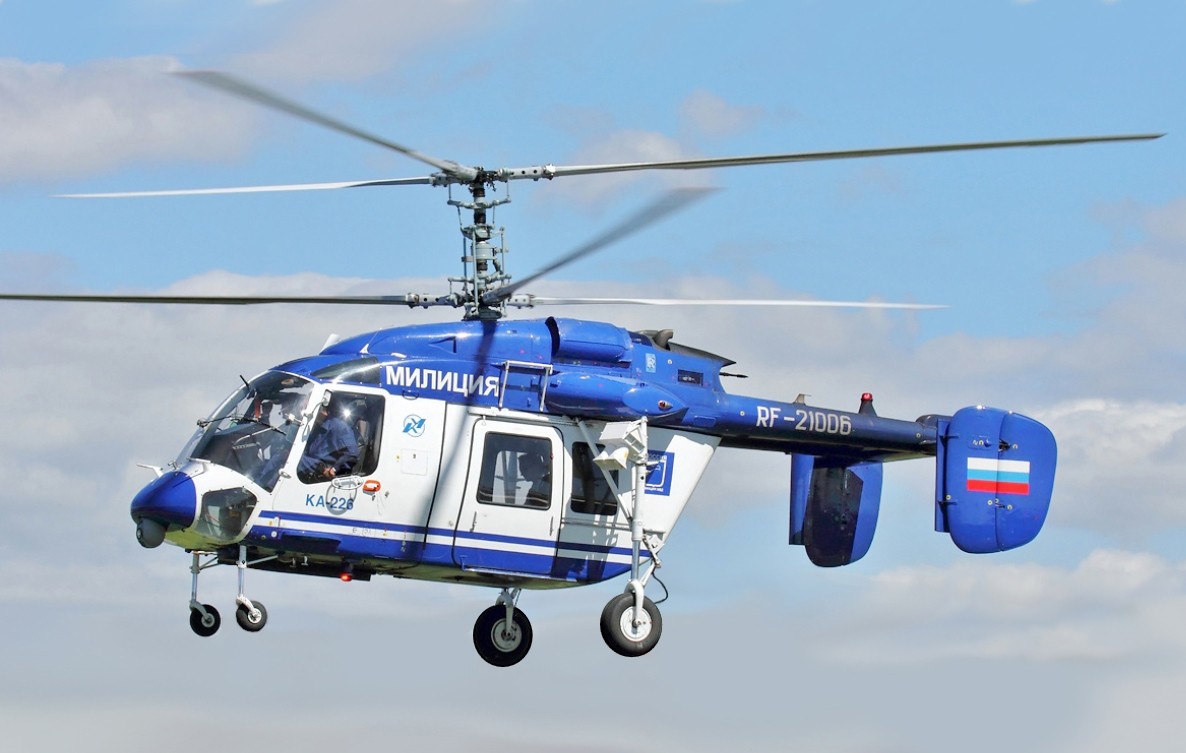
The Ka-226 entered operational service with Russian emergency services in 2001, when the Ministry for Emergencies received its first two Ka-226A aircraft. By 2018, approximately 75 units had been delivered to various operators, with the Russian Aerospace Forces operating 69 helicopters as the primary user. The Federal Security Service acquired at least 6 units, while the Ministry of Internal Affairs operates 11 aircraft for law enforcement missions.
Commercial operators include Gazpromavia Airlines and Gazprom, which utilizes the Ka-226AG variant for oil and gas industry operations. The helicopter's modular design allows rapid mission reconfiguration, making it particularly valuable for search and rescue, medical evacuation, and disaster relief operations throughout Russia's vast territory.
International Expansion
In December 2015, India selected the Ka-226T variant for its Light Utility Helicopter program, signing an agreement for 200 aircraft to be produced over 9 years. This deal, approved in April 2018, established Indo-Russian Helicopters as a joint venture with plans to construct a new manufacturing facility in Tumakuru. The partnership represents one of Russia's largest helicopter export programs in recent decades.
The Manufacturer
Kamov Design Bureau, founded in 1948 by Nikolai Kamov, developed the Ka-226 as part of its specialization in coaxial rotor helicopters dating to the 1950s. Following Kamov's death in 1973, his design team continued advancing coaxial technology, leading to the Ka-226's development in the 1990s to meet requirements from TSENTROSPAS, Moscow City Government, and Gazpromavia Airlines.
Production occurs primarily at two facilities: Strela plant in Orenburg handles final assembly, while Kumertau Aviation Production Enterprise (KumAPP) in Kumertau contributes manufacturing. KumAPP, established in 1962 as a repair facility, began helicopter production with the Ka-26 in 1968 and celebrated its 50th anniversary in 2012 while producing Ka-226T variants. Both facilities operate under Russian Helicopters, a Rostec subsidiary formed in 2007.
Engine & Technical Innovation
The Ka-226's twin Rolls-Royce (Allison) 250-C20R turboshaft engines deliver 420-670 horsepower each, providing superior power-to-weight ratio compared to its piston-powered predecessor, the Ka-26. The Ka-226T variant employs Turbomeca Arrius 2G1 engines rated at 670 horsepower each, specifically optimized for high-altitude and hot-weather operations.
The helicopter's defining characteristic is its coaxial contra-rotating rotor system, eliminating the tail rotor entirely. This configuration provides enhanced safety during hovering operations, increased lift efficiency, and reduced noise signature compared to conventional helicopters. The modular "flying chassis" concept inherited from the Ka-26 allows operators to swap mission-specific pods rapidly, transforming the aircraft from passenger transport to cargo hauler or specialized mission platform.
Performance Characteristics
With a crew of one or two pilots, the Ka-226 achieves a maximum speed of 150 mph and cruises at approximately 113 mph. The coaxial rotor diameter spans roughly 10 meters, providing excellent lift characteristics while maintaining a compact footprint suitable for confined area operations. Internal fuel capacity of 770 liters can be supplemented with an additional 320-liter external tank for extended range missions.
The helicopter's 8-seat passenger capacity or equivalent cargo volume makes it ideal for utility operations in Russia's challenging geographic conditions. Pilots appreciate the enhanced control authority provided by the coaxial system, particularly during precision hovering required for emergency services and industrial applications.
Certification and Legacy
The Ka-226 received Russian AP-29 certification on October 31, 2003, with the Ka-226T variant certified in April 2015. While production numbers remain modest compared to Western competitors, the helicopter has established itself as a reliable platform for specialized operations requiring the unique advantages of coaxial rotor technology.
The aircraft represents Kamov's successful transition from Cold War military focus to modern civilian and dual-use applications. As production continues in Russia with planned expansion to India, the Ka-226 sustains the coaxial rotor tradition pioneered by Nikolai Kamov while addressing 21st-century operational requirements. The ongoing Indo-Russian collaboration may significantly expand the type's global presence, potentially introducing coaxial helicopter technology to new markets and operators worldwide.