
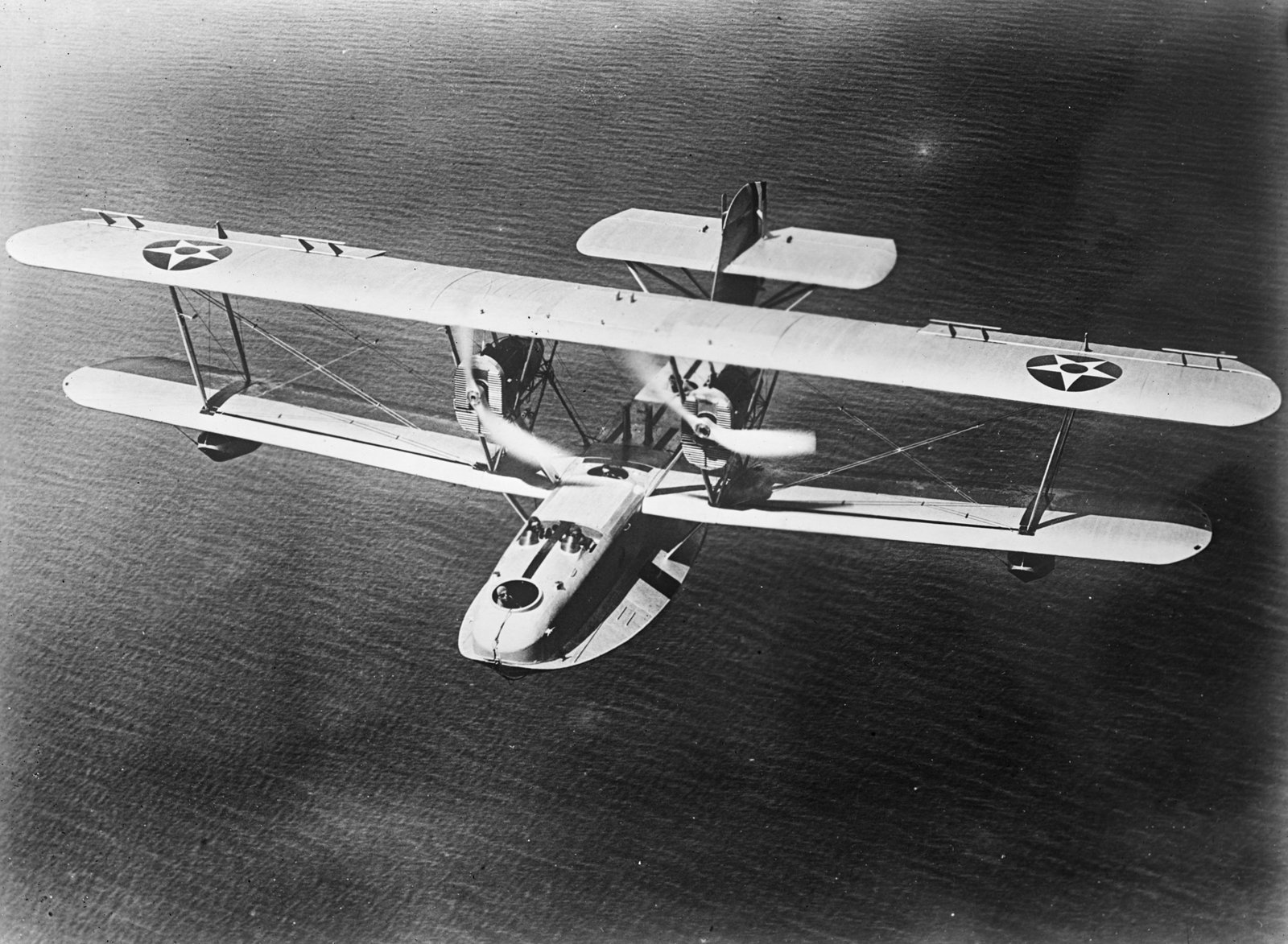
The Naval Aircraft Factory (NAF) PN was not a single aircraft model but a comprehensive family of patrol flying boats developed by the U.S. Navy. Based on the Curtiss F-5L/Felixstowe lineage, the PN series consisted of several variants produced throughout the 1920s and 1930s. The original design and development work were conducted by the Naval Aircraft Factory, a government-operated facility established in October 1917 at the Philadelphia Navy Yard in Pennsylvania. While the NAF served as the design authority, the production of later derivatives was outsourced to private industry.
The definitive version of the series was the PN-12, a twin-engine biplane flying boat optimized for long-range maritime patrol and antisubmarine warfare. The PN-12 family totaled 98 aircraft, including 25 Douglas PD-1s, 30 Martin PM-1s, 25 Martin PM-2s, and 18 Keystone PK-1s. Technically, the PN-12 was powered by two 525-hp radial piston engines, utilizing either the Wright Cyclone R-1750 or the Pratt & Whitney Hornet R-1850. These aircraft were designed for a crew of five and featured a top speed of 114 mph with a cruising range exceeding 1,300 miles. For combat, they were equipped with single .30-caliber machine guns located amidships and in the bow, along with four 230-pound bombs mounted under the lower wing.
In military service, the PN-12 derivatives entered the U.S. Navy fleet on April 30, 1928. They remained a primary asset for maritime patrol until the final Keystone PK-1 was retired in July 1938. Beyond American service, the Brazilian Navy operated three Martin PM-1s acquired in 1930, which were notably employed in bombing raids during the 1932 revolution. The broader design lineage, stretching from the F-5L through the PN series to the Hall PH-3, is recognized for its longevity, spanning two world wars. The NAF facility that birthed the design eventually transitioned into the Naval Air Engineering Facility (Ship Installations) by May 1956, marking the end of aircraft production at the Philadelphia site.