
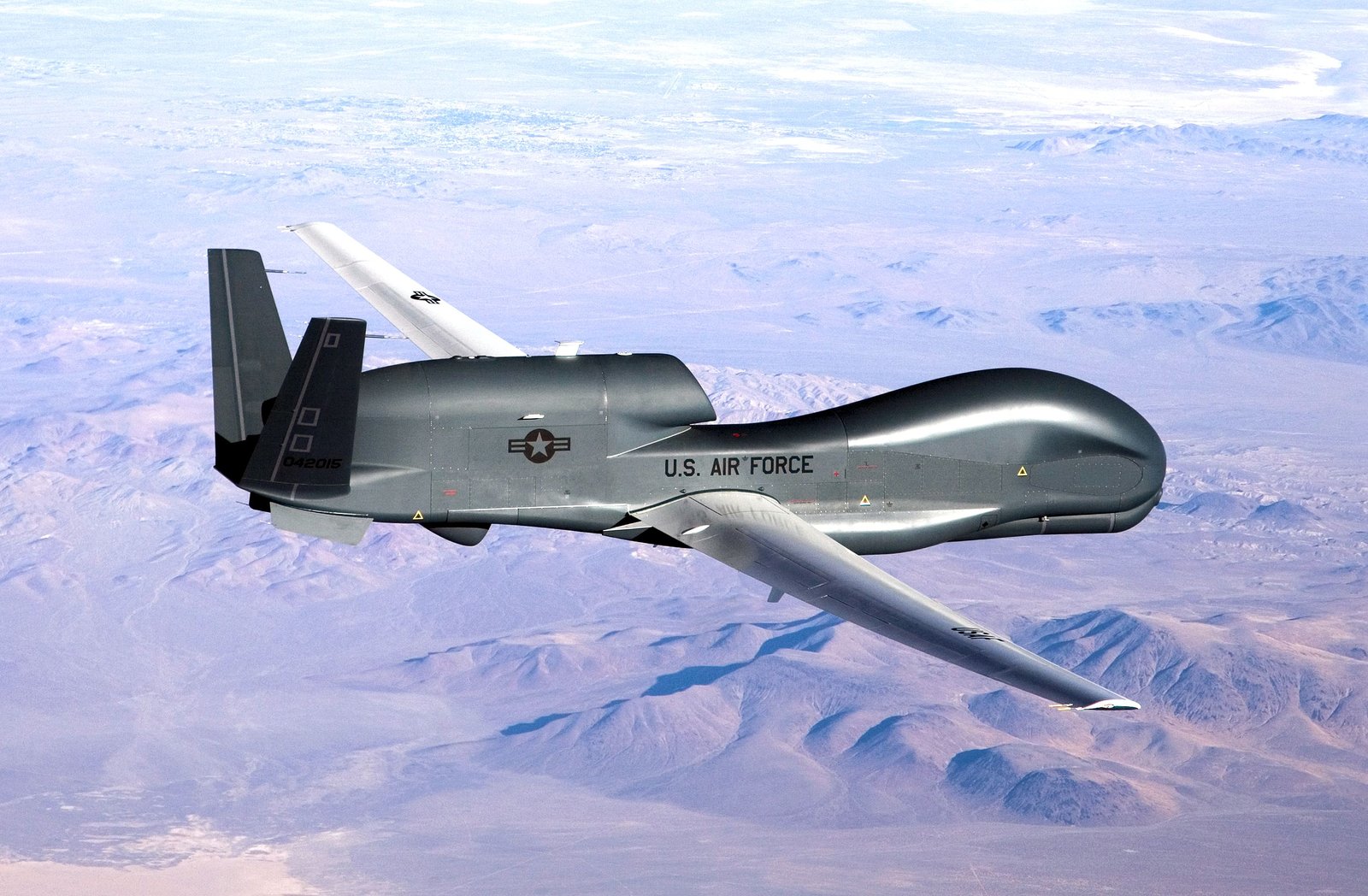
The Northrop Grumman KQ-X was not a standalone production aircraft model, but rather a specialized research and development program funded by the Defense Advanced Research Projects Agency (DARPA). Awarded to Northrop Grumman on July 1, 2010, the $33 million initiative was tasked with the investigation and development of autonomous aerial refueling techniques. The program sought to solve the complex challenge of allowing unmanned aircraft to perform refueling operations autonomously, a capability that had never been previously achieved for high-altitude unmanned systems.
Rather than designing a new airframe from the ground up, the KQ-X program utilized two existing NASA Global Hawk high-altitude long-endurance unmanned aerial vehicles (UAVs) as the primary test platforms. To achieve the program's goals, Northrop Grumman collaborated with several key subcontractors, most notably Sierra Nevada Corporation and Sargent Fletcher Inc. These partnerships were essential in integrating the necessary hardware and software to facilitate the autonomous docking and refueling processes.
The program's progress culminated in a series of flight demonstrations that took place between January 11, 2012, and May 30, 2012. These tests were designed to validate the autonomous systems and prove that high-altitude UAVs could successfully engage in refueling operations. Because the KQ-X was a research effort utilizing existing Global Hawk airframes, there was no traditional production line, factory manufacture, or specific production quantity associated with the KQ-X designation itself.
In terms of operational history, the KQ-X did not serve in a combat or commercial capacity. Its entire existence was dedicated to the research and test environment. The legacy of the program lies in its successful demonstration of autonomous aerial refueling, providing a technological foundation for future unmanned aerial systems. While the specific engine and dimensional specifications of the modified test aircraft were not detailed as unique KQ-X specifications, the program's success proved the viability of autonomous refueling for long-endurance unmanned platforms.