
Service History
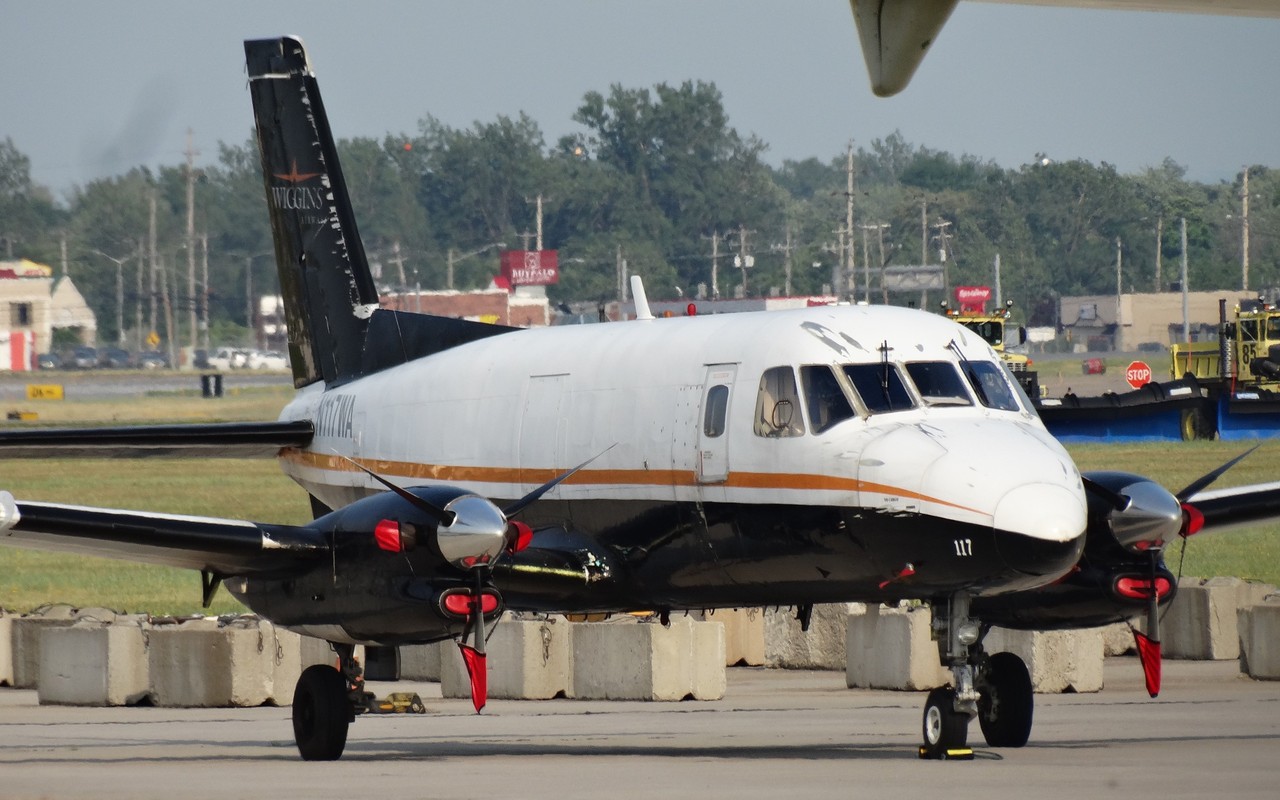
The Bandeirante transformed regional aviation across Brazil and became the foundation of EMBRAER's rise to global prominence. Between 1973 and 1991, the aircraft connected remote communities throughout the Amazon, Northeast, and Midwest regions of Brazil, where conventional airliners could not operate economically. Transbrasil became the launch customer in April 1973, followed by VASP and Rio-Sul, establishing a network that served previously isolated settlements.
By 1977, international recognition arrived when Air Littoral became the first foreign airline operator. The aircraft's versatility attracted operators across North America and Europe, with Aero Commuter ordering three units by 1978. Of the 501 aircraft delivered during the production run, the type dominated Brazil's regional aviation sector and proved that developing nations could produce sophisticated commercial aircraft.
Military Operations
The Brazilian Air Force secured the program's future by ordering 80 units, becoming the aircraft's largest single customer. Military service began on February 9, 1973, with the FAB utilizing Bandeirantes for passenger transport, cargo operations, flight training, search and rescue missions, and reconnaissance duties throughout Brazil's vast territory.
Uruguay's Air Force became the first export military customer in 1975, purchasing five EMB-110C variants. The aircraft's ability to operate from unpaved airstrips made it invaluable for humanitarian missions and military logistics in South America's challenging geography.
The Manufacturer
EMBRAER emerged from Brazilian Congressional Decree-Law No. 770 on August 19, 1969, specifically created to develop and manufacture the Bandeirante. The state-owned enterprise began industrial operations in January 1970 at São José dos Campos, transforming Brazil from an aircraft importer to a major aerospace exporter.
French engineer Max Holste led the design team, creating an aircraft that incorporated advanced systems including Rockwell Collins avionics and specialized Goodyear tires. The project originated from the Ministry of Aeronautics' IPD/PAR 6504 initiative in 1965, designed to establish Brazil's aerospace independence.
Since the Bandeirante's success, EMBRAER has delivered more than 8,000 aircraft worldwide, with one EMBRAER aircraft taking off every ten seconds globally. The company evolved from state ownership to become a publicly traded corporation and now leads the regional jet market worldwide.
Engine and Technical Innovation
Two Pratt & Whitney PT6A turboprop engines powered the Bandeirante, with early production aircraft receiving 680-horsepower PT6A-27 engines. Later variants, including the EMB-110P1, upgraded to 750-horsepower PT6A-34 engines driving constant-speed, reversible-pitch propellers. This powerplant combination provided exceptional reliability and fuel efficiency for short-haul operations.
The aircraft featured a pressurized cabin, advanced for regional aircraft of the early 1970s, and required only two crew members for operation. Maximum takeoff weight reached 13,007 pounds, while empty weight measured 7,474 pounds, providing substantial payload capacity for passenger or cargo operations.
Performance Characteristics
Pilots praised the Bandeirante's handling characteristics and short-field performance, essential for Brazil's remote airstrips. The aircraft achieved a maximum speed of 385 mph and cruised at 345 mph, with a service ceiling of 29,800 feet and range extending to 1,087 miles depending on payload.
Takeoff distance of 4,659 feet allowed operations from airstrips that larger aircraft could not access, while fuel capacity of 867 gallons provided adequate range for regional routes. The combination of speed, payload, and short-field capability made the Bandeirante ideal for connecting Brazil's scattered communities.
Production Legacy
Production concluded in 1991 after 501 deliveries, but the aircraft's influence extended far beyond these numbers. The Bandeirante demonstrated Brazil's technical capabilities and established EMBRAER's reputation for reliable, efficient regional aircraft. Success led to development of the EMB-121 Xingu executive transport and the larger EMB-120 Brasília, which first flew in 1983.
Many Bandeirantes continue operating today, particularly in remote regions where their rugged construction and short-field performance remain valuable. In 2023, EMBRAER celebrated the aircraft's 50th year of continuous service, marking an extraordinary operational lifespan that validated the original design's excellence. The name "Bandeirante," meaning "pioneer" in Portuguese, proved prophetic as the aircraft pioneered Brazil's emergence as a major aerospace manufacturing nation.