
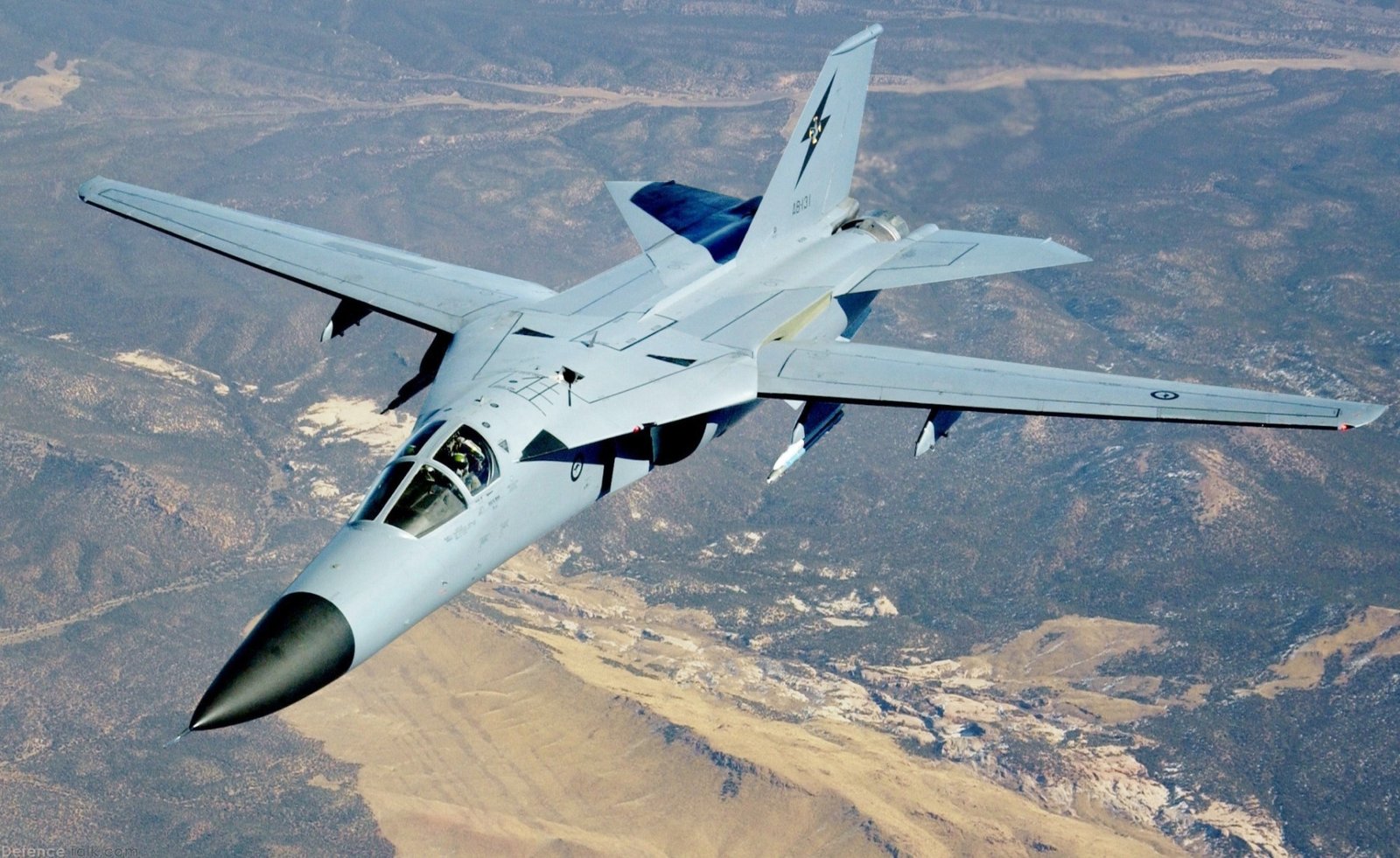
Production and Manufacturer History
The F-111C was a specialized variant of the F-111 Aardvark, developed by General Dynamics in the United States. The broader F-111 production program spanned from 1964 to 1976, resulting in a total of 563 aircraft. In 1963, the Royal Australian Air Force (RAAF) ordered 24 purpose-built F-111C airframes. To address attrition, the RAAF later acquired four additional aircraft in 1982; these were originally USAF F-111A models that were rebuilt to the F-111C standard. While the aircraft were produced by General Dynamics, the company's Fort Worth aircraft operations were eventually divested and acquired by Lockheed Martin, which now maintains the program's historical records.
Design and Development
Originating from the United States Department of Defense TFX (Tactical Fighter Experimental) program, General Dynamics won the development contract in 1962. The F-111C was specifically designed to combine the F-111A fuselage with the longer wings of the F-111B to enhance range and performance. A defining characteristic of the design was its variable-geometry "swing" wings, making it the first aircraft of its kind to enter service. This allowed the aircraft to optimize its wing sweep for both high-speed dashes and low-speed take-offs and landings. While the F-111 family first flew on December 21, 1964, specific Australian airframes, such as A8-142, first flew as late as December 18, 1968.
Service History
The F-111C entered RAAF service in 1973, replacing the English Electric Canberra. Although deliveries began in 1968, technical and structural issues delayed formal reception until October 1, 1973. The first F-111C to land at RAAF Amberley occurred on June 1, 1973. Throughout its 37-year career, the F-111C served as a long-range, all-weather strike platform. While the C-model never saw combat, it participated in major exercises, including Pitch Black and the 2002 Red Flag exercise in the United States. Between 1979 and 1980, four of the original 24 aircraft were converted into RF-111C reconnaissance variants.
Performance and Legacy
Capable of reaching a top speed of Mach 2.5, the F-111C was the fastest aircraft ever operated by the RAAF. It became a cultural icon in Australia, famous for "dump and burn" fuel-ignition displays at airshows. The aircraft's operational career concluded on December 3, 2010, when A8-125 made the final operational landing at RAAF Amberley. Several aircraft have been preserved, including A8-109, a former USAF F-111A that served in Vietnam during "Linebacker" missions before being converted to C-standard and displayed at the HARS Aviation Museum.