
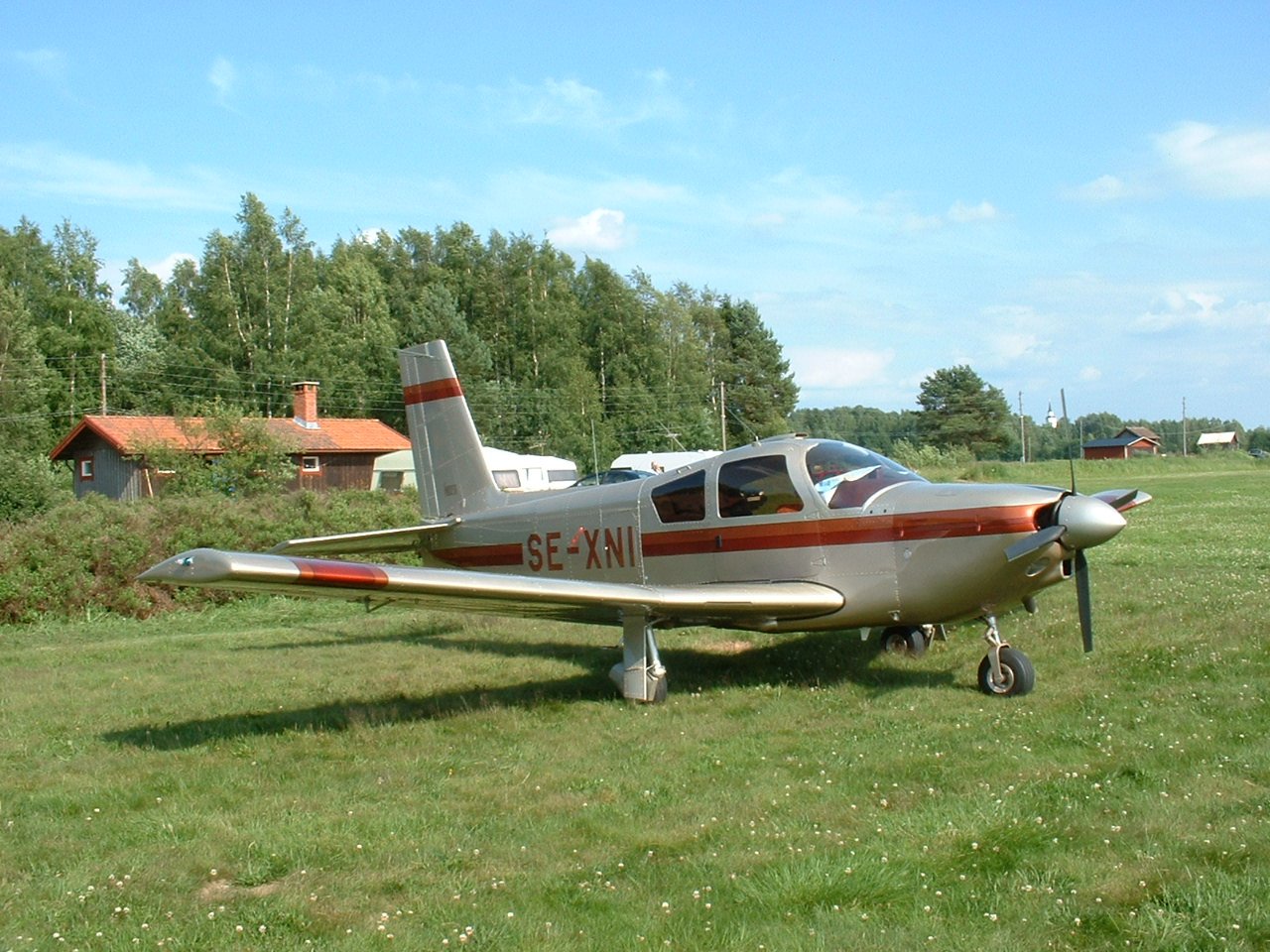
Development and Design Philosophy
The ST-10 Provence emerged from SOCATA's acquisition of the Gardan GY-80 Horizon design rights in 1962, representing the company's effort to transform a promising design into a commercially viable touring aircraft. Initially designated the Super Horizon 200, then ST-10 Provence, and finally ST-10 Diplomate, the aircraft underwent extensive development before its prototype first flight on November 7, 1967. The design team focused on extracting maximum performance from a 200-horsepower powerplant, achieving cruise speeds of 265 to 280 kilometers per hour (143-170 mph) that surpassed many contemporary four-seat aircraft.
The Manufacturer's Evolution
SOCATA (Société de Construction d'Avions de Tourisme et d'Affaires) inherited a rich aviation legacy through its predecessor, Morane-Saulnier, founded in 1911. The original company had achieved notable firsts, including Raymond Saulnier's 1914 machine gun synchronization patent and the 1913 Morane H parasol that carried Roland Garros across the Mediterranean. After Morane-Saulnier's bankruptcy in 1962, Sud Aviation acquired the company and transformed it into SOCATA in 1966, establishing manufacturing operations primarily in Tarbes, France.
During World War II, the Tarbes facility had been forced to produce Focke-Wulf 190 fighters for the German occupation forces until Allied bombing in March 1944 destroyed much of the plant. Post-war recovery began with the MS 470 trainer in 1945, marking France's first postwar aircraft production. By 1993, SOCATA had manufactured over 17,000 aircraft in its various incarnations, eventually becoming part of EADS and later Daher, which continues operations today.
Technical Innovation
The ST-10's low-wing configuration incorporated all-metal construction with careful attention to aerodynamic efficiency. The aircraft's clean lines and optimized wing design allowed it to achieve remarkable performance from its Lycoming IO-360-C1A or IO-360-C1B engine. This four-cylinder, horizontally opposed, fuel-injected powerplant delivered 200 horsepower (149 kW) with the reliability that Lycoming engines had established throughout the 1960s.
With a maximum takeoff weight of 1,180 kilograms (2,601 pounds) and an empty weight of 650 kilograms (1,433 pounds), the ST-10 offered a useful load of 530 kilograms. The aircraft's dimensions included a wingspan of 9.70 meters (32 feet 10 inches) and height of 2.88 meters (9 feet 5 inches), creating an elegant profile that emphasized its performance orientation.
Production Challenges
Despite its impressive specifications and sleek appearance, the ST-10 faced significant market challenges during its production run from 1970 to 1974. Only 55 aircraft were completed at SOCATA's Tarbes facility, making it one of the rarer French general aviation designs of the era. The limited production numbers reflected the competitive nature of the four-seat touring aircraft market, where established manufacturers like Piper and Cessna dominated sales volumes.
The ST-10's higher performance came at a cost premium that many buyers were unwilling to pay, particularly when proven alternatives offered similar utility at lower prices. Additionally, the early 1970s marked a challenging period for general aviation manufacturing, with economic uncertainties affecting discretionary aircraft purchases.
Pilot Experience
Those fortunate to fly the ST-10 consistently praised its spirited performance and responsive handling characteristics. The aircraft's low-wing design provided stability in cruise flight while maintaining adequate control authority for recreational flying. The fuel-injected Lycoming engine offered reliable operation and smooth power delivery throughout the aircraft's operating envelope.
The cabin accommodated four occupants in relative comfort, with the pilot and three passengers enjoying better visibility than many high-wing competitors. The aircraft's cruise performance of 150 knots represented a significant advantage over typical training aircraft, making it attractive for cross-country touring and business transportation.
Legacy and Current Status
Today, the ST-10 Provence remains a rare sight on general aviation ramps worldwide, with some examples still maintaining airworthiness certificates. The aircraft represents an interesting footnote in French aviation history, demonstrating SOCATA's engineering capabilities while highlighting the commercial realities of the competitive general aviation market.
The limited production numbers have made surviving ST-10s valuable to collectors and enthusiasts who appreciate the aircraft's distinctive design and performance characteristics. While not achieving the commercial success that SOCATA had hoped, the ST-10 contributed to the company's experience base that would later influence more successful designs in subsequent decades.
The aircraft serves as a reminder of the numerous ambitious general aviation projects launched during the 1960s and early 1970s, when optimism about private flying's growth led many manufacturers to develop specialized designs for specific market segments.