
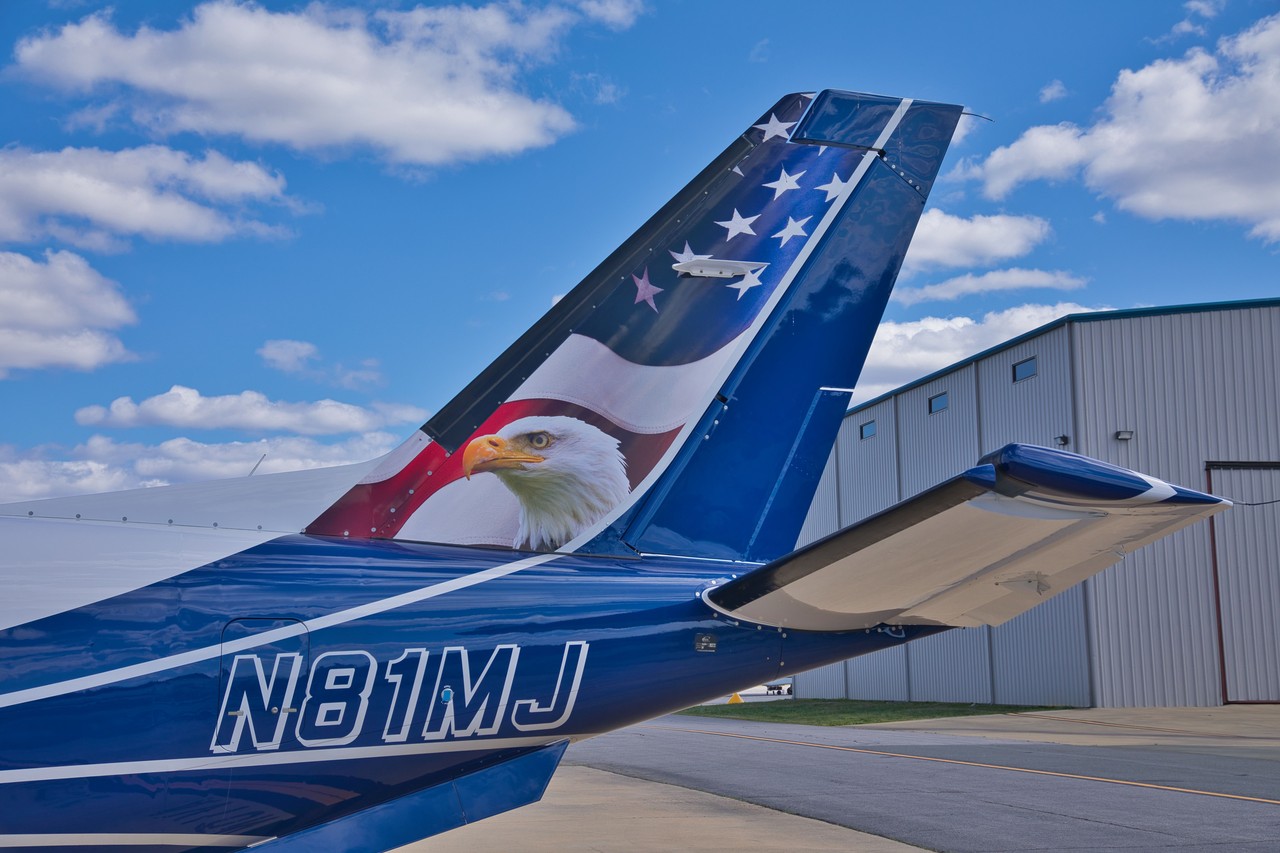
Revolutionary Design Concept
The TBM-700A emerged from an ambitious collaboration between French manufacturer SOCATA and American company Mooney Aircraft in the mid-1980s. The design traced its origins to Mooney's Model 301 prototype, a comparatively underpowered aircraft that served as the foundation for what would become a groundbreaking turboprop. When French interests acquired Mooney, the two companies launched a joint venture to develop an enlarged, turboprop-powered design that would fill a gap between twin-engine aircraft and smaller single-engine planes.
Development and Certification
The first TBM-700 prototype was officially rolled out on June 13, 1988, at SOCATA's Tarbes facility in France. Just one month later, on July 14, 1988—coincidentally Bastille Day—the aircraft completed its maiden flight. The development program progressed rapidly, with French certification achieved on January 31, 1990, followed by FAA approval on August 28, 1990. This swift certification process reflected both the aircraft's sound design and the manufacturers' determination to capture the emerging market for high-performance single-engine turboprops.
Manufacturing Partnership and Challenges
Production was initially planned for two facilities: SOCATA's factory in Tarbes, France, would serve international markets, while Mooney's Kerrville, Texas facility would handle U.S. deliveries. However, this arrangement proved short-lived. In May 1991, Mooney withdrew from the partnership, leaving SOCATA as the sole manufacturer. Despite this setback, SOCATA successfully ramped up production, with the first customer deliveries beginning in October 1990.
Technical Innovation
The TBM-700A's most significant achievement was becoming the first pressurized single-engine turboprop certified for passenger service. The aircraft featured a robust aluminum and steel airframe with a distinctive low-wing configuration. Its Pratt & Whitney Canada PT6A-64 engine produced 700 shaft horsepower, flat-rated to maintain full power even in hot conditions up to ISA +49°C. The reverse-flow design of the PT6A engine, combined with a four-bladed constant-speed reversible propeller, provided exceptional performance characteristics.
The pressurization system allowed the aircraft to cruise at altitudes exceeding 30,000 feet while maintaining a comfortable cabin environment for passengers. This capability, previously available only in twin-engine aircraft or jets, represented a quantum leap in single-engine turboprop technology.
Market Reception and Performance
The aviation industry's response to the TBM-700A was overwhelmingly positive. The initial production run of 50 aircraft sold out almost immediately, demonstrating strong demand for this new category of aircraft. Pilots praised the aircraft's generous power margins and impressive speed capabilities, with many noting that it delivered near-jet performance at significantly lower operating costs.
With a maximum cruise speed of 300 knots, the TBM-700A earned recognition as one of the fastest single-engine turboprops ever certified. The aircraft could carry six to seven passengers in a spacious cabin while maintaining a useful load of 1,764 pounds. Its 282-gallon fuel capacity provided substantial range, making it ideal for business travel across continental distances.
Production Success
SOCATA manufactured the TBM-700A from 1990 through the mid-1990s, with the final aircraft (Serial Number 0142) delivered in 2000. A total of 324 TBM-700 series aircraft were built between 1990 and 2005, establishing a solid foundation for future variants. The success of the original TBM-700A led directly to improved versions including the 700B, 700C, and 700C2, each incorporating technological advances and customer feedback.
The Manufacturer's Evolution
SOCATA (Société de Construction d'Avions de Tourisme et d'Affaires) had established itself as a respected manufacturer of general aviation aircraft before undertaking the ambitious TBM project. The company's expertise in aluminum construction and certification processes proved crucial to the TBM-700A's development. In 2009, French industrial group Daher acquired SOCATA, creating Daher-Socata, which continues TBM production today with advanced variants like the TBM-960.
Operational Legacy
The TBM-700A's pioneering role cannot be overstated. It proved that single-engine turboprops could safely and efficiently serve the business aviation market previously dominated by twin-engine aircraft. The aircraft's reliability record, enhanced by the proven PT6A engine with inspection intervals of 3,000 to 3,500 hours, helped establish confidence in single-engine turboprop operations.
By 2023, more than 1,155 TBM aircraft of all variants had been produced, with the fleet accumulating millions of flight hours. The TBM-700A established design principles and performance benchmarks that continue to influence modern single-engine turboprop development. Today, well-maintained TBM-700A aircraft command prices ranging from $1.1 million for early examples to $1.825 million for late-production models, reflecting their enduring value in the marketplace.