
Development and Design Philosophy
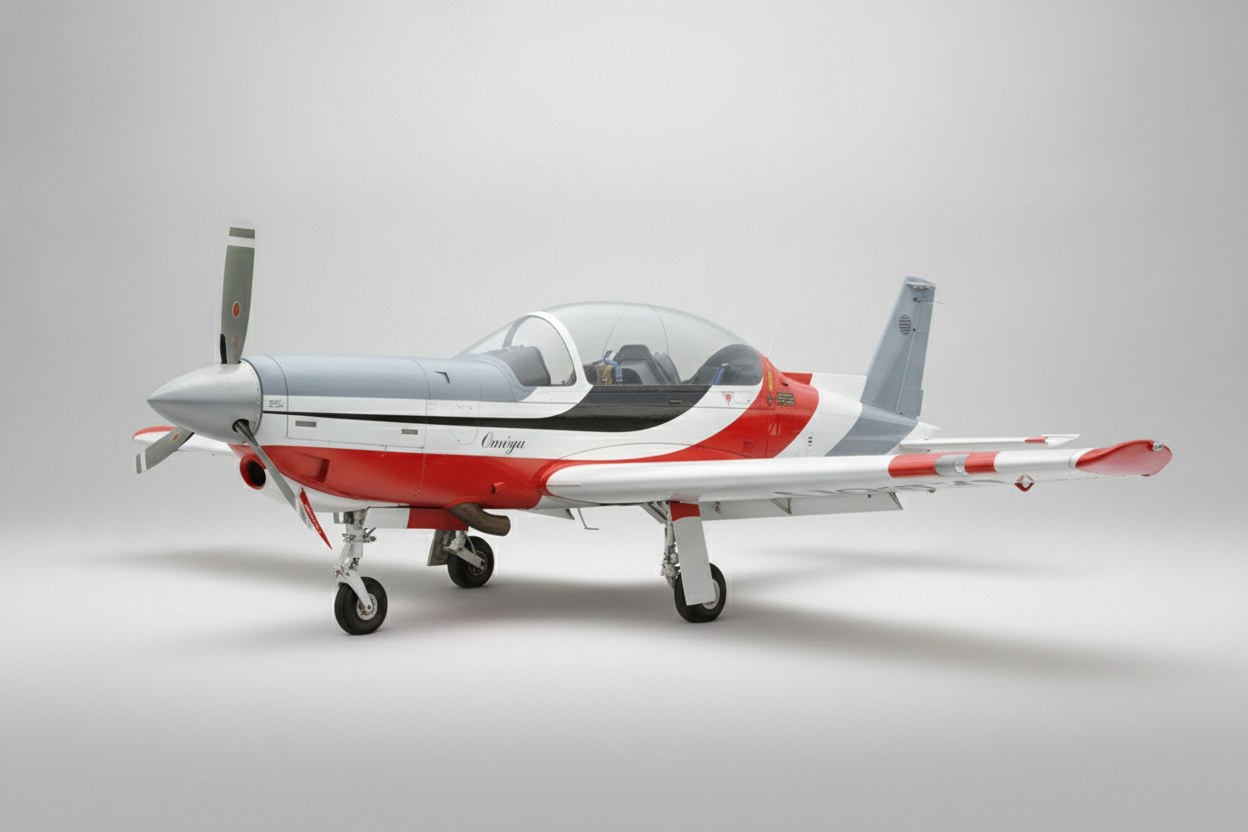
The TB-31 Omega emerged during SOCATA's ambitious expansion of their TB aircraft family in the late 1980s. The company had achieved considerable success with the TB-30 Epsilon military trainer, which entered service in 1984 and attracted orders from the French Air Force and several foreign operators. Building on this foundation, SOCATA's engineering team sought to explore whether turboprop power could enhance the Epsilon's training capabilities while maintaining its docile handling characteristics.
The prototype aircraft was converted from an existing Epsilon testbed, allowing engineers to evaluate the transformation from piston to turbine power without developing an entirely new airframe. This pragmatic approach reflected SOCATA's methodical development philosophy, which had served them well throughout the TB family's evolution.
Technical Innovation
The heart of the TB-31's transformation was its TP319 turboprop engine, which replaced the Lycoming piston engine of the standard Epsilon. This powerplant promised several advantages over conventional piston engines: reduced vibration, improved reliability at altitude, and the ability to operate on jet fuel rather than aviation gasoline. For military training applications, these characteristics offered potential operational benefits, particularly for air forces operating in remote locations where avgas availability remained problematic.
The aircraft retained the Epsilon's fundamental configuration: a low-wing monoplane with tricycle landing gear and tandem seating for instructor and student. The 7.92-meter wingspan and 7.59-meter overall length remained unchanged from the base aircraft, demonstrating SOCATA's commitment to maintaining the Epsilon's compact dimensions and excellent ground handling characteristics.
Flight Testing and Evaluation
Flight testing commenced in mid-1989, following the prototype's maiden flight in April of that year. Test pilots evaluated the aircraft's performance across the full spectrum of primary training maneuvers, assessing whether the turboprop installation maintained the Epsilon's forgiving stall characteristics and precise control response that had made it popular with flight training organizations.
The evaluation program focused particularly on fuel efficiency, maintenance requirements, and operational costs compared to the piston-powered variant. These factors would prove crucial for any potential customers, as training aircraft typically accumulate high flight hours while operating under strict budget constraints.
Market Reality and Production Decision
Despite successful flight testing, the TB-31 Omega never progressed beyond its single prototype. The late 1980s military training market presented significant challenges for new aircraft types. Most air forces had established training programs built around existing aircraft, and the benefits of turboprop power failed to justify the additional acquisition and support costs for primary training applications.
The timing also proved unfortunate. The end of the Cold War in 1989 led to reduced military budgets worldwide, with many air forces cutting training programs rather than expanding them. Advanced jet trainers were gaining favor for countries that could afford them, while those seeking economical primary trainers remained satisfied with proven piston-engine designs.
SOCATA's Broader Challenges
The TB-31's failure to reach production reflected broader challenges facing SOCATA during this period. The company had invested heavily in the TB family, producing more than 2,000 aircraft between 1979 and 2006. However, the general aviation market proved increasingly difficult, with economic downturns affecting sales throughout the 1990s.
The September 11, 2001 attacks devastated the aviation industry, forcing SOCATA to suspend serial production in 2003. By 2012, the company had terminated all marketing and production activities for the TB series, focusing instead on business aviation through their successful TBM turboprop line.
Legacy and Current Status
SOCATA survived these challenges through corporate restructuring and acquisition. The company eventually became part of the Daher group, operating as Daher-Socata and continuing to produce the highly successful TBM series of single-engine turboprops for business aviation.
The TB-31 Omega remains a footnote in aviation history, representing the road not taken for military training aircraft development. Its single prototype demonstrated that turboprop conversion was technically feasible, but market forces and timing prevented any commercial success. The aircraft exemplifies how even sound engineering concepts can fail when market conditions and customer needs do not align with technical capabilities.
Today, the TB-30 Epsilon continues in limited service with several air forces, while the turboprop training market has been dominated by aircraft like the Pilatus PC-21 and Embraer Super Tucano, both purpose-built designs rather than piston-to-turbine conversions.