
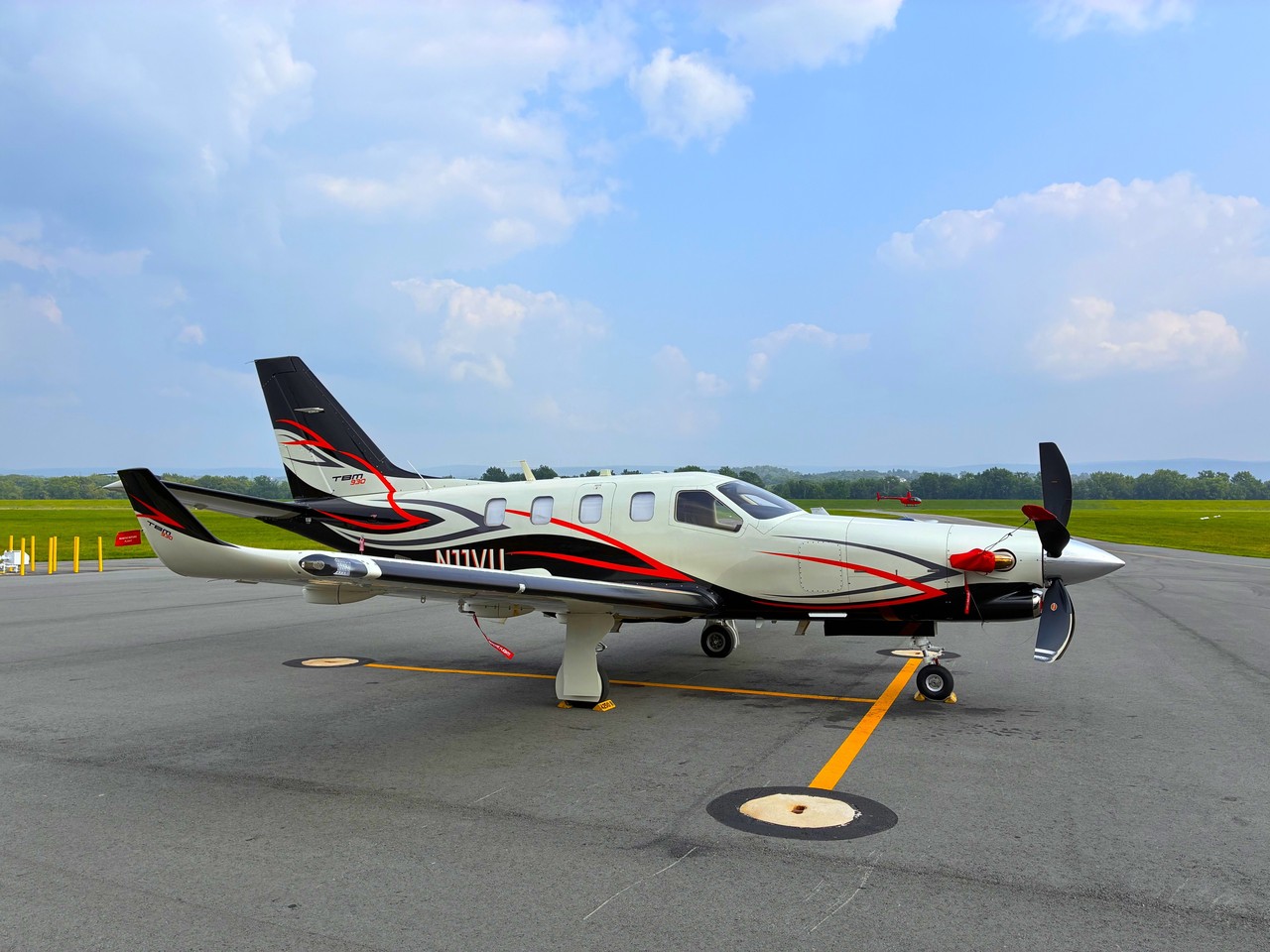
A Speed Revolution in Single-Engine Aviation
The TBM-900 transformed expectations for single-engine turboprop performance when it entered service in 2015. Achieving speeds previously reserved for light jets, the aircraft attracted both piston twin owners seeking an upgrade and entry-level jet pilots looking for more economical operations. The 330-knot cruise speed represented a significant leap forward in single-engine capability, establishing new benchmarks for the category.
Despite launching during uncertain economic times, Daher secured 40 pre-launch orders, demonstrating strong market confidence in the design. By July 2023, the broader TBM-900 series had accumulated over 600 deliveries, with the 500th TBM-900 series aircraft delivered in October 2023.
The Manufacturer's Evolution
SOCATA (Société de Construction d'Avions de Tourisme et d'Affaires) originally developed the TBM series as part of a joint venture with Mooney Airplane Company called TBM International, established in 1990. The French company, initially part of Aérospatiale, had planned to establish a U.S. production line at Mooney's Kerrville, Texas facility, but abandoned these plans in May 1991, consolidating all manufacturing at their Tarbes facility in southwestern France.
In 2009, Daher acquired a majority stake in SOCATA, eventually rebranding the operation as Daher-SOCATA before fully integrating it under the Daher name. The company continues TBM production today, having delivered over 1,260 TBM-series aircraft by 2024, with the 900-series becoming their best-selling variant.
Engineering Excellence and Innovation
The SOCATA/Daher-SOCATA engineering team began development work in late 2010, focusing on aerodynamic improvements over the preceding TBM-850. The design incorporated 26 specific modifications, including proprietary winglets, a redesigned air intake system, carbon-fiber cowlings, an enlarged dorsal fin, composite landing gear doors, and an inertial separator system.
One of the most significant changes was the adoption of a five-blade Hartzell carbon-fiber propeller, which contributed substantially to the aircraft's performance gains. The engineering team conducted extensive flight testing using modified TBM-700 testbeds and two purpose-built prototypes, accumulating 215 flight hours before certification.
The aircraft received both FAA and EASA certification in December 2014, with first deliveries occurring on March 20, 2015, to customers in both the United States and Europe.
Powerplant Performance
The TBM-900 utilizes the Pratt & Whitney Canada PT6A-66D turboprop engine, flat-rated at 634 kilowatts (850 shaft horsepower). This powerplant, part of the proven PT6 family that first flew in 1963, provides excellent power margins and reliability. The PT6 series has achieved remarkable success, with over 50,000 units produced across all variants.
Early pilots praised the engine's reliable hot-section inspection intervals and robust performance characteristics. The TBM-900's redesigned nose-to-firewall configuration and spinner optimization enhanced airflow to the engine, contributing to overall performance improvements.
Pilot Experience and Performance
The TBM-900's performance specifications impressed pilots accustomed to traditional single-engine limitations. With a maximum cruise speed of 330 knots true airspeed, a service ceiling of 31,000 feet, and an initial climb rate of approximately 2,000 feet per minute, the aircraft delivered near-jet performance with single-engine economics.
The pressurized cabin accommodates six to seven passengers in executive configuration, with one or two crew members. The aircraft's 1,730 nautical mile range enables non-stop flights across significant distances, making it practical for business and personal transportation missions previously requiring larger aircraft.
Production and Global Reach
SOCATA produced 114 TBM-900 aircraft between 2014 and 2016, all manufactured at the Tarbes facility. The aircraft found international acceptance, with examples delivered worldwide. One notable early delivery was aircraft VH-LZJ (construction number 1016, originally N198JJ), delivered to Australia on June 10, 2014, registered on June 26, 2014, and displayed at the Avalon Airshow in February 2015.
The TBM-900's launch coincided with market recovery following the 2008 economic downturn, and its success helped revitalize Daher's position in the single-engine turboprop market.
Legacy and Continued Impact
The TBM-900 established new performance standards for certified pressurized single-engine turboprops, earning recognition as the fastest aircraft in its category. This achievement built upon the foundation established by the original TBM-700, which became the first pressurized single-engine turboprop certified on August 28, 1990.
By 2023, the combined TBM-900 series had accumulated over 2.6 million flight hours, with approximately 488 aircraft delivered across the 900, 910, 930, and 960 variants. The aircraft's success demonstrated strong market demand for high-performance single-engine turboprops, influencing subsequent developments in the category and cementing Daher's position as a leader in this specialized market segment.