
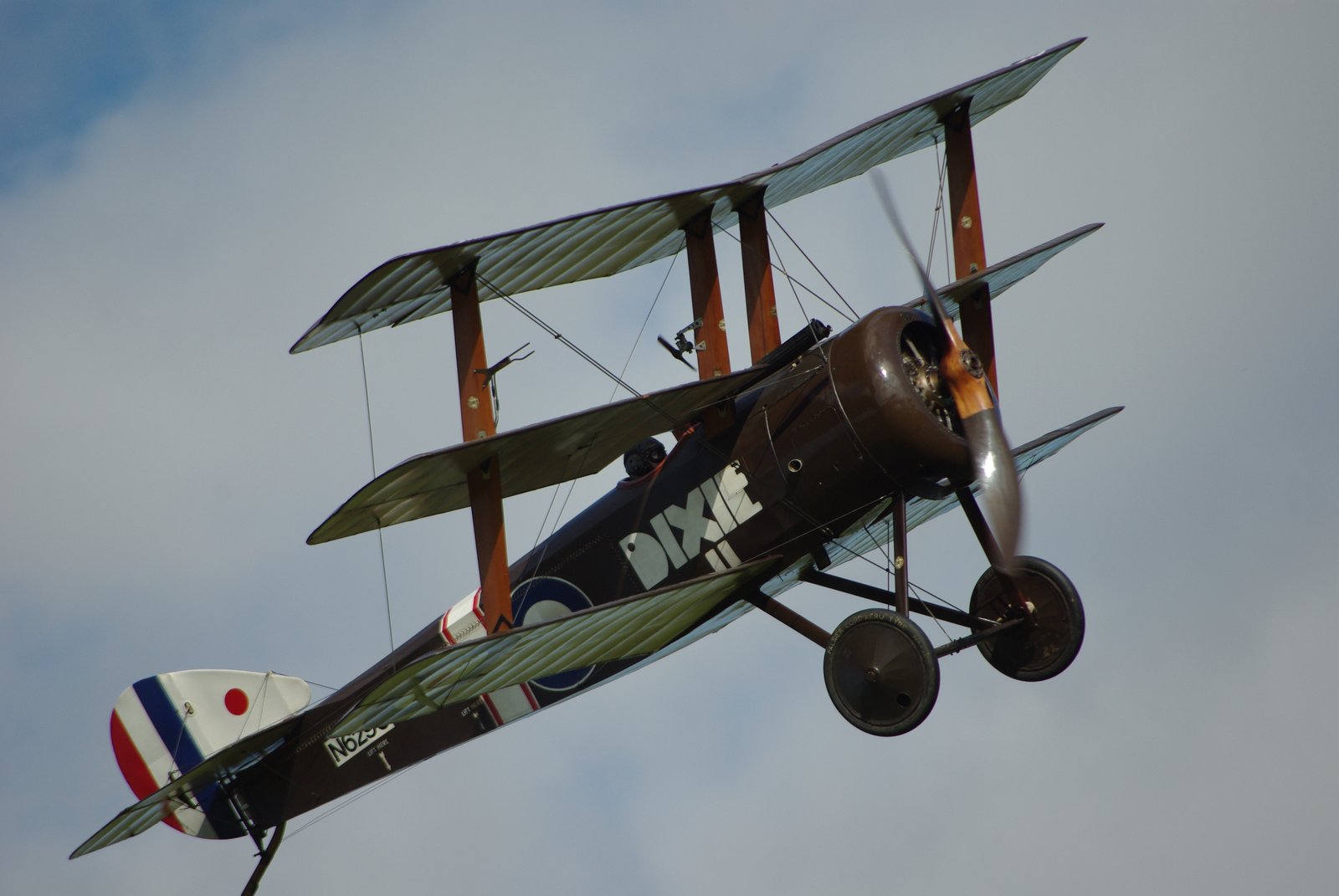
Designed by Herbert Smith for the Sopwith Aviation Company in the United Kingdom, the Sopwith Triplane was a landmark in early aviation history. The aircraft first took flight on 28 May 1916, introducing a three-wing configuration that provided a phenomenal rate of climb and superior maneuverability. These design characteristics allowed the Triplane to outperform the Albatros D.III in turns and climbs, with combat comparisons indicating it was at least 15 mph faster. This success had a significant international impact, prompting German manufacturers to develop their own triplane fighters, most notably the Fokker Dr.I.
Technically, the aircraft was powered by a 130 hp (approximately 96 kW) Clerget 9B piston rotary engine. The airframe featured a wingspan of 26 ft 6 in and a length of 18 ft 10 in, with a total wing area of 231 sq ft. It was a compact, single-seat fighter with an empty weight of 993 lb and a loaded weight of 1,415 lb. In terms of performance, it reached a maximum speed of 117 mph at 5,000 ft and could ascend to a service ceiling of 20,500 ft. Its climb performance was particularly notable, reaching 6,500 ft in 6.33 minutes. The aircraft was armed with a single .303 in Vickers machine gun.
Production occurred between 1916 and 1917, with 147 units built. While both the Royal Flying Corps and the Royal Naval Air Service (RNAS) placed orders, policy shifts resulted in the aircraft being used exclusively by RNAS fighter squadrons on the Western Front. The prototype, serial N500, was flown by Harry Hawker and sent to France in mid-1916 for trials with the Naval A Fighting Squadron at Furnes, where it was reportedly deployed on an interception mission within 15 minutes of its arrival. The most distinguished unit to operate the type was No. 10 Naval Squadron’s “Black Flight,” which claimed 87 German aircraft over three months; commander Raymond Collishaw alone was credited with 33 of these victories. Despite its effectiveness, the Triplane had a brief front-line career of approximately six months before being replaced by the Sopwith Camel, after which surviving airframes served as experimental aircraft and trainers. Today, the RAF Museum preserves a Sopwith Triplane, including serial N5912.