
Production and Manufacturer History
The Stinson L-13 was developed by Stinson, which at the time operated as a division of the Consolidated-Vultee Aircraft Corporation (Convair). While the aircraft was designed by the Stinson division, it was produced and marketed under the Convair name. The production run was brief, occurring between 1946 and 1947. A total of 302 airframes were constructed, consisting of two XL-13 prototypes built in Wayne, Michigan, and 300 production L-13A aircraft. In 1948, Convair sold the Stinson division to Piper Aircraft, but Convair retained the L-13 program.
Design and Technical Specifications
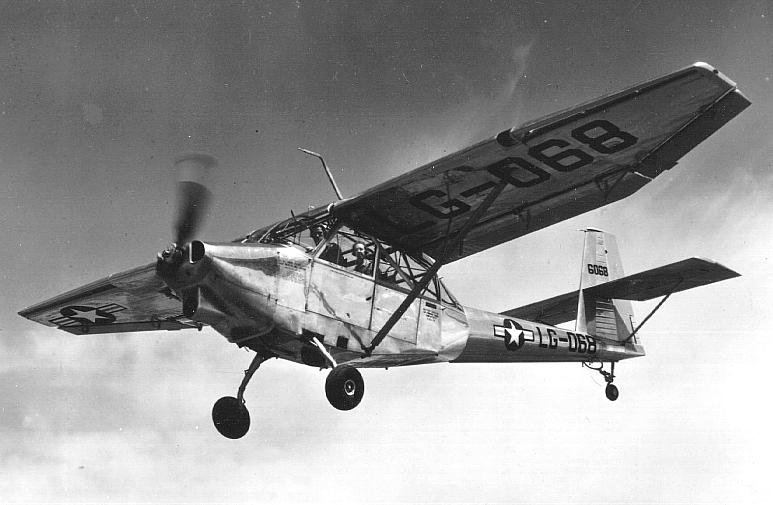
First flown in 1945, the L-13 was significantly larger and heavier than its predecessors, such as the L-4 and L-5. It featured a design gross weight of 2,900 lb, though it could handle a maximum overload of 3,700 lb. The aircraft was a high-wing, tailwheel monoplane characterized by a "greenhouse" cockpit with roof windows for superior observation. To facilitate transport and storage, the wings and horizontal stabilizers were foldable, and the landing gear legs could be rotated, allowing the plane to be towed behind a jeep. The interior was highly adaptable, featuring two side-by-side front seats and a cabin capable of transporting two stretchers for air-ambulance missions.
Engine and Performance
The standard military configuration utilized a Franklin O-425-9 air-cooled flat-six piston engine, producing between 245 and 250 hp. This powerplant enabled a maximum speed of 115 mph and a cruise speed of 92 mph, with a service ceiling of 15,000 ft. The L-13 was optimized for Short Take-Off and Landing (STOL) performance; at a weight of 2,700 lb, it could take off in 230 feet and land in 227 feet, with a stall speed of 43 mph. For maintenance ease, the aircraft was equipped with swing-out engine mounts.
Service History and Legacy
Although conceived during the final stages of World War II, the L-13 did not see combat in that conflict. It served primarily in support, training, and liaison roles for the U.S. Air Force and the U.S. Army, the latter of which operated 43 ex-Air Force L-13As during the Korean War. A specialized L-13B variant was produced in a run of 28 aircraft, featuring cabin heat and hot air ducting for cold-weather operations. As helicopters replaced fixed-wing liaison aircraft, the L-13 was phased out of military service and transitioned to civilian use. Many were converted to radial engines (such as Jacobs or Lycoming) and operated as "Husky II" bush planes in Alaska and the Caribbean. Today, the aircraft is rare, with approximately 15 remaining on the FAA registry. Notable examples include a static L-13A at the Planes of Fame Air Museum and an airworthy L-13B at the Heritage Flight Museum.