
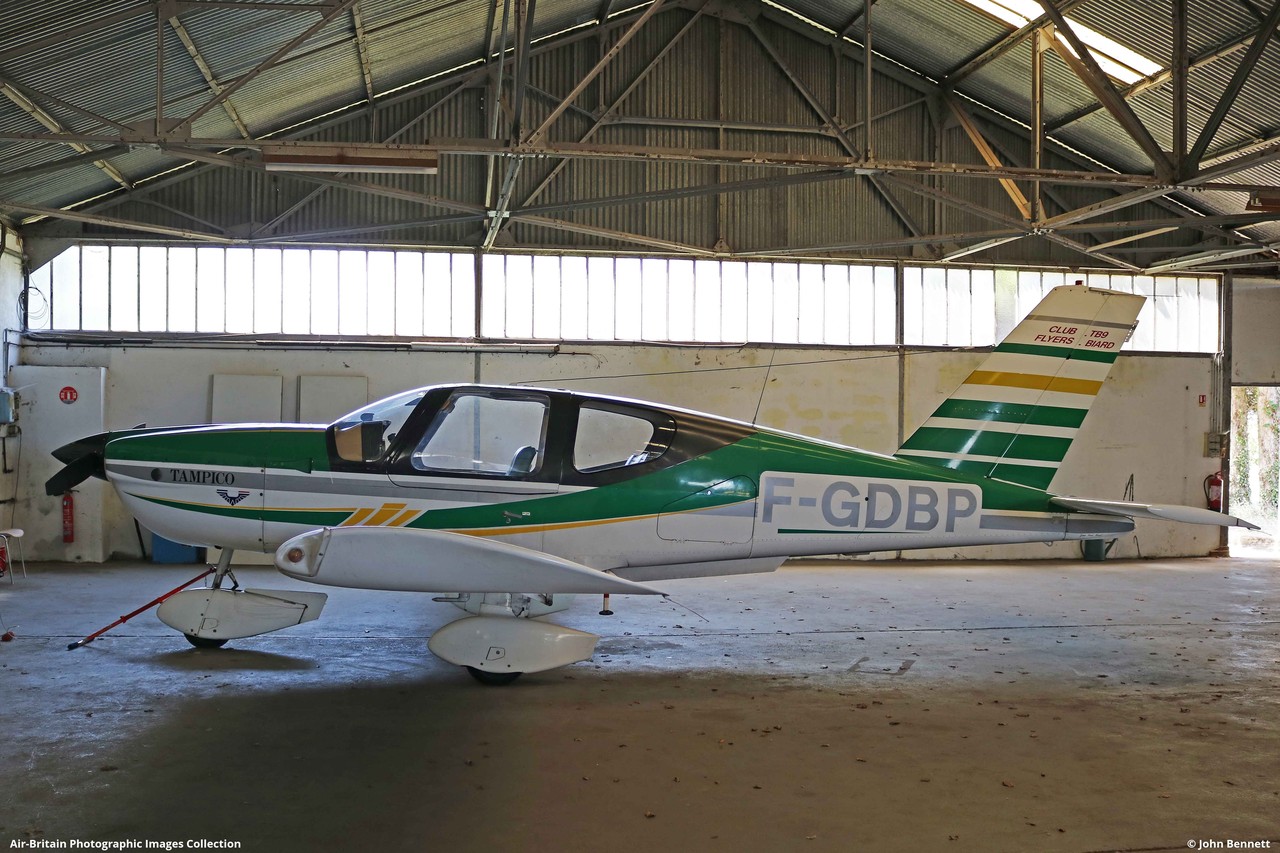
Development and Design
SOCATA's engineering team conceived the TB-9 Tampico during the mid-1970s as part of an ambitious plan to replace their successful Rallye series with a modern general aviation lineup. The first prototype took flight on September 23, 1977, powered by a 160-horsepower Lycoming O-320 engine. However, this initial aircraft was lost during spin testing on December 15, 1977, prompting SOCATA to develop a second prototype equipped with a more powerful 180-horsepower engine.
The design team prioritized creating a sleek, low-wing layout with fixed tricycle landing gear that would offer superior build quality compared to contemporary American trainers from Cessna and Piper. French certification was achieved on April 26, 1979, clearing the way for production to begin that same year. The Tampico's modern aesthetics and European engineering represented a fresh approach to the four-seat trainer market.
Production and Market Entry
Production commenced in 1979 at SOCATA's primary manufacturing facility in Tarbes, France. The TB-9 served as the foundation model for the entire TB family, which would eventually encompass over 2,000 aircraft across all variants by the time production ended in 2012. During the program's peak in early 1993, SOCATA was delivering 12 TB-family aircraft per month, demonstrating strong market demand.
The manufacturer employed an innovative approach to enter the American market, sometimes producing airframe components in France while completing final assembly in the United States using American-sourced parts. This strategy helped reduce costs and provided customers with familiar components and support networks.
Technical Specifications and Performance
The TB-9 Tampico was powered by the reliable Lycoming O-320-D2A engine, a four-cylinder, normally aspirated, carbureted powerplant producing 160 horsepower. This engine featured a time-between-overhaul interval of 2,000 hours or 12 years, making it economical for training operations. The aircraft could be equipped with either a fixed-pitch propeller or an optional constant-speed propeller in the TB-9 Tampico CS variant.
With an empty weight of 1,411 pounds and a maximum gross weight of 2,337 pounds, the Tampico offered a useful load of 926 pounds. The aircraft's fuel capacity of 53 gallons provided adequate range for training missions and cross-country flights. The four-seat cabin accommodated one pilot and three passengers, making it suitable for both flight instruction and personal transportation.
Major Customers and Service Record
The Civil Aviation Administration of China emerged as a significant customer for the TB family, placing the largest single order in the program's history during December 1993. This order included 38 TB-200 Tobago XLs and 5 TB-20 Trinidads for training purposes, demonstrating international confidence in SOCATA's designs.
The TB-9 found its primary role in flight training schools and as a personal aircraft for private owners. Its European origins provided an alternative to the dominant American trainers, appealing to customers seeking different styling and engineering approaches. Fleet operators reported generally positive service experiences, with only minor issues such as occasional fuel transmitter cracks or brake system leaks.
Variants and Improvements
SOCATA developed several TB-9 variants to meet different market needs. The basic TB-9 Tampico served as the standard model, while the TB-9 Tampico Club was specifically configured for training operations. The TB-9C Tampico Club offered additional refinements, and the TB-9 Sprint featured aerodynamic gear fairings (spats) for improved performance. The top-tier TB-9 Sprint GT incorporated further enhancements to the Sprint configuration.
Later production aircraft benefited from ongoing improvements, including spin-on oil filter installations and other system upgrades based on operational experience. These modifications enhanced reliability and reduced maintenance requirements for operators.
The Manufacturer's Evolution
SOCATA (Société de Construction d'Avions de Tourisme et d'Affaires) traced its aviation heritage back over 100 years through various French aircraft manufacturers. Originally part of Aérospatiale, the company faced significant challenges during the aviation industry downturn following the September 11, 2001 attacks. By 2004, declining sales forced SOCATA to consolidate its sales and marketing operations in Tarbes.
The company was subsequently acquired by Daher, which continues to support the TB fleet today. Under Daher's ownership, TB-series aircraft receive ongoing parts support and modern upgrades, including glass cockpit installations. While Daher has shifted focus to their successful TBM turboprop line, they maintain comprehensive support for the hundreds of TB-family aircraft that remain in active service worldwide.
Legacy and Current Status
Production transitioned from serial manufacturing to built-to-order by the early 2000s before ending entirely in 2012. The TB-9 Tampico's legacy rests on its role in diversifying the trainer market during the 1980s and 1990s, offering pilots and flight schools a European alternative characterized by modern styling and solid construction quality. While exact numbers of active TB-9 aircraft remain unavailable, the continued support from Daher ensures that many examples continue flying today, testament to the aircraft's enduring design and reliability.