
Service History
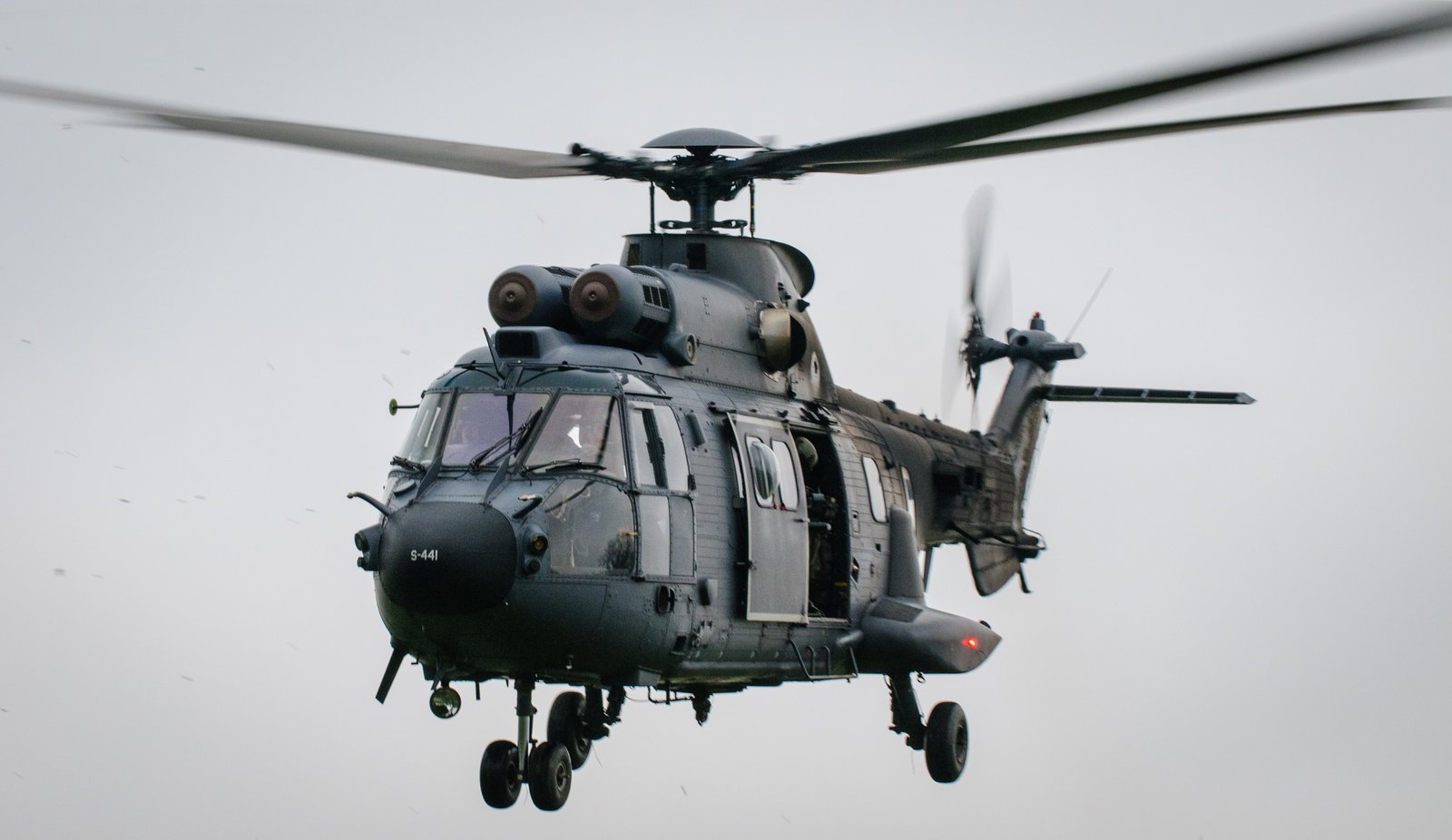
The AS-532A2 Cougar Mk2 established itself as the backbone of European military helicopter operations throughout the 1990s and 2000s. More than 350 Cougar helicopters across all variants were ordered by military forces worldwide, with the A2 variant representing the most advanced configuration of the family. The Netherlands received seventeen AS532-U2 Cougars in October 1993, deploying them extensively as medium transport helicopters including combat operations supporting Task Force Uruzgan in Afghanistan. Bulgaria acquired twelve AS532 helicopters between August 2006 and July 2009, comprising four dedicated combat search and rescue variants and eight utility models.
Operational History
The Cougar Mk2 proved its versatility across multiple combat and humanitarian missions. French Air Force AS-532A2 variants conducted combat search and rescue operations in various theaters, while naval variants equipped with AM 39 Exocet missiles and variable-depth sonar systems performed anti-surface and anti-submarine warfare missions. Slovenia integrated four AS532 helicopters into its military operations in 2003-2004, utilizing the aircraft's exceptional endurance capability of four hours for extended patrol and transport missions. The helicopter's robust design allowed operations in extreme conditions, with Centrisep air intakes specifically engineered for high-dust and desert environments.
The Manufacturer
Aerospatiale developed the Cougar as part of France's commitment to European aerospace cooperation, with production later transferred to Eurocopter following the 1990 formation of this joint venture. Eurocopter emerged from the merger of DaimlerChrysler Aerospace of Germany, Aerospatiale Matra of France, and CASA of Spain under the EADS umbrella. The company systematically redesignated all military AS332 Super Puma variants as AS532 Cougars in 1990 to distinguish military from civilian models. In 2014, Airbus Helicopters absorbed Eurocopter, renaming the AS532 as the H215M Cougar while maintaining production and support capabilities.
Engine & Technical Innovation
The AS-532A2 Cougar Mk2 achieved its performance through twin Turbomeca Makila 1A2 turboshaft engines, each generating 1,380 kilowatts of maximum takeoff power and 1,240 kilowatts continuous power. These engines incorporated advanced anti-icing systems and particle separation technology essential for military operations. The aircraft required a crew of two pilots and one loadmaster, with the flight deck designed for single-pilot operations under specific conditions. Revolutionary Spheriflex rotor hubs utilized unlubricated metal antifriction bearings capable of withstanding impacts from 20-millimeter cannon and 12.7-millimeter machine gun rounds, while the transmission system could operate without lubrication for up to ninety minutes during emergency conditions.
Performance Characteristics
Pilots praised the Cougar Mk2 for its exceptional stability and control authority across its flight envelope. The helicopter achieved a maximum speed of 278 kilometers per hour and cruised efficiently at 231 kilometers per hour with a climb rate of 6.2 meters per second. Its service ceiling of 3,450 meters enabled operations in mountainous terrain, while the 573-kilometer range provided tactical flexibility for extended missions. The aircraft's operating weight of approximately 4,560 kilograms allowed for substantial payload capacity up to its maximum takeoff weight of 9,000 kilograms.
Safety and Survivability
Engineers designed the AS-532A2 with unprecedented crashworthiness standards, protecting occupants during impacts up to 11.4 meters per second. The fuselage incorporated energy-absorbing structures and reinforced crew compartments that exceeded military specifications for battlefield survivability. Self-sealing fuel tanks and redundant flight control systems provided additional protection during combat operations, while the aircraft's ability to continue flying on a single engine ensured mission completion even after battle damage.
Production Legacy
The Cougar family's success led to the development of the Eurocopter EC725 Caracal, incorporating lessons learned from decades of AS532 operations. Current operators continue flying their Cougar fleets with ongoing modernization programs extending service life into the 2030s. The basic AS-532A2 Mk2 remained an unarmed platform, though military variants could mount 7.62-millimeter machine guns, rocket pods, and various air-to-surface missiles depending on mission requirements. Today, surviving examples serve with air forces across Europe, Africa, and Asia, testament to the design's enduring capability and reliability in demanding operational environments.