
Market Dominance and Commercial Success
The ATR-42-300 revolutionized regional aviation by capturing markets previously considered uneconomical for scheduled airline service. By September 1989, ATR had achieved its original target of 400 sales, with over 285 ATR 42s delivered to more than 60 airlines by 1995. The aircraft's ability to operate from short strips and handle extreme weather conditions made it indispensable for routes in developing nations and remote regions where larger jets could not venture.
Air Littoral of France became the launch customer, receiving the first production aircraft on December 3, 1985, and conducting the first revenue flight on December 23, 1985, between Béziers Cap d'Agde Airport and Paris Orly. The type's rapid acceptance in North America proved crucial to its success, with Texas Air Corporation ordering 50 aircraft in August 1988. Trans World Express received the 100th production aircraft in 1988, followed by American Eagle's substantial order for 41 ATR 42s and 59 ATR 72s on August 21, 1990.
The Franco-Italian Partnership
ATR emerged from a strategic alliance formed on November 4, 1981, uniting France's Aérospatiale with Italy's Aeritalia in pursuit of the growing regional aircraft market. The consortium established final assembly operations in Toulouse, France, where production commenced in 1985. This partnership combined French expertise in civil aviation with Italian aerospace manufacturing capabilities, creating a formidable competitor to established manufacturers like Fokker and British Aerospace.
The company briefly became part of Aero International (Regional) in January 1996, a consortium that also included Avro and Jetstream, but regained independence when this arrangement dissolved in mid-1998. Today, ATR continues as an independent manufacturer, with its original partners now evolved into Airbus and Leonardo S.p.A.
Powerplant and Technical Innovation
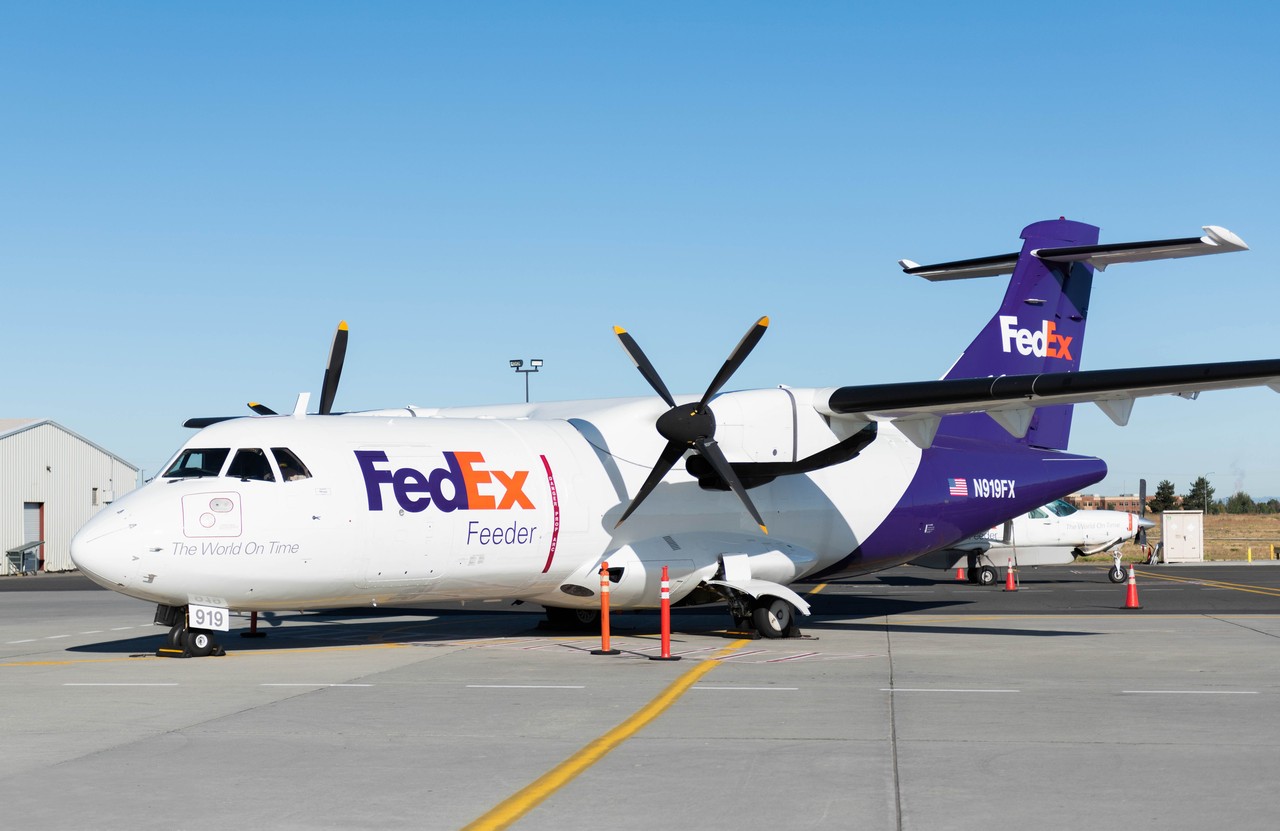
The ATR-42-300 utilized two Pratt & Whitney Canada PW120 turboprop engines, each producing 2,000 shaft horsepower or 1,340 kilowatts when flat-rated to 1,800 shaft horsepower. These engines drove four-blade Hamilton Standard constant-speed propellers, providing the aircraft with exceptional short-field performance and fuel efficiency crucial for regional operations.
The design team placed unprecedented emphasis on composite materials integration, a revolutionary approach in the mid-1980s when most aircraft still relied heavily on aluminum construction. This advanced materials usage contributed to the aircraft's structural efficiency and operational economics, establishing design principles that would influence regional aircraft development for decades.
Operational Characteristics
Pilots praised the ATR-42-300 for its forgiving handling characteristics and robust construction. The aircraft achieved a maximum speed of 490 kilometers per hour at its service ceiling of 7,600 meters, with a two-person flight crew managing all operations. Its maximum takeoff weight of 16,900 kilograms allowed for flexible payload configurations between passengers and cargo.
The high-wing configuration provided excellent ground clearance for operations on unpaved strips, while the turboprop powerplant delivered superior fuel efficiency compared to early regional jets. These characteristics made the ATR-42-300 particularly valuable for airlines serving remote destinations where infrastructure limitations prohibited larger aircraft operations.
Production Legacy and Continued Relevance
Production continued from 1985 through 1996, when the improved ATR-42-500 variant superseded the original model. The success of the ATR-42-300 directly enabled development of the larger ATR 72, which first flew on October 27, 1988, sharing the same production line and majority of subsystems with its smaller sibling.
By 2015, the ATR 42 family had become the only 50-seat regional aircraft remaining in production, a testament to the soundness of the original design concept. The ATR turboprop family achieved over 1,800 total sales to more than 200 operators worldwide, with major modern operators including Wings Air, Air New Zealand, Canadian North, and Indigo continuing to demonstrate the enduring value of the ATR-42-300's design philosophy in contemporary regional aviation.