
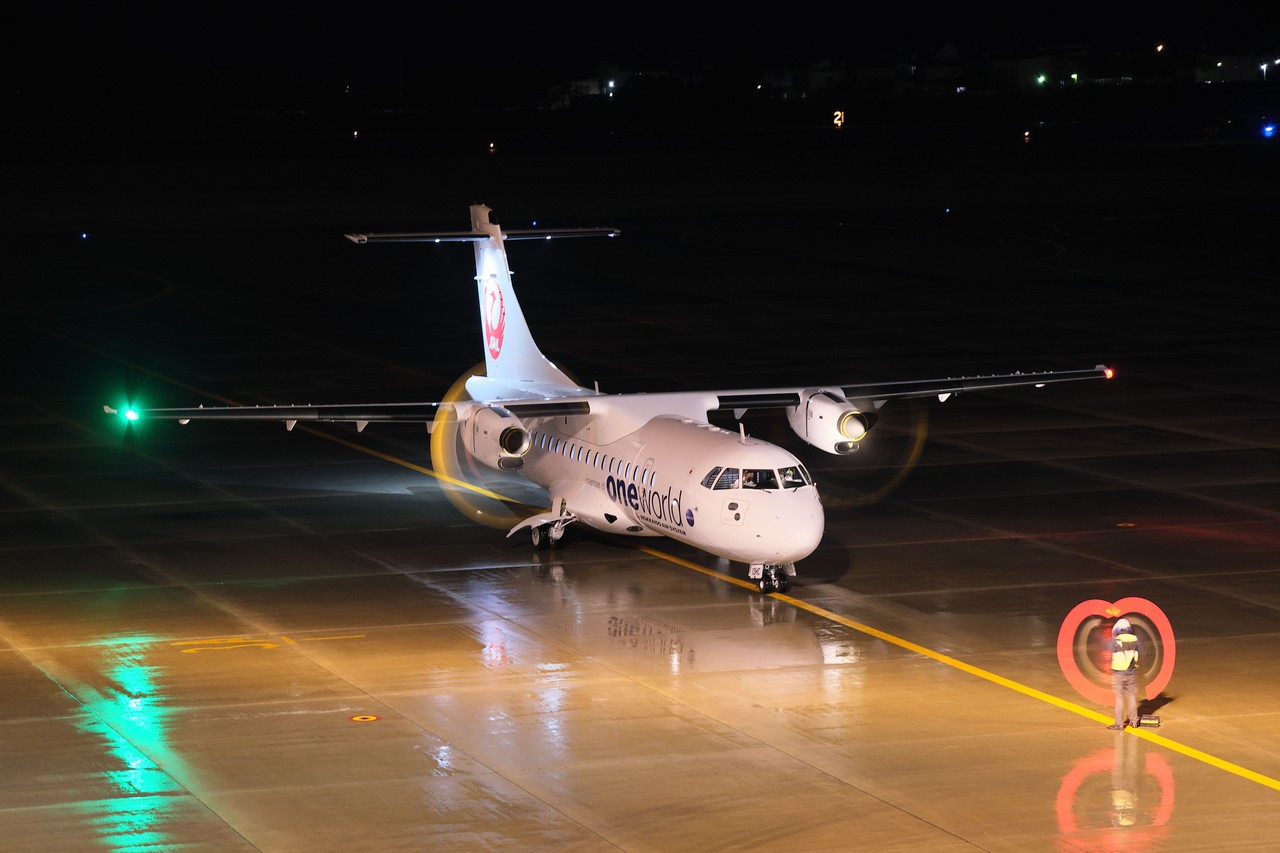
Service History
The ATR 42-600 entered commercial service in November 2012 with Precision Air of Tanzania, marking the beginning of a new chapter for regional aviation. By 2019, the aircraft had gained significant traction in the North American market when Silver Airways became the first U.S. operator, taking delivery of its initial aircraft on April 22, 2019, with firm orders for 16 units through Nordic Aviation Capital. The type has proven particularly valuable for airlines serving thin routes, with operators like JSX adding ATR 42-600s to their fleets for specialized regional services.
Across the broader ATR 42 family, which includes 483 aircraft built since 1985, the type has demonstrated remarkable longevity with 203 aircraft remaining active as of 2024. The series achieved significant milestones throughout its operational history, including American Eagle's 41-aircraft order in 1990 and Texas Air Corporation's substantial 50-unit ATR 42-300 order in 1988. By 2000, the entire ATR fleet had accumulated over 10 million flights carrying 450 million passengers worldwide.
The Manufacturer
ATR (Aerei da Trasporto Regionale) emerged from a strategic partnership formed in 1981 between France's Aérospatiale and Italy's Aeritalia, creating one of Europe's most enduring aerospace collaborations. The company has operated continuously for over four decades, evolving with its parent companies as Aérospatiale became part of Airbus and Aeritalia transformed into Leonardo. Today, ATR maintains its 50-50 ownership structure between these two aerospace giants.
The joint venture achieved remarkable success, reaching 1,500 total deliveries across both ATR 42 and ATR 72 families by the mid-2010s. In 2013, ATR recorded its strongest performance with net orders totaling 1,328 aircraft, comprising 443 ATR 42s and 885 ATR 72s, while maintaining a production backlog worth $5.3 billion with 221 aircraft on order.
Engine & Technical Innovation
The ATR 42-600's enhanced performance stems from its Pratt & Whitney Canada PW127M turboprop engines, representing a significant advancement over previous variants in the series. These powerplants deliver improved fuel efficiency and enhanced dispatch reliability, addressing two critical concerns for regional operators managing thin-margin routes.
ATR CEO Stéphane Mayer announced the -600 series launch on October 2, 2007, emphasizing the variant's focus on operational efficiency and reduced operating costs compared to the preceding -500 model. The aircraft incorporates a modern glass cockpit system alongside the upgraded engines, creating a comprehensive modernization package that maintains compatibility with existing ATR operational procedures.
The -600 variant accommodates 42 to 48 passengers depending on configuration, with a standard two-person flight crew. Its high-wing design provides excellent short-field performance, making it particularly suitable for airports with challenging runway conditions or limited infrastructure.
Production & Development Legacy
Production of the ATR 42-600 takes place at ATR's final assembly facility in Toulouse, France, sharing the production line with the larger ATR 72 family. This shared manufacturing approach has enabled ATR to maintain efficient production despite the aircraft's specialized market position. In 2023, ATR delivered four ATR 42-600s as part of its 36-aircraft total delivery count, with the majority comprising ATR 72-600 variants.
The -600's development represented ATR's commitment to sustaining the 50-seat regional turboprop market, making it the sole aircraft in this category remaining in active production by 2015. This unique market position has provided ATR with a specialized niche, particularly valuable for operators requiring aircraft capable of serving smaller airports and thin routes economically.
ATR attempted to expand the variant's capabilities with the ATR 42-600S STOL (Short Take-Off and Landing) version, launched on October 9, 2019, with 20 initial commitments including orders from Elix Aviation Capital and Air Tahiti. The STOL variant promised operations from runways as short as 800 meters while maintaining 42-passenger capacity. However, ATR ceased development of this specialized variant in November 2024 due to insufficient market demand, with only 21 total orders accumulated.
Current Operations
As of 2024, ATR maintains 39 ATR 42-600 aircraft on order, ensuring continued production into the near future. The aircraft's role in connecting smaller communities to major transportation networks remains vital, particularly in regions where larger aircraft would prove economically unviable. Its position as the world's last production 50-seat turboprop provides operators with a unique solution for routes requiring this specific capacity and performance combination.
The ATR 42-600's operational flexibility and modern systems have established it as an essential component of global regional aviation infrastructure, continuing the legacy of a design concept that has successfully adapted to changing market demands for nearly four decades.