
Market Dominance and Innovation
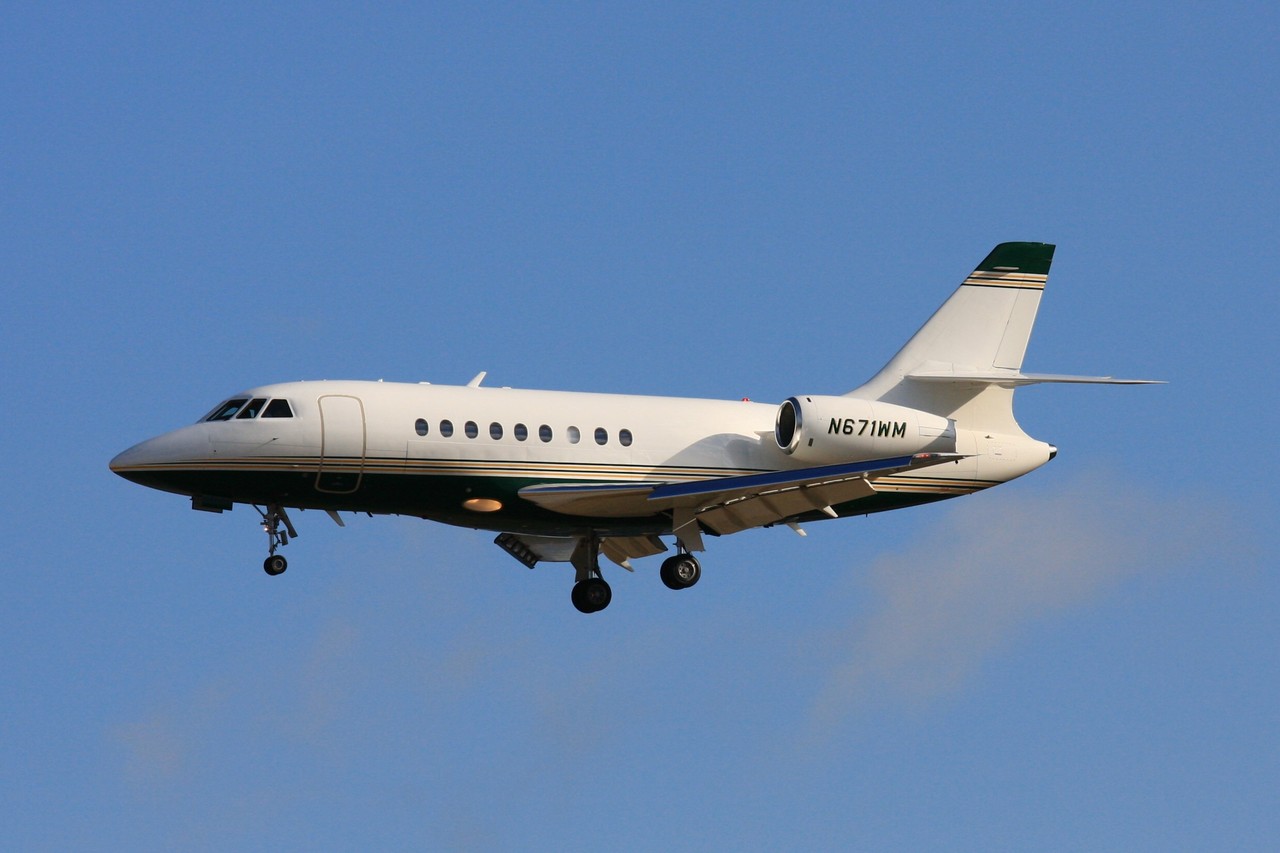
The Falcon 2000EX EASy carved out a significant niche in the competitive super-midsize business jet market during its production run from 2004 to 2009. With 92 aircraft delivered according to industry tracking, the type represented Dassault's commitment to integrating cutting-edge avionics technology with proven airframe design. The aircraft's introduction of the Honeywell EASy flight deck system in 2004 marked a watershed moment for business aviation, bringing synthetic vision technology and simplified cockpit operations to the corporate jet segment.
Design Evolution and Certification
Building upon the foundation established by the original Falcon 2000, which first flew on March 4, 1993, the EX EASy variant underwent substantial engineering improvements. The aircraft achieved dual certification from both the FAA and EASA on June 22, 2004, following an intensive development program that began with its maiden flight in early 2003. Engineers completely redesigned the pressurization and oxygen systems while implementing the revolutionary EASy avionics suite based on Honeywell's Primus Epic platform.
The transformation from the base Falcon 2000 was dramatic in terms of performance capabilities. The new Pratt & Whitney Canada PW308C engines, each delivering 7,000 pounds of thrust, provided nearly 1,000 nautical miles of additional range compared to the original CFE-powered variant. Maximum takeoff weight increased to 42,200 pounds, while fuel capacity expanded by 3,800 pounds, enabling the aircraft to achieve its impressive 3,880-nautical-mile range.
Dassault Aviation Heritage
Dassault Aviation, the French manufacturer behind the Falcon 2000EX EASy, traces its lineage back to 1929 and has maintained its position as one of Europe's premier aviation companies. Operating in partnership with Italian firm Alenia, now part of Leonardo, Dassault has consistently pushed technological boundaries in both military and civilian aircraft development. The company's decision to establish final assembly operations at their Little Rock, Arkansas completion center demonstrated their commitment to serving the North American business jet market.
The Falcon 2000EX EASy represented the company's first private jet designed entirely using digital technology, reflecting Dassault's investment in advanced engineering tools and methodologies. This digital design approach enabled improved aerodynamics and simplified systems integration throughout the aircraft.
Technical Excellence and Engine Performance
The heart of the Falcon 2000EX EASy's performance lies in its twin Pratt & Whitney Canada PW308C turbofan engines. These powerplants, equipped with Full Authority Digital Engine Control (FADEC) systems, provide exceptional reliability and fuel efficiency. With overhaul intervals extending to 7,000 hours and operating costs of $280 per hour per engine, the PW308C engines established new benchmarks for lifecycle economics in the super-midsize category.
The aircraft's climb performance, improved by approximately 600 feet per minute over the original Falcon 2000, enables rapid transit to optimal cruise altitudes. This enhanced climb capability, combined with the aircraft's airport flexibility, made it particularly attractive to operators requiring access to challenging airports with shorter runways or noise restrictions.
Operational Capabilities and Configuration
Typically configured with two distinct cabin zones, the Falcon 2000EX EASy accommodates 10 passengers in standard layout, with maximum seating for 12 individuals. The cabin measures 31 feet in length and 7 feet 8 inches in width, providing generous space for long-range business travel. The aircraft's baggage compartment capacity for 12 suitcases ensures adequate storage for extended trips.
A notable achievement in the type's operational history occurred on March 18, 2010, when a Falcon 2000EX EASy successfully completed steep approach trials at London City Airport. This milestone made it the first modern Dassault twin-engine jet to operate from the challenging London facility, demonstrating the aircraft's exceptional approach capabilities and opening new route possibilities for operators.
Legacy and Market Position
Production ceased in 2009 as Dassault shifted focus to the longer-range Falcon 2000LX variant. Of the 92 aircraft produced, 89 remain in active service as of recent fleet analyses, with current market values ranging from $8.695 million to $9.5 million depending on vintage and total flight hours. Aircraft on the pre-owned market typically show between 4,730 and 9,889 total flight hours, with model years spanning from 2005 to 2009.
The Falcon 2000EX EASy's introduction of synthetic vision technology and advanced flight management systems influenced an entire generation of business jet development. Its combination of transcontinental range, advanced avionics, and operational flexibility established performance standards that continue to influence super-midsize aircraft design today. While production numbers remained modest compared to some competitors, the aircraft's technological contributions to business aviation far exceeded its numerical presence in the marketplace.