
Production and Manufacturer History
The Conair Firecat is not a clean-sheet design but a conversion program developed by the engineering and manufacturing arm of Conair Aviation (now Conair Group) in Abbotsford, British Columbia, Canada. Beginning in the late 1970s, Conair began purchasing surplus Grumman S-2 Tracker carrier-borne anti-submarine warfare (ASW) aircraft to modify them into dedicated airtankers. The first Firecat entered service in 1978. According to the Canadian Museum of Flight, a total of 36 Trackers were converted into Firecat and Turbo Firecat configurations. While the base airframes were originally manufactured by Grumman in the United States (and some under license by de Havilland Canada), all Firecat modification work was performed by Conair in Canada.
Design and Technical Specifications
The conversion process focused on transforming a rugged military ASW platform into a cost-effective firefighting tool. To accommodate a belly tank, Conair raised the cabin floor by 20 cm (8 inches) and installed a retardant tank with a capacity of 3,296 litres (870 U.S. gallons) in the former torpedo bay. To optimize performance, superfluous military equipment was removed, reducing the aircraft's empty weight by nearly 1,500 kg compared to the original military Tracker.
Originally, the Firecat utilized the twin radial piston engines of the S-2 Tracker. However, starting in 1988, Conair began re-engining the fleet with Pratt & Whitney Canada PT6A-67AF turboprop engines, resulting in the "Turbo Firecat" designation. These modifications included the addition of underwing fuel tanks and an increase in maximum take-off weight (MTOW) by 680 kg (1,500 lb), bringing the total MTOW to 12,480 kg (27,500 lb). The turboprop engines significantly improved reliability and performance in "hot-and-high" conditions.
Service History and Legacy
The Firecat served as a vital asset for wildfire suppression in Canada and France. France's Sécurité Civile ordered Firecats for its "Guet Aérien Armé" (armed aerial watch) program, taking delivery of 14 original Firecats starting in May 1982, followed by a similar number of Turbo Firecats. These aircraft were utilized in the Mediterranean and southern France to provide fast initial attacks on wildfires, complementing larger scooping aircraft. France eventually retired its Tracker-derived fleet in 2020 after nearly 40 years of service.
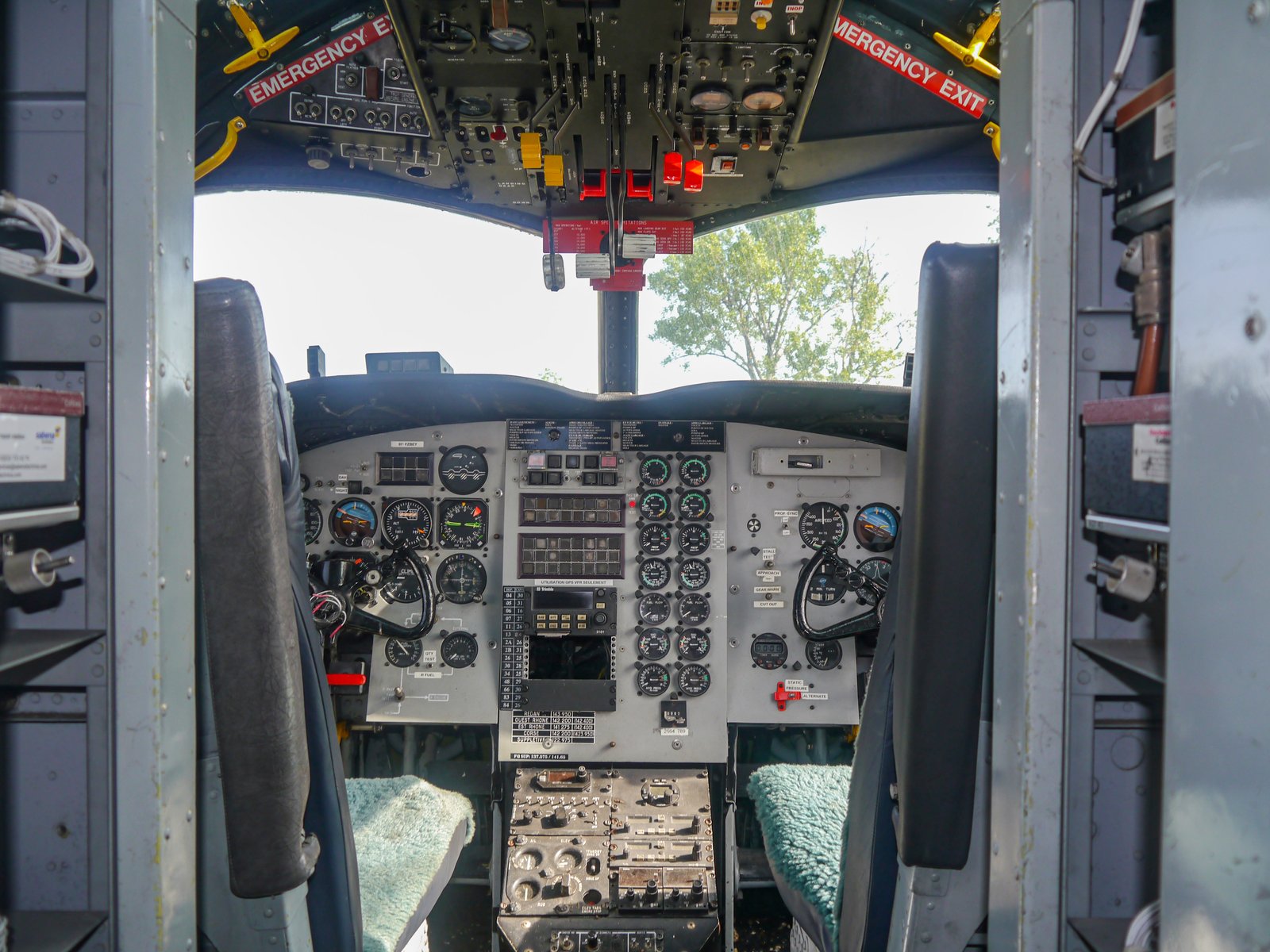
Today, the Firecat's legacy is preserved in several collections. The Canadian Museum of Flight in Langley, British Columbia, maintains a Conair Firecat, while a Turbo Firecat (formerly US Navy BuNo 147559 and Sécurité Civile "Tanker 15") has been featured at IWM Duxford. The program demonstrated the viability of repurposing Cold War-era military aircraft for civilian protection roles.