
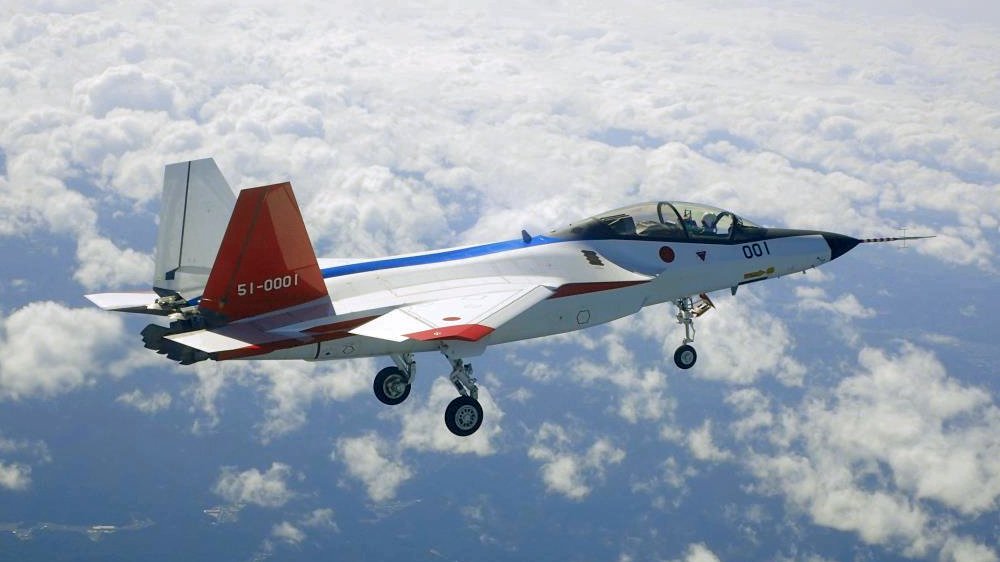
The Mitsubishi F-X was conceived as a cornerstone of Japan's future aerial defense, intended to serve as the nation's first domestically developed stealth fighter. Classified by the Japanese Ministry of Defense as a sixth-generation fighter, the F-X was designed for air superiority and stealth penetration. The primary objective of the program was to replace the aging Mitsubishi F-2 fleet by the mid-2030s, ensuring that Japan maintained an indigenous fighter-industrial base and advanced combat capabilities.
In October 2020, the Japanese Defense Ministry selected Mitsubishi Heavy Industries (MHI) as the lead developer for the project. MHI, which identifies as Japan's sole manufacturer of fighter aircraft, was tasked with the development, manufacture, and support of the platform. While the program aimed for a high degree of technological autonomy, the F-X never reached the production phase. Early projected timelines from July 2020 suggested that prototype construction would occur in 2024, with flight testing scheduled to commence in 2028. However, no production aircraft were ever built, and no first flight occurred.
Technical specifications for the F-X remained largely provisional. The aircraft was planned as a twin-engine stealth fighter. One secondary source mentioned a planned engine, the IHI XF9-1 turbofan, which reportedly offered approximately 22,000 lbf of dry thrust and up to 30,000 lbf with afterburner; however, this specification was not corroborated by other sources and remained provisional.
Ultimately, the F-X program did not result in an operational aircraft. On December 9, 2022, Japan, the United Kingdom, and Italy announced the Global Combat Air Programme (GCAP), into which the F-X project was folded. Consequently, the F-X has no completed service history or operational legacy, as it remained a development program rather than a production aircraft.