
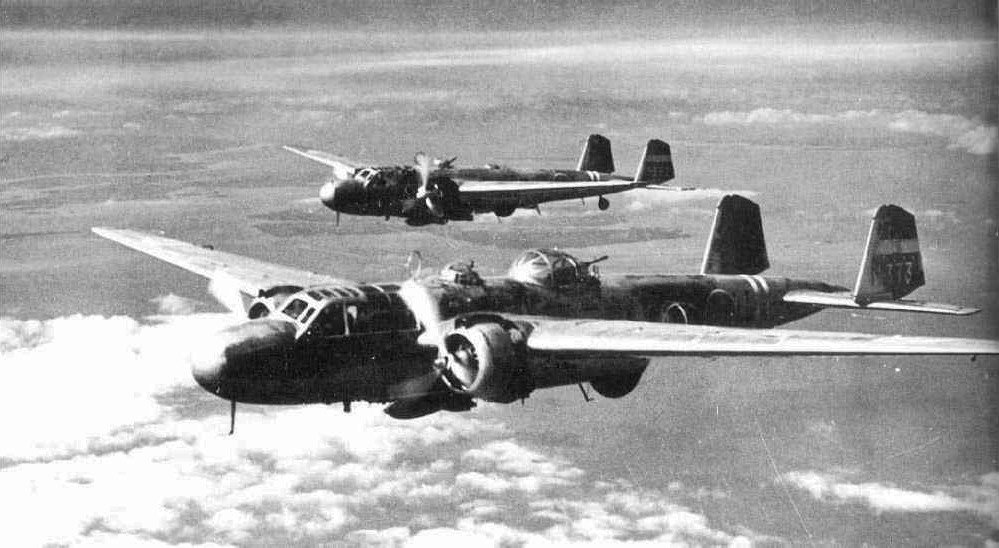
The Mitsubishi G3M Rikko was a twin-engine land-based attack aircraft developed for the Imperial Japanese Navy. First flown in July 1935, the G3M was designed as a modern, long-range bomber capable of conducting maritime strikes over vast distances. Its versatility allowed it to be adapted for various roles, including the capacity to carry an 800 kg torpedo.
Production of the G3M began with Mitsubishi and was later expanded through licensed production by Nakajima. While specific production windows are noted as 1939–1941 for Mitsubishi and 1941–1942 for Nakajima, the overall production run is commonly cited as spanning from 1936 to 1942. A total of 1,048 aircraft were manufactured before the type was eventually retired in 1945.
Technically, the aircraft was powered by two piston radial engines, specifically the Mitsubishi Kinsei in typical wartime versions, which produced 1,061 hp each. The G3M featured a wingspan of 25.0 m and a length of 16.45 m. With an empty weight of 4,965 kg and a maximum takeoff weight of 8,000 kg, it achieved a maximum speed of approximately 375 km/h and a cruise speed of 280 km/h. Its operational range was roughly 4,400 km, though the G3M3 variant, equipped with increased fuel capacity, could reach up to 6,228 km. The aircraft had a service ceiling of 9,200 m and was crewed by five to seven personnel.
In military service, the G3M operated in several capacities, including medium bomber, torpedo bomber, reconnaissance, and transport. It first entered combat during the Second Sino-Japanese War in 1937, notably conducting a long-range strike from Formosa into mainland China on 14 August 1937. During the Pacific War, it was deployed in major campaigns including the Solomons, Guadalcanal, Wake Island, and the Battle of the Coral Sea. Its most significant achievement occurred in December 1941, when G3M aircraft, operating alongside G4M bombers, sank the British capital ships HMS Prince of Wales and HMS Repulse. By 1943, the G3M was largely relegated to second-line duties, such as maritime patrol and transport. Allied forces identified the aircraft by the reporting name "Nell," while transport conversions were designated "Tina."